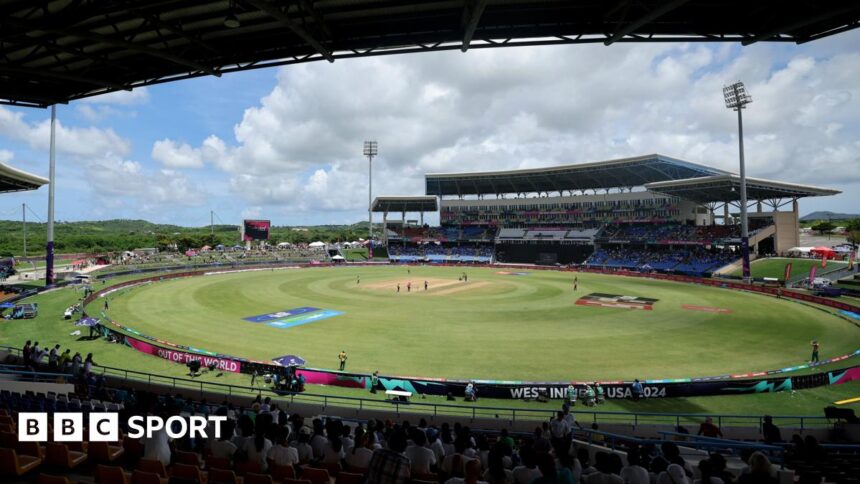
Antigua’s Pitch Peril: Match Abandoned After Batter Hospitalised, Casting Shadow Over Caribbean Cricket
The idyllic cricket grounds of the Caribbean, synonymous with calypso rhythms and batting brilliance, were the scene of a deeply disturbing incident this week. A domestic first-class match at the iconic Sir Vivian Richards Stadium in Antigua was abruptly abandoned after a dangerously unpredictable pitch sent a batter to the hospital, raising urgent questions about pitch preparation, player safety, and the legacy of the region’s premier venues just months after hosting a global tournament.
A Terrifying Sequence: The Ball That Changed Everything
The third day of the West Indies Championship match between the Leeward Islands Hurricanes and the Trinidad and Tobago Red Force began like any other. However, the session quickly descended into nightmare. Leeward Islands’ Jeremiah Louis, a seasoned all-rounder, faced a delivery from Trinidad and Tobago and West Indies fast bowler Jayden Seales. What should have been a manageable length ball instead transformed into a weapon. It exploded off the pitch, leaping viciously from just short of a length and striking Louis on the side of the helmet with frightening force.
The immediate aftermath was a harrowing tableau of shock and pain. Louis collapsed to the ground. After a moment, he removed his helmet, his frustration and distress palpable as he beat the ground. In a raw display of adrenaline and anguish, he then kicked his helmet away before walking, visibly shaken, towards the pavilion. The medical protocols swung into action, and he was swiftly transported to hospital. A subsequent Cricket West Indies statement confirmed Louis was in a stable condition, suffering from a possible concussion, a relief amidst the alarming circumstances.
Umpires Patrick Gustard and Jonathan Blades, after consultation with the captains, had no choice. The pitch was deemed too dangerous to continue. The abandonment was not a bureaucratic decision but a necessary act of player welfare, halting a professional contest in its tracks.
Expert Analysis: From World Cup Stage to Domestic Crisis
The irony of the location is stark and significant. The Sir Vivian Richards Stadium is no backwater ground; it is a Test-hosting venue that just months ago staged critical matches in the 2024 T20 World Cup. The transition from a global white-ball spectacle to a domestic red-ball fixture should not entail such a dramatic drop in pitch quality and safety. This incident forces a critical examination of the dual lives of Caribbean cricket grounds.
Expert pitch analysts point to several potential culprits:
- Inconsistent Preparation: Pitches for global tournaments receive meticulous, often external, curation. Domestic matches may rely on overworked or under-resourced ground staff, leading to inconsistent preparation.
- Soil and Weather Impact: The clay-based soils in parts of the Caribbean can become excessively dry and crumbly. Without precise watering and rolling, they can lose their binding, creating unpredictable bounce.
- The “Two-Tier” System: There is a growing perception that the absolute best resources are funneled towards international games, leaving the foundational domestic circuit—the very system that develops Test players—to operate with inferior standards. This incident is a severe manifestation of that potential divide.
The role of the bowler, Jayden Seales, is also noteworthy. As a West Indies seamer, his pace and skill are designed to exploit helpful conditions, but not lethally dangerous ones. The delivery was not a deliberate short ball; it was a length ball that reared abnormally, removing any chance for the batter to react. This underscores the pitch as the primary antagonist.
Predictions and Repercussions: A Wake-Up Call for CWI
The abandonment in Antigua is not an isolated event but a loud alarm bell. It will likely trigger a cascade of repercussions and force administrative action.
Immediate Fallout: Cricket West Indies will launch a formal investigation into the pitch preparation at the Sir Vivian Richards Stadium. The venue’s status for upcoming international matches could be under review until satisfactory remedial work and new protocols are demonstrated. The physical and mental recovery of Jeremiah Louis will be paramount, with concussion protocols strictly followed.
Long-Term Predictions:
- Enhanced Pitch Monitoring: We predict CWI will institute a more centralized, rigorous pitch monitoring system for all first-class venues, with independent inspectors and standardized preparation guidelines.
- Investment in Groundskeeping: Significant investment in training and resources for domestic ground staff is now unavoidable. The health of the first-class game depends on the quality of its surfaces.
- Player Advocacy Strengthened: Player associations will use this event to strengthen calls for guaranteed safe playing conditions. We may see players more willing to report concerns about pitches before matches begin.
- Reputational Damage: For a region selling itself as a reliable host for world cricket, this is a setback. Future touring teams may scrutinize pitch reports from the Caribbean more closely.
Conclusion: Safety Must Be the Non-Negotiable Legacy
The image of Jeremiah Louis struck and falling is one that cricket in the West Indies, and globally, must sear into its institutional memory. A sport that celebrates courage and contest cannot allow that contest to be skewed by unplayable and hazardous conditions. The abandonment was the correct, if regrettable, decision.
The Sir Vivian Richards Stadium, named for a batsman who embodied fearless dominance, must now become a symbol of reform. The pitches prepared in its hallowed turf must honor its namesake by allowing batters to play without fear and bowlers to earn their wickets through skill, not lottery. The 2024 T20 World Cup showcased the Caribbean’s vibrant passion for cricket. The domestic abandonment that followed exposes a vulnerable foundation. For the future of West Indies cricket, from the Test arena to the grassroots, ensuring safe, sporting pitches is not a matter of logistics—it is the absolute bedrock of the game’s integrity and its very duty of care to those who play it.
Source: Based on news from BBC Sport.