Duke’s Legal Blitz: The NIL Contract Lawsuit That Could Redefine College Football Transfers
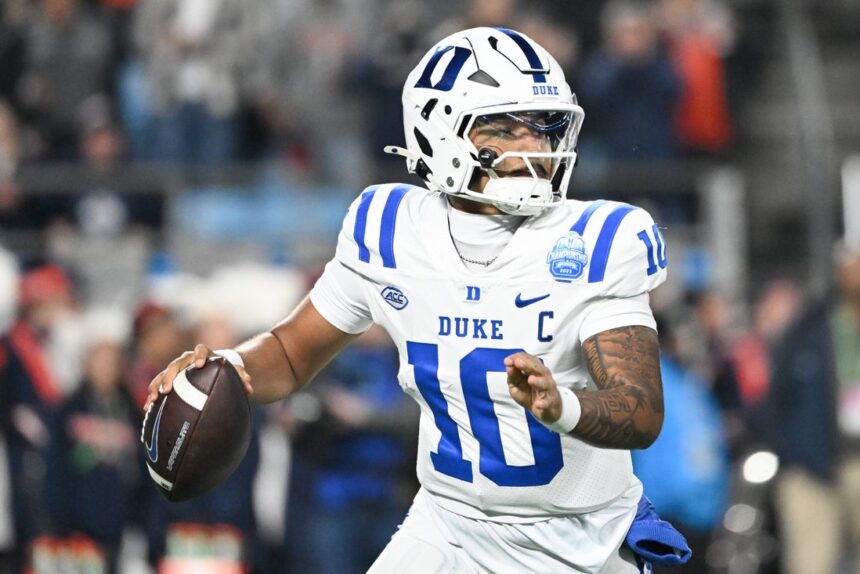
In a move that sent shockwaves through the collegiate athletics landscape, Duke University didn’t just file a grievance—they filed a lawsuit. On Tuesday, the university took the unprecedented step of suing its own quarterback, Darian Mensah, to prevent him from entering the NCAA transfer portal. The core of the dispute? A multi-year Name, Image, and Likeness (NIL) contract that Duke claims grants them exclusive rights to Mensah’s brand “with respect to higher education and football.” This isn’t merely a tiff over a player’s departure; it’s a high-stakes legal battle that threatens to upend the fragile ecosystem of modern college sports, pitting contract law against the burgeoning culture of athlete empowerment. The immediate ruling from the bench, a denial of Duke’s request for a restraining order, is just the opening whistle in a game that will be played out in courtrooms and arbitration hearings.
The Legal Playbook: Dissecting Duke’s Grounds for Suit
Duke’s complaint, filed in Durham County Superior Court, is a meticulously crafted argument that seeks to treat an NIL deal not as a supplemental endorsement, but as a binding employment-style agreement. The university’s legal strategy hinges on several key claims that, if upheld, would establish a powerful new precedent.
First and foremost, Duke asserts that the contract explicitly provides the university with exclusive NIL rights within the realms of higher education and football through December 31, 2026. This exclusivity clause is the linchpin of their case. By entering the transfer portal, Duke argues, Mensah would be irreparably harming their ability to monetize and control his brand for promotional and commercial purposes related to Duke football.
Secondly, the university emphasizes that the contract includes a mandatory arbitration clause. Duke contends that by announcing his intent to transfer, Mensah breached the agreement, triggering a dispute that must be settled through arbitration, not the public portal. Their lawsuit seeks an injunction to maintain the status quo—keeping Mensah from transferring—until that arbitration process concludes.
The core legal question is profound: Can an NIL contract, which is ostensibly about a student-athlete’s commercial brand, be used to effectively restrict their athletic participation and mobility? Duke is betting that the answer is yes.
Immediate Fallout and the Bench Ruling
The drama escalated swiftly from the filing of paperwork to a courtroom showdown. In a hearing on Tuesday, Superior Court Judge Michael O’Foghludha ruled from the bench, denying Duke’s request for a temporary restraining order against Mensah. While a written order is pending, this initial decision represents a significant, if temporary, victory for the quarterback and his legal team.
Mensah’s attorney, renowned sports lawyer Darren Heitner, successfully argued against the injunction. The denial suggests the judge may have been unconvinced that Duke would suffer the “irreparable harm” necessary to justify such an extreme pre-arbitration measure, especially given the existence of the arbitration process itself. This ruling allows Mensah, for now, to proceed with exploring his transfer options, though the specter of the ongoing lawsuit and impending arbitration looms large.
The swift judicial response highlights the urgency and complexity of the situation. It also sets the stage for a bifurcated battle: one front in the public court system over injunctions and enforcement, and another in a private arbitration room over the fundamental breach and damages.
Expert Analysis: A Pandora’s Box for the NIL Era
This case is a watershed moment, and its implications stretch far beyond Durham. Legal and collegiate sports experts point to several potential outcomes and ramifications.
- The “De-Facto Employment” Argument: “Duke is essentially testing whether NIL contracts can be structured as non-compete agreements,” notes a veteran collegiate compliance director. “If they succeed, schools could use lucrative, long-term NIL deals as a tool to lock in roster stability, fundamentally altering the power dynamics the transfer portal created.”
- The NCAA’s Dilemma: The NCAA, already struggling to govern the NIL landscape, is a bystander in this contractual dispute. The case underscores how private contracts between collectives/universities and athletes are creating rules that supersede NCAA legislation. It exposes the association’s diminishing control over the core transactional relationships in the sport.
- Recruiting and Contract Arms Race: Future NIL deals will be scrutinized like never before. High school recruits and their advisors will now have to weigh the long-term commitment implied by multi-year NIL offers against the freedom to transfer. We may see a rise in “transfer buyout” clauses or more explicitly defined terms regarding portal entry.
The arbitration process itself is a black box, but its result will send a market signal. A ruling favoring Duke would empower other schools to enforce similar contracts aggressively. A ruling for Mensah would reinforce athlete mobility and likely lead to a restructuring of how NIL exclusivity is defined in contracts.
Predictions and the Future of Athlete Mobility
Predicting the final outcome is perilous, but the trajectory of this case will shape college football’s future.
Prediction 1: A Settled, but Precedent-Setting, Outcome. The most likely scenario is a confidential settlement reached during arbitration. Duke may secure a financial penalty or a negotiated “release fee,” while Mensah likely gains his freedom to transfer. Even without a definitive court ruling, the mere fact this lawsuit was filed will chill the market. Schools will cite it in negotiations, and athletes will be more wary of long-term exclusivity.
Prediction 2: The Erosion of “Student-Athlete” Pretense. This lawsuit lays bare the professionalized nature of top-tier college football. Duke is suing to protect a commercial asset, framing the relationship in purely contractual terms. This further distances the model from amateurism and accelerates calls for a formal employer-employee relationship, which would bring collective bargaining and standardized contracts.
Prediction 3: A New Era of Contractual Scrutiny. The Darian Mensah case will become a staple in sports law seminars and agent training. Every multi-year NIL deal will now be viewed through the lens of its “transferability.” We will see a rise in shorter-term deals with clearer exit provisions, or conversely, more schools attempting to replicate Duke’s aggressive stance with stronger legal language.
Conclusion: A Line in the Turf
Duke University’s lawsuit against Darian Mensah is more than a dispute over a quarterback’s future; it is a line in the turf for the entire NIL era. By choosing litigation, Duke has boldly asserted that an NIL contract can be a tool for roster management, a binding commitment that transcends the traditional student-athlete model. The initial court denial is a setback for their strategy, but the war is far from over.
This case forces a painful and public examination of what NIL has become. Are these agreements simply endorsements, or are they the foundational contracts of a quasi-professional league? The answer will determine whether the transfer portal remains a vehicle for athlete freedom or becomes a minefield of contractual litigation. One thing is certain: the outcome of Duke v. Mensah will resonate in athletic departments, law firms, and locker rooms across the country, rewriting the rules of engagement in college sports’ new, monetized reality.
Source: Based on news from Deadspin.