Duke Football’s Legal Blitz: The Landmark Lawsuit That Could Shatter College Sports’ Transfer Portal
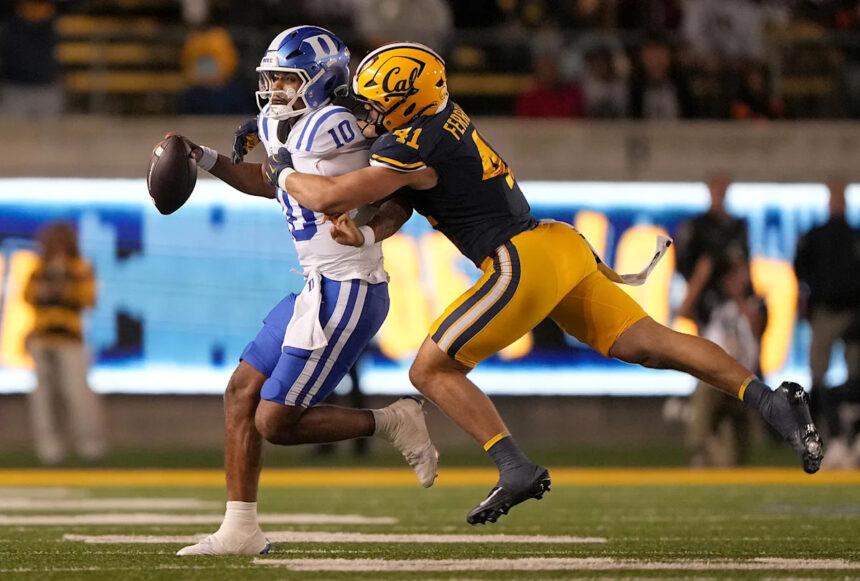
The ink was barely dry on a contract that was supposed to symbolize a new era of stability in college athletics. In 2023, Duke University signed quarterback Darian Mensah to a groundbreaking two-year, $8 million deal, a bold move to secure top talent in the NIL and transfer portal age. It was hailed as a step into a brave new world. Just one year later, that world has erupted into legal warfare. Duke has filed a lawsuit against Mensah, seeking to bar him from entering the transfer portal and alleging a blatant breach of contract. This isn’t just a dispute between a player and a school; it’s a seismic legal salvo that threatens to redefine the rules of engagement for every powerhouse program and star athlete in the country.
From Groundbreaking Deal to Groundbreaking Lawsuit
When Duke secured Darian Mensah, the narrative was one of progressive adaptation. In the chaotic, free-agent-like atmosphere of modern college football, a multi-year contract was seen as a novel tool for roster construction and player commitment. It was a statement that Duke was willing to play at the financial forefront to compete. Fast forward to today, and the university is again going first—but in a dramatically different courtroom arena. The core of Duke’s argument is brutally simple: a contract is a contract. The university contends that Mensah’s decision to enter the transfer portal, despite having a signed agreement for the 2024 season, constitutes a direct breach of that legally binding document.
While initial reports indicate a judge denied Duke’s request for an immediate injunction to block Mensah’s portal entry, the lawsuit itself is the real story. The denial of the injunction may allow Mensah to technically be in the portal, but it does not absolve him of the underlying breach of contract claim. Duke is playing a longer, more consequential game. The lawsuit is not merely about keeping one quarterback; it’s about establishing a precedent that could deter what schools see as rampant, contractually unmoored player movement fueled by behind-the-scenes inducements.
The Nuclear Option: Subpoena Power and the NCAA’s Blind Spot
This is where Duke’s legal maneuver transitions from a contractual dispute to a potential industry earthquake. By taking the matter to court, Duke has activated a tool the NCAA desperately lacks: subpoena power. This changes everything. The NCAA’s enforcement arm, often criticized as slow and toothless, operates on voluntary cooperation and limited investigative authority. Duke’s lawsuit, however, opens the formal discovery process.
This means Duke’s lawyers can legally compel Darian Mensah to turn over a treasure trove of private communications. The implications are staggering:
- Text messages and emails with representatives from other schools, especially the University of Miami, the program widely speculated to have induced Mensah’s transfer.
- Direct messages from collective boosters or third-party agents.
- Financial records or promises related to new NIL opportunities contingent on his transfer.
In short, Duke now has the ability to follow the digital money trail. This lawsuit grants the university not just the inclination to sue Miami (or another party) for tortious interference with a contract, but the mechanism to unearth the evidence. Perhaps most critically, any confidential information uncovered becomes part of a public court record—where the NCAA can easily see it. Duke is effectively conducting an investigation the NCAA cannot, with the potential to hand them a wrapped-and-ready infractions case.
Expert Analysis: The Stakes for the Entire Ecosystem
“This is the logical endpoint of the ‘contractualization’ of college athletics,” says Dr. Amanda Winters, a sports law professor. “For years, the only ‘contract’ was the National Letter of Intent, which bound the athlete to the school but not the school to the athlete in any meaningful financial way. These new, monetized NIL contracts are different. They are commercial agreements. And in the commercial world, you cannot unilaterally walk away from a valid contract without facing damages.”
The central tension is between emerging state NIL laws, which often guarantee a player’s right to transfer, and foundational contract law. Duke’s lawsuit argues that Mensah’s right to transfer does not immunize him from the consequences of breaking a separate, enforceable financial agreement. The potential outcomes create a spectrum of possibilities for the future:
- If Duke prevails, it could lead to a wave of similar lawsuits from schools, making star players think twice before entering the portal mid-contract. Multi-year deals would gain real teeth.
- If Mensah prevails, it would render multi-year NIL contracts largely unenforceable for retention, pushing collectives and schools toward purely pay-for-play one-year agreements, increasing annual chaos.
- The discovery wildcard could expose the shadowy tactics of tampering, potentially leading to massive NCAA penalties for involved schools and scaring boosters into transparency.
The lawsuit also puts the athlete in an unprecedented position. While empowered with transfer freedom, a star player may now have to weigh that freedom against the prospect of a costly, public, and invasive legal battle that lays their private communications bare.
Predictions and the Path Forward
The immediate future of this case is likely a messy, protracted legal fight, not a quick settlement. Duke has signaled a willingness to spend significant resources to make its point. The discovery phase will be the main event, as both sides jockey over what communications must be disclosed. Watch for Miami or other unnamed third parties to potentially be added as defendants if evidence of tampering emerges.
Long-term, this case screams for a structural solution that the current patchwork of state laws and NCAA rules cannot provide. It increases the pressure on Congress to pass federal NIL legislation that explicitly addresses the enforceability of contracts and the legality of multi-year agreements within the unique framework of amateur athletics (or what’s left of it).
Furthermore, this may accelerate a formal employer-employee relationship, such as through a collective bargaining agreement with a players’ association. In that model, contracts, transfers, and tampering would be governed by a clear, negotiated CBA, not by a combination of NCAA bylaws, state law, and ad-hoc court battles.
Conclusion: The Game Has Changed, Again
Duke’s lawsuit against Darian Mensah is far more than a squabble over a quarterback. It is the first major test of whether the new financial instruments of college sports have any real binding power. By moving the fight from the NCAA’s opaque infractions chamber to the transparent, evidence-driven arena of a public courtroom, Duke has fundamentally altered the playbook. They have weaponized the legal system to attack what they see as a culture of contractual lawlessness.
Whether you view this as a necessary stand for institutional integrity or an aggressive attempt to roll back player mobility, the result is the same: the transfer portal now has a legal shadow. The days of consequence-free movement for players under contract may be numbered. As the discovery process unfolds, potentially exposing the inner workings of recruiting inducements, the entire college sports industry will be watching, knowing that the precedent set in a North Carolina courtroom could reshape their world for a generation. The brave new world of player compensation has just collided head-on with the old world of contractual obligation, and the fallout will define the next chapter of college athletics.
Source: Based on news from Yahoo Sports.