Duke QB Darian Mensah in Unprecedented Portal Limbo: A Legal Battle Redefining College Football Free Agency
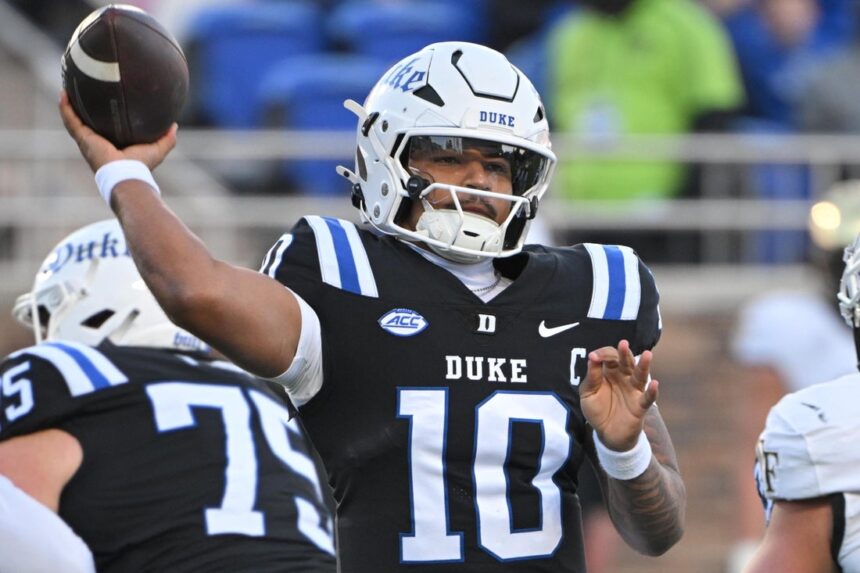
The NCAA transfer portal, designed to streamline athlete movement, has hit a monumental snag. At the center is Duke quarterback Darian Mensah, a player caught in a bureaucratic and legal purgatory that could set a precedent for the entire landscape of college athletics. While his name is officially in the portal, a North Carolina courtroom now holds the key to his future, creating a standoff that challenges the very notion of athlete autonomy in the modern era.
The Unprecedented Injunction: Duke’s Legal Play to Block a Transfer
According to an ESPN report, Darian Mensah finds himself in a uniquely restrictive situation. While he successfully entered the transfer portal last Friday—the final day of the winter window—he is legally barred from taking the next critical steps. A North Carolina judge has issued a temporary restraining order preventing Mensah from enrolling at or playing for any other school. This order is in place pending a hearing on Duke University’s request for a preliminary injunction, a legal maneuver aimed at forcing him to remain a Blue Devil.
This is not a simple matter of NCAA paperwork or a denied waiver. This is a university taking an active player to court to stop him from leaving, a stark escalation in the ongoing power dynamics between institutions and athletes. The hearing is currently scheduled for February 2 with Judge Ed Wilson of Durham County Superior Court, but Mensah’s attorney, renowned sports lawyer Darren Heitner, is aggressively seeking an earlier date. Every day of delay is a day Mensah misses crucial opportunities to connect with new coaching staffs, learn playbooks, and compete for a starting job in spring practice.
Timeline of a Standoff: From Portal Entry to Court Date
The sequence of events highlights the rapid legal escalation:
- Last Friday: Mensah announces his entry into the transfer portal via social media and informs new Duke head coach Manny Diaz.
- Immediately After: Duke files legal action, leading to a judge granting a temporary restraining order.
- Wednesday (ESPN Report): The public learns Mensah is in this unique “portal limbo,” unable to communicate with other schools for enrollment.
- Next Legal Step: An injunction hearing set for February 2, unless Heitner succeeds in moving it earlier.
The timing is particularly critical. Mensah entered on the portal’s final day, a strategic decision many athletes make. However, Duke’s immediate legal response has turned that strategy on its head, potentially costing him the entire cycle for finding a new home.
Expert Analysis: Why Would Duke Take This Route?
From a football perspective, this aggressive legal tactic is unusual but speaks to several potential motivations for the Duke program under Manny Diaz.
Depth Chart Desperation: Diaz inherited a quarterback room in flux. Losing a scholarship QB, even one who may not have been the projected starter, creates immediate and risky depth issues, especially this late in the transfer cycle. An injunction could be a hardball tactic to force Mensah to return, preserving a body in the room.
A Deterrent for Others: Diaz is establishing a new culture. Taking such a strong, public stance against a player’s departure sends a clear message to the rest of the roster about the program’s expectations and the potential consequences of entering the portal, possibly to discourage further exits.
Contractual Interpretation: At the heart of the injunction request is likely Duke’s interpretation of the National Letter of Intent (NLI) or the school’s own financial aid agreement. The university may be arguing that Mensah is bound to the institution for the full academic year, and his attempt to transfer constitutes a breach of that contract. This legal argument, if successful, would fundamentally alter the power of the NLI.
Darren Heitner’s involvement is equally significant. A lawyer who has been at the forefront of athlete empowerment, NIL rights, and challenging NCAA rules, his defense will undoubtedly argue for Mensah’s right to freely pursue opportunities, framing the portal as the established mechanism for doing so and Duke’s action as an unfair restraint.
Predictions and Ramifications for the Future of Transfers
The outcome of this case will send shockwaves through college sports, regardless of the judge’s decision.
If Duke Wins the Injunction: This would be a seismic shift. It would empower schools to use local courts to block transfers, essentially making the portal meaningless without a school’s consent. We could see a flood of similar injunctions, particularly from coaches looking to stem roster attrition, turning every contentious transfer into a potential legal battle. The “free agency” model would be crippled.
If Mensah Wins and the Injunction is Denied: This would affirm the athlete’s right to use the portal as intended. However, it would not stop schools from attempting similar legal delays in the future, using the court system as a new form of roster management—slowing down a player’s move even if they ultimately can’t stop it. The threat of legal entanglement could still have a chilling effect on players considering a transfer.
The Most Likely Outcome: Many legal experts predict a settlement before February 2. The public relations cost for Duke in a protracted battle against a student-athlete is high. A settlement might allow Mensah to leave immediately in exchange for dropping any claims, or could involve a structured release after spring practice. However, the mere fact this reached the courts has already altered the calculus for future transfers.
Conclusion: A Waters Moment for Athlete Mobility
The case of Darian Mensah is no longer just about a quarterback seeking a new team. It has become a watershed moment for athlete mobility. The transfer portal was created to bring order and freedom to player movement, but Duke’s legal challenge exposes a potential loophole that could allow institutions to reclaim control through state court systems.
This standoff in Durham underscores the unfinished and often contradictory nature of college athletics reform. While athletes have gained monumental rights through NIL and transfer freedoms, institutions still hold powerful, traditional tools to enforce compliance. The judge’s gavel on February 2 (or sooner) won’t just decide the fate of one player’s season; it will signal whether the balance of power in college sports continues to tilt toward the athlete or if schools have found a potent new method to push back. For Darian Mensah, his career is on pause. For college sports, the very mechanism of player movement is now on trial.
Source: Based on news from Deadspin.