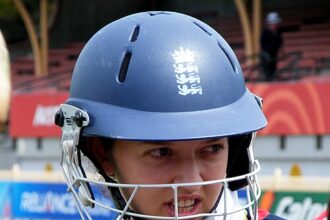
Joyce Set for Six Nations Comeback Five Months After Giving Birth
In a story that transcends sport, Wales and Bristol Bears flanker Alisha Joyce is set to make a stunning return to international rugby this weekend, just five months after giving birth to her son, Ralphie. The 28-year-old has been named among the replacements for Wales’ opening Guinness Women’s Six Nations clash against the reigning world and Six Nations champions, England, at Ashton Gate on Saturday (14:15 BST).
Joyce’s last Test match was against Japan in WXV2 in October 2024. Since then, she has navigated the physical and emotional journey of motherhood, returning to elite training with a ferocity that has impressed Wales head coach Sean Lynn. Her comeback is not just a personal victory; it is a powerful statement about the evolving landscape of professional women’s rugby, where players are increasingly balancing the demands of elite sport with family life.
This weekend’s fixture also carries a deeply sentimental subplot. It marks 562 days since Alisha Joyce last played alongside her partner, Jaz Joyce, who is also in the Wales squad. The prospect of the couple sharing the field in a Six Nations match, having become parents in the interim, adds a layer of human drama rarely seen in elite sport.
From Maternity Leave to Matchday: The Remarkable Road Back
Alisha Joyce’s return to the Test arena is remarkable not just for its speed, but for the context of her preparation. The Bristol Bears flanker has had only half an hour of competitive rugby this season, all of it coming in the Celtic Challenge. Yet, according to Lynn, her physicality in training has been so undeniable that she could not be left out of the matchday 23.
“She’s been outstanding,” Lynn said of Joyce earlier this week. “Her physicality in training has been impressive. She’s a natural leader and a world-class athlete. It’s a testament to her dedication and the support system around her that she’s ready to contribute at this level so quickly.”
The flanker’s journey back to fitness has been methodical. Postpartum recovery for elite athletes is a complex process, involving rebuilding core strength, pelvic floor stability, and cardiovascular endurance while managing the demands of a newborn. Joyce has credited the medical and performance staff at both Bristol Bears and the Welsh Rugby Union for creating a bespoke return-to-play program that prioritized her health and Ralphie’s well-being.
Key milestones in her comeback include:
- Postnatal recovery: Gradual return to non-contact conditioning within weeks of giving birth.
- Full-contact training: Reintroduced to physical collisions and rucking drills in early 2025.
- Celtic Challenge minutes: A 30-minute cameo to test match fitness and decision-making under pressure.
- Selection confirmation: Named on the bench for the Six Nations opener after dominating scrimmage sessions.
This timeline is a fraction of what many athletes require. For context, the standard medical advice for returning to high-impact sport after childbirth is often six to nine months. Joyce’s return in five months highlights her exceptional baseline fitness and the progressive attitudes within the Wales setup.
Expert Analysis: What Joyce Brings to the Wales Back Row
From a tactical perspective, Alisha Joyce’s inclusion is a major boost for a Wales side that has struggled to match the physicality of the top-tier nations. As a Bristol Bears flanker, she plays in one of the most competitive back-row units in the Premiership Women’s Rugby (PWR). Her game is built on relentless work rate, jackal threat, and bone-jarring tackles.
Sean Lynn’s Wales have been criticized in the past for being outmuscled in the contact area, particularly against England. Joyce’s ability to win turnovers and slow down opposition ball is precisely the antidote needed against a Red Roses pack that thrives on quick ruck speed. Even if she only plays the final 20-30 minutes, her introduction could disrupt England’s rhythm and give Wales a foothold in the game.
Her partnership with Jaz Joyce in the back row is also a tantalizing prospect. While Jaz is more of a dynamic ball-carrier and lineout option, Alisha is the disruptor and defensive organizer. Together, they form a complementary unit. The emotional synergy of playing alongside a life partner, especially after becoming parents, could unlock an extra level of intensity and communication on the field.
“Having them both in the squad is a unique dynamic,” says former Wales international and BBC pundit, Philippa Tuttiett. “It’s not just about the rugby. It’s about trust. They know each other’s movements instinctively. If they get game time together, it could be a beautiful moment for Welsh rugby, but also a tactical nightmare for England to defend against.”
Statistical context: In her last Test against Japan, Joyce made 14 tackles and carried the ball 8 times in a dominant performance. Wales will need that same level of output, but in short, high-impact bursts from the bench.
Predictions: Can Wales Spring a Shock at Ashton Gate?
Let’s be realistic: England are the reigning Six Nations and World Cup champions. They have not lost a home Six Nations match since 2017 and boast a squad depth that is the envy of the world. Wales, by contrast, are in a rebuilding phase under Lynn, integrating new talent and dealing with key retirements.
However, the Six Nations has a history of producing tight, emotional encounters. England often start slow in tournament openers, and the atmosphere at Ashton Gate—a 27,000-capacity stadium—will be electric. Wales have nothing to lose and everything to gain.
Here is my prediction for how the match may unfold:
- First half: England will dominate territory and possession, but Wales’ defense, led by captain Hannah Jones, will hold firm. Expect a 10-3 or 14-5 scoreline at the break.
- Second half: As England’s bench power comes on, fatigue will set in for Wales. This is where Lynn will turn to Joyce. Her role will be to inject physicality and disrupt England’s set-piece flow.
- Key battle: The breakdown. If Joyce can win two or three turnovers, Wales may force England into errors and create scoring opportunities from counter-attacks.
- Final score prediction: England by 18-22 points. But Wales to cover the spread and show significant improvement from their 2024 Six Nations campaign.
The real victory for Wales this weekend, however, is not the scoreboard. It is the return of a world-class athlete like Alisha Joyce. Her presence in the squad sends a clear message to young girls and aspiring athletes: motherhood and elite sport are not mutually exclusive.
A Strong Conclusion: The Bigger Picture for Welsh Rugby
Alisha Joyce’s comeback is more than a headline; it is a beacon for the future of women’s sport. In a year where the Women’s Rugby World Cup is on the horizon, Wales need every ounce of experience and grit they can muster. Having a player of Joyce’s calibre—who has been through the physical and emotional crucible of childbirth and returned stronger—is invaluable.
For the Joyce family, Saturday will be a day of profound emotion. Ralphie, born just five months ago, will be watching from the stands (or more likely, from a parent’s arms) as his mother runs out at Ashton Gate. And if the stars align, he will see both his mothers on the pitch together for the first time in 562 days.
That is the kind of story that reminds us why we love sport. It is not just about tries and tackles; it is about resilience, love, and the unbreakable human spirit. Alisha Joyce embodies all of that. And as she prepares to take the field against the best team in the world, one thing is certain: Welsh rugby is better with her in it.
Follow the action live on BBC One and iPlayer from 14:00 BST on Saturday. And remember: never count out a mother with something to prove.
Source: Based on news from BBC Sport.