Chisora vs. Wilder: A 13-Year Reckoning Arrives in London This April
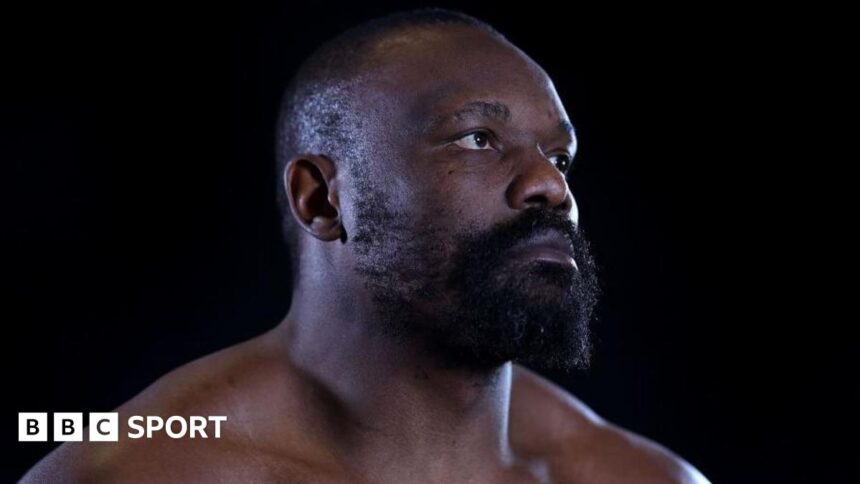
The heavyweight division, often dormant, is jolted awake by a clash of seismic personalities and punishing power. In a stunning twist to a long-dormant saga, British warrior Derek Chisora will face the devastating former WBC champion Deontay Wilder on April 4th in London. This is more than a fight; it is a ghost from the past materializing, a 13-year-old promise of violence finally kept, and a dramatic pivot in the final chapter of Chisora’s storied career.
A Collision Course, Finally Realized
The history between these two men adds a thick layer of intrigue to an already explosive matchup. Back in 2011, a young, rising Deontay Wilder was scheduled to face Chisora in London. The fight was abruptly canceled after Wilder’s arrest for domestic violence charges prevented him from obtaining a visa to enter the United Kingdom. The “what if” has lingered ever since. Now, over a decade later, with both men having traversed the peaks and valleys of the sport’s most glamorous division, they will settle the unfinished business. For Chisora, 42, this represents a monumental shift in his retirement plans. He had publicly stated his 50th professional bout would be his last and would take place overseas. Instead, he has chosen a final, thunderous homecoming against one of the most feared punchers in boxing history.
Tale of the Tape: Experience vs. Atomic Power
On paper, this is a classic stylistic dichotomy. The numbers tell a story of relentless activity against chilling efficiency.
- Derek Chisora (36-13, 23 KOs): The veteran is defined by his iron chin, relentless pressure, and an engine that belies his age. His record is a ledger of modern heavyweight history, having shared the ring with Vitali Klitschko, Tyson Fury (twice), Dillian Whyte (twice), Oleksandr Usyk, and Joseph Parker. The losses on his record are almost a badge of honor, proof of his willingness to fight anyone, anytime. Chisora’s path to victory is clear: bulldoze forward, smother Wilder’s space, and turn the fight into a grueling, physical war of attrition from the first bell.
- Deontay Wilder (43-3-1, 42 KOs): The “Bronze Bomber” is the antithesis of volume. He is a predator of patience and catastrophic power. With a knockout percentage hovering near 95%, his right hand remains the sport’s most potent equalizer. Since his epic trilogy with Tyson Fury, questions linger about his desire and his ability to handle relentless pressure. Wilder’s strategy is singular: control distance, establish his jab, and wait for the one moment to detonate his fight-ending power. For him, this fight is a statement opportunity to announce he is still a premier force in the division.
Expert Analysis: The Critical Battle Within the Battle
The outcome hinges on a few critical, combustible factors. First is Chisora’s durability. Can his legendary chin withstand the clean, concussive force of a Wilder right hand that has felled every man he’s ever faced except Fury? Chisora has been stopped, but never easily, and never by a single punch. He will need to employ intelligent pressure, using head movement and a high guard to close the distance.
Second is Wilder’s psyche and activity. Following two brutal knockout losses to Fury and a labored win over Robert Helenius, is the killer instinct still razor-sharp? Chisora will be in his face from the opening seconds, testing Wilder’s stamina and will in a way he hasn’t experienced since the first Fury fight. If Wilder cannot keep Chisora at the end of his jab and create angles, he will find himself in deep, uncomfortable waters.
Finally, there is the intangible of occasion. The London crowd will be a roaring, partisan force for Chisora. This energy can lift a fading fighter to extraordinary heights. For Wilder, fighting in a hostile UK environment for the first time, it will be a test of his focus and mental fortitude.
Predictions: A Fight with Only One Likely Ending
This fight presents a stark range of possibilities, but most analytical paths lead to a dramatic conclusion.
The Likely Scenario: The sheer, fight-altering power of Deontay Wilder is the overriding factor. Chisora’s style—come forward, eat a shot to give one—is perilously tailored for Wilder’s counter-punching genius. It is difficult to envision Chisora surviving 10-12 rounds without walking onto a fight-ending bomb. Prediction: Wilder by mid-to-late round knockout. A perfectly timed right hand, perhaps as Chisora wades in, will end the night abruptly and emphatically.
The Chisora Dream: The path to a shocking upset requires a perfect, career-best performance. Chisora must make it ugly, smothering, and exhausting from the first minute. He needs to drain Wilder’s legs and confidence by forcing clinches, digging to the body, and making every second a draining ordeal. If he can survive the early onslaught and take Wilder into the deep, uncharted waters of rounds 8-12, fatigue and frustration could lead to a historic stoppage or a close decision. It is a monumental “if,” but in heavyweight boxing, one brave heart can rewrite the script.
Conclusion: A Final Salute or a Resounding Statement?
Derek Chisora versus Deontay Wilder is a gift to fight fans—a dramatic, high-stakes narrative with guaranteed action. For Chisora, it is a final, glorious roll of the dice on the biggest possible stage at home. Win or lose, his legacy as a fearless gladiator is secure. For Wilder, it is a chance to re-assert his dominance, silence doubters, and catapult himself back into world title contention with a highlight-reel finish.
On April 4th in London, a 13-year-old promise will be fulfilled with fists. Whether it ends with Chisora’s arm raised in a fairy-tale farewell or with Wilder’s hand cannon once again silencing a arena, one thing is certain: it will be unmissable. This is not just a fight; it is a reckoning.
Source: Based on news from BBC Sport.