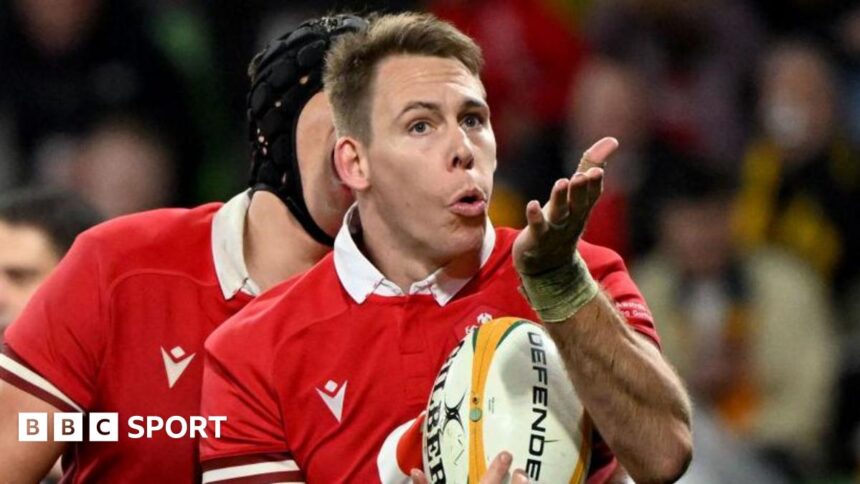
Liam Williams Hangs Up His International Boots: The End of a Welsh Rugby Odyssey
The final whistle has blown on one of Welsh rugby’s most compelling and celebrated international careers. Liam Williams, the fearless full-back whose journey from steel town scaffolder to British & Irish Lion became the stuff of modern legend, has announced his retirement from the international game. With 93 caps, two Six Nations titles, and a starring role in a World Cup semi-final run, ‘Sanjay’ leaves a void as large as his heart on the field. His departure marks not just the end of an era for the Wales back-three, but the closing chapter of a player who embodied the relentless, unyielding spirit of Welsh rugby.
From Port Talbot to the Pinnacle: The Making of a Maverick
Liam Williams’ origin story is central to his mythos and his connection with the Welsh faithful. Unlike many modern professionals groomed in academies, Williams’ path was forged in the hard-knocks school of amateur rugby with Waunarlwydd and the physically demanding day job of scaffolding at the Port Talbot steelworks. This background instilled in him a trademark toughness, a work ethic that never dimmed, and an authentic, grounded edge that resonated with fans.
His professional debut for the Scarlets in 2011 was a late bloom by contemporary standards, but his talent was undeniable. Less than a year later, he won his first Wales cap against the Barbarians in June 2012. The raw, electric talent was evident—a blend of audacious counter-attacking, surprising aerial prowess for his stature, and a defensive bravery that bordered on the reckless. He was a natural footballer, whose skills were honed not in a sterile gym but on the unpredictable pitches of Welsh club rugby.
- Key Career Milestones:
- 2011: Professional debut for Scarlets.
- 2012: First Wales cap vs Barbarians.
- 2017 & 2021: Selected for British & Irish Lions tours.
- 2019: Pivotal role in Wales’ Rugby World Cup semi-final run.
- 2021: Part of Wales’ Six Nations title-winning squad.
The Undeniable Impact: A Career Defined by Grit and Genius
Williams’ 93-cap career was a masterclass in evolution and impact. Initially a mercurial wing, he found his true calling at full-back, where his vision, positioning, and back-field reliability transformed him into a world-class operator. His value was never merely in statistics, though his 21 tries for Wales are a respectable return. It was in the game-changing moments and the intangible spirit he brought.
He was a cornerstone of the Wales squad that reached the 2019 Rugby World Cup semi-finals in Japan. His performance in the epic quarter-final victory over France was quintessential Williams: solid under the high ball, destructive in defence, and a constant threatening presence. His selection for two consecutive British & Irish Lions tours (2017 & 2021), playing in five Test matches, cemented his status among the elite. On the grandest stages, against the All Blacks and Springboks, his fearlessness never wavered.
In the red of Wales, his highlights are woven into the fabric of the last decade. His two Six Nations titles (2013 Grand Slam, 2021 Championship) bookend a period of Welsh success in which he was a constant. Who can forget his stunning solo try against Scotland in 2018, or his aerial dominance that so often turned defence into attack? He played with a fire that could ignite his team and a stadium, a player for the big occasion who relished the physical and mental battle.
The Void He Leaves: What’s Next for Wales?
Williams’ retirement, following the recent exits of other golden-era stars, accelerates a period of significant transition for Wales. His unique skill set makes him particularly difficult to replace directly. The modern full-back position requires a cocktail of skills: the last line of defence, the launchpad for attack, and a tactical kicker. Williams added a fourth, crucial ingredient: uncompromising physicality in the contact area.
Wales now looks to a new generation. Players like Cameron Winnett (Cardiff Rugby) showed promise in the recent Six Nations, offering a different, more playmaking style. Tommy Rogers (Scarlets) and the returning Louis Rees-Zammit (if deployed at 15) present other options. However, none yet possess the complete, battle-hardened package Williams delivered at his peak. The challenge for head coach Warren Gatland is not to find a like-for-like replica, but to rebuild the back-three’s identity and security without its most experienced and proven guardian.
The immediate impact on Wales’ defensive structure and back-field organisation will be keenly felt. Williams’ communication and positioning were a safety net for his teammates. Furthermore, his absence removes a key leadership figure within the squad—a player who led by example with every courageous leap and thunderous tackle.
A Legacy Forged in Steel and Spirit
Liam Williams retires as one of the most important Welsh players of his generation. His legacy is multifaceted. It is a legacy of perseverance, proving that an alternative route to the top, via the clubhouse and the construction site, is still possible. It is a legacy of fearless performance, delivering on the most pressurized stages for both Wales and the Lions. Most of all, it is a legacy of authentic connection.
Fans saw in Williams a reflection of themselves: passionate, tough, and fiercely proud. He played with a heart-on-sleeve emotion that was utterly genuine. In an era of increasing professionalism, he remained refreshingly himself—a rugby player who loved the contest, cherished the jersey, and never lost the edge that his unconventional journey gave him.
As he continues his club career in Japan, Welsh rugby says goodbye to a true maverick. The scaffolding that supported his remarkable rise may be gone, but the structure of memories, moments, and sheer bloody-minded brilliance he built will stand firm in Welsh rugby history for generations to come. The name Liam Williams will forever be synonymous with courage, class, and the unbreakable spirit of a boy from Port Talbot who reached the very summit of the game.
Source: Based on news from BBC Sport.