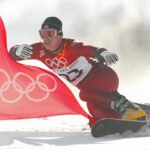
From Olympic Glory to FBI Fugitive: The Arrest of Snowboarder Ryan Wedding
The world of Olympic sports is built on narratives of triumph, dedication, and national pride. Rarely does that narrative take a sharp, dark turn into international crime and a place on the Federal Bureau of Investigation’s most wanted list. That is the stunning trajectory of former U.S. Olympic snowboarder Ryan Wedding, whose athletic legacy is now irrevocably shadowed by his alleged criminal enterprise. According to Associated Press sources, Wedding, a fugitive for years, has been apprehended, closing a dramatic chapter that reads more like a thriller than a sports biography.
A Descent from the Pinnacle: Athlete to Alleged Kingpin
Ryan Wedding was once celebrated for his athletic prowess. Competing in the 2006 Winter Olympics in Turin, he represented the pinnacle of his sport, an ambassador of speed and skill on the snow. His post-competitive life, however, veered into treacherous territory. Federal authorities allege Wedding transitioned from mastering halfpipes to orchestrating a sophisticated transnational drug trafficking operation. The U.S. Attorney’s Office accused him of being a central figure in a ring that imported large quantities of cocaine from Peru to the United States, utilizing private aircraft and complex logistics networks that spanned continents.
The stark contrast between his public and alleged private personas is jarring. Investigators paint a picture of a man who leveraged the mobility, connections, and perhaps the unassuming profile of a former athlete to build a criminal enterprise. This fall from grace underscores a troubling potential: the same drive, risk-assessment, and network-building that can propel an athlete to the Olympics can, when misdirected, fuel ventures of a far more sinister nature.
The Long Arm of the Law: Fugitive Status and Capture
Wedding’s world began to crumble as a multi-year investigation, dubbed “Operation Snow Fall” by some insiders for its ironic twist, closed in. Facing a litany of serious charges including conspiracy to distribute cocaine and money laundering, Wedding made a critical decision: he fled. His disappearance earned him a spot on the FBI’s Ten Most Wanted Fugitives list, a designation reserved for the most dangerous and elusive criminals. For years, Wedding vanished, with rumors placing him in various Latin American countries. His case grew cold, a lingering embarrassment for law enforcement and a haunting footnote in Olympic history.
The recent arrest, as reported by AP sources, marks the culmination of a relentless international manhunt. While specific details of the capture remain under wraps, it likely involved:
- Coordinated International Intelligence: Sharing of financial data, communication intercepts, and human intelligence across agencies and borders.
- Technological Surveillance: Exploiting modern digital footprints, which are nearly impossible to erase completely, even for a cautious fugitive.
- Pressure on Associates: The prosecution of other network members creating leverage and potential sources of information on Wedding’s whereabouts.
His apprehension sends a powerful message about the persistence of federal law enforcement and the shrinking world for those on the run.
Expert Analysis: The Psychology of a Fallen Star
To understand the Ryan Wedding case, one must look beyond the legal charges. Sports psychologists and criminologists point to a potential “perfect storm” of factors that can lead elite athletes astray after competition ends.
“The transition out of elite sport is one of the most psychologically challenging periods an athlete can face,” notes Dr. Elena Vargas, a specialist in athlete mental health. “You go from a structured life of intense purpose, adrenaline, and global recognition to a void. For some, the need to replicate that intensity, that high-stakes environment, can manifest in profoundly destructive ways. The thrill-seeking behavior is redirected.”
Furthermore, the networks and travel access built during an athletic career can be repurposed. A former Olympian moving across borders may attract less scrutiny than a known criminal associate. The capital earned from sport, or the celebrity status that enables fundraising, can provide seed money for illicit ventures. Wedding’s case appears to be a textbook, if extreme, example of these post-career identity and opportunity risks converging with catastrophic results.
Predictions and Implications: What Comes Next?
With Wedding in custody, the focus shifts to the courtroom and the broader repercussions. Several key developments are anticipated:
A High-Profile Prosecution: The Department of Justice will seek to present a watertight case, using Wedding’s capture as a flagship victory in its war on drug trafficking. The narrative of the “Olympian turned drug lord” will be central to their story.
Plea Deal Possibilities: Facing overwhelming evidence and the prospect of a life sentence, Wedding may seek a plea agreement. His cooperation could unravel further layers of the trafficking network he allegedly helped lead, potentially implicating other high-level players.
Reckoning for Olympic Institutions: While no sports body is responsible for an individual’s crimes, the case forces a uncomfortable conversation. It highlights the critical need for robust athlete transition programs that address mental health, career counseling, and community reintegration long after the medals are hung up. The International Olympic Committee and national governing bodies may face renewed pressure to expand these safety nets.
Legacy Permanently Altered: Ryan Wedding’s name will no longer be found solely in Olympic record books. It will forever be tethered to the FBI’s Ten Most Wanted list. His story serves as a cautionary tale of potential, privilege, and perilous redemption.
Conclusion: A Tale of Two Legacies
The arrest of Ryan Wedding closes a manhunt but opens a complex dialogue about fame, failure, and the fragile line between legend and infamy. He achieved what millions dream of—competing on the world’s grandest athletic stage. Yet, he is also accused of orchestrating a scheme that fuels addiction and devastates communities. His life now represents two indelible, conflicting legacies: one of peak human performance, the other of profound human failing.
For law enforcement, his capture is a resounding success. For the Olympic movement, it is a sobering moment of reflection. For the public, it is a stark reminder that the heroes we celebrate are human, capable of breathtaking achievement and, as this case alleges, breathtaking deceit. The final chapter of Ryan Wedding’s story will be written in a federal courtroom, where a judge and jury will weigh the evidence against the man who once carried his nation’s hopes on a snow-covered mountain.
Source: Based on news from Yahoo Sports.
Image: CC licensed via www.moody.af.mil