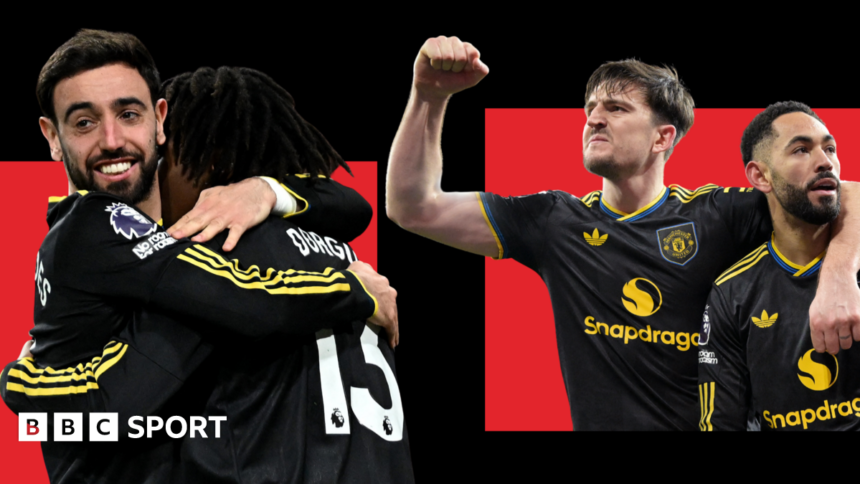
Another Unbelievable Result: The Tactical Shift Defining Manchester United’s Resurgence
Another week, another seismic, statement victory that defies the recent narrative. Manchester United’s triumph at the Emirates Stadium wasn’t just a win; it was a blueprint. For the second consecutive weekend, Erik ten Hag’s side ventured into the lair of a title contender and emerged not with a plucky, backs-against-the-wall point, but with all three. The scoreline whispers it, but the performance shouts it: something is fundamentally different about Manchester United now. This is no longer a collection of individuals hoping for moments of magic. This is a team.
From Individual Brilliance to Collective Resolve
For years, United’s successes have been punctuated by the spectacular and the individual. A moment of de Gea heroics, a piece of Bruno Fernandes genius, a burst of Cristiano Ronaldo goalscoring instinct. These were victories built on fragments. What we witnessed against Arsenal, following the pattern set against Manchester City, was a victory built on a foundation.
The key difference is stark. United’s win at the Emirates did not rely on a goalkeeper making 14 saves or a forward scoring a worldie from 30 yards. They scored two excellent, well-worked goals, but the victory was secured long before the final whistle through a unified tactical discipline and a spine that finally stood tall and firm.
This shift from fragility to fortitude is the single most important change at the club. It is the hallmark of a team that has been coached, that understands its roles, and crucially, trusts in the system and each other. Manager Erik ten Hag deserves immense credit for instilling this mentality, but the players deserve equal praise for its execution.
The Spine is Back: Big Players Turning Up in Big Games
Analyze any great team and you find a dominant spine. At the Emirates, United’s core players weren’t just present; they were authoritative, embodying the confidence now flowing through the side. This was a clinic in experienced, high-quality players performing to their known capabilities simultaneously.
- Harry Maguire: Revitalized and immense. His performance was a masterclass in defensive leadership—commanding in the air, decisive in the tackle, and simple in distribution. He looked every bit the player United invested in.
- Casemiro: The metronome and the minder. In the midfield battle, his experience was priceless. He broke up play, provided tactical fouls at the right moments, and used the ball intelligently. He is the platform that allows others to flourish.
- Bruno Fernandes: Deployed in his favoured number 10 role, he was the creative heartbeat. His work rate was matched by his vision, linking play and constantly probing the Arsenal defence. He played with a controlled fury that was devastatingly effective.
- Rasmus Højlund: While the key facts mentioned Mbeumo (a Brentford player), the principle holds for United’s striker. Højlund’s pace, relentless energy, and ability to hold the ball under pressure scared Arsenal’s backline and was pivotal in relieving pressure and launching attacks.
When these pillars perform at this level, it elevates everyone around them. The full-backs play with assurance, the wingers track back knowing the structure is solid, and the entire unit moves up the pitch with a shared belief.
The Ten Hag Effect: A System That Empowers
The most compelling evidence of change is tactical. United are no longer a reactive team, waiting to be punched before swinging back. At Arsenal, they had a clear, courageous game plan. They pressed in coordinated units, they attacked with purpose in transition, and they defended in a compact, disciplined mid-block that frustrated Arsenal’s intricate patterns.
Ten Hag’s coaching is visible in the details: the triggering of the press, the spatial awareness of the midfield, the overlapping and underlapping runs from the full-backs. This is not luck. This is design. He has found a way to meld the team’s undeniable attacking talent with a pragmatic defensive structure, something that seemed impossible just months ago.
Furthermore, his man-management is bearing fruit. Restoring Maguire’s confidence, defining Bruno’s role, and integrating the relentless energy of youngsters like Kobbie Mainoo alongside Casemiro’s wisdom—these are all calculated moves that are paying spectacular dividends. The manager has built a system that doesn’t just accommodate big players; it empowers them to be their best, together.
Looking Ahead: Sustainable Success or a Temporary High?
The inevitable question after such a euphoric fortnight is: can this last? Beating City and Arsenal in succession is a monumental feat, but the true test of a team’s character is consistency against the so-called “lesser” sides—the matches where intensity can naturally dip.
The predictions for United’s season have been radically rewritten in the space of two games. From top-four hopefuls, they have now inserted themselves into a compelling, multi-team title conversation. The key for their campaign will be:
- Injury Management: Their spine must remain fit. The drop-off in certain positions is still noticeable.
- Mid-Week Mentality: Balancing European commitments with this intense domestic pace will challenge squad depth.
- Home Fortress: Old Trafford must become a guaranteed source of points, complementing this newfound away-day steel.
If they can maintain this level of collective organization and spine performance, they are not just top-four certs; they are genuine contenders. The psychological barrier of beating their biggest rivals has been shattered, and the belief within the camp will be sky-high.
Conclusion: More Than a Moment, This is a Movement
Manchester United’s victory at Arsenal was indeed “another unbelievable result.” But the disbelief is now fading, replaced by recognition. This is not a fluke or a flash in the pan. It is the direct result of a tactical philosophy being implemented, of key players being deployed correctly and performing to their elite standards, and of a collective spirit that has been forged in the heat of battle.
The difference is systemic, psychological, and palpable. Big players are turning up because they are in a system that allows them to. The team is playing its part because every cog knows its function. What we are witnessing is the transformation of Manchester United from a club reliant on the unbelievable to a team built on the believable—a team that expects to win these games. That, more than any single result, is the most unbelievable and promising change of all.
Source: Based on news from BBC Sport.