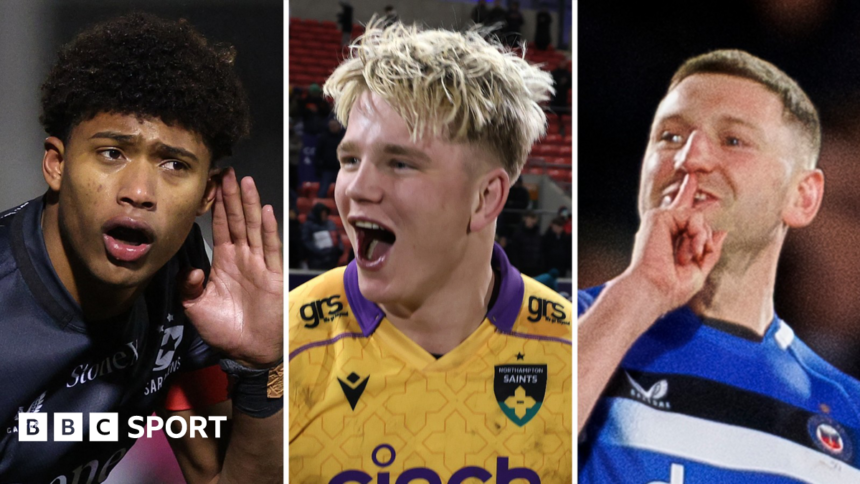
Cal-fouri, a Lesser-Spotted Law & Russell v The Shed: The Premier League’s Intriguing Subplots
The relentless churn of the Premier League season often focuses on the title race, the scramble for Europe, and the desperate fight for survival. Yet, beneath these grand narratives, the league’s true soul and future are written in smaller, more personal stories. This weekend was a masterclass in those subplots: a teenage phenom making good on his own audacious prophecy, a forgotten law of the game rearing its head in dramatic fashion, and a veteran warrior winning a battle that transcended the scoreboard. From the Emirates to the King Power and a raucous Craven Cottage, we examine the talking points that define the character of England’s top flight.
Noah Caluori: The Prodigy Who Dares to Declare His Destiny
At just 19, Noah Caluori isn’t waiting for permission. His stunning goal in Arsenal’s emphatic victory wasn’t just a moment of technical brilliance; it was a statement of intent, a line item checked off a very public list. Caluori operates differently. Noah Caluori’s goal-setting is not a private, superstitious ritual. He is methodical, vocal, and unashamedly ambitious. Last week, he laid it bare: his career-end goal is to be counted among the game’s all-time greats. His medium-term target? To be a regular England starter by next year’s World Cup.
This is more than just confidence; it’s a blueprint. In an era of media-trained clichés, Caluori’s transparency is disarming. He understands that declaring a dream applies a productive pressure, turning internal motivation into an external accountability pact with the world. His performance is the proof of concept. The goal itself—a blend of spatial awareness, deft touch, and cold-blooded finish—was that of a seasoned star, not a hopeful teenager.
Expert Analysis: Caluori’s approach disrupts the traditional British “one game at a time” modesty. Sports psychologists are increasingly advocating for this kind of overt, process-driven goal setting. By stating his aim to be an all-time great, he anchors his daily work in a legacy purpose. The World Cup starter goal is a perfect “stretch” objective: achievable, yet requiring monumental, consistent performance. The risk, of course, is the weight of expectation. But for a player of his evident skill and mental fortitude, that weight seems to be fuel.
- Public Accountability: By stating goals publicly, Caluori creates a powerful external driver for excellence.
- Process Over Outcome: His “all-time great” ambition is the vision, but his training focus will be on the incremental skills required to get there.
- World Cup Timeline: The 2026 target is specific and time-bound, lighting a fire under his club form to force Gareth Southgate’s hand.
Prediction: Caluori will earn his first senior England cap within the next 12 months. His trajectory is too steep, and his profile too compelling to ignore. The true test will be how he handles the inevitable dip in form, but his goal-oriented mindset provides the perfect framework for navigating that adversity.
The “Lesser-Spotted Law”: When Pollock’s Goal Rewrote the Script
While Caluori’s goal was about the future, Kiernan Pollock’s decisive strike for Leicester City was a moment pulled from football’s arcane rulebook. In a crowded penalty area, the ball appeared to pinball between bodies before nestling in the net. Immediate reactions pointed to luck, a fortunate ricochet. Then, the replay. A clear, deliberate glance off the defender’s shoulder. Cue the frantic referencing of Law 12.
The lesser-spotted law in question? A goal cannot be scored directly from an attacking handball, even if accidental. However, if the ball deflects off another part of the body—the shoulder being legal—immediately before going in, it stands. The officials, after a tense VAR check, got it spot-on. Pollock’s goal was legal, a triumph of correct application over assumed infringement.
Expert Analysis: This incident is a vital reminder of the game’s nuanced laws. In the age of VAR, understanding has become paramount for fans, players, and pundits alike. The “deliberate” vs. “accidental” handball debate often clouds the more specific rule about the immediate sequence of a goal. Pollock’s strike was a perfect teaching moment. It also highlights the importance of the on-field referee’s initial call; his decision to allow the goal was validated, preserving the flow and authority of the game while technology provided due diligence.
Prediction: This high-profile correct call will lead to a renewed focus from the PGMOL on educating broadcasters and the public on the finer points of Law 12. Expect more detailed graphical explanations during future matches to demystify these critical, game-changing decisions.
Russell vs. The Shed: A Veteran’s Victory in the Cauldron
Some battles are measured in more than goals. At Craven Cottage, as Fulham dismantled their opponents, the most compelling duel was between one man and an entire stand. Tom Russell, the visiting team’s captain and talisman, spent 90 minutes as the focal point for the infamous Shed End’s relentless, raucous hostility. Every touch was booed, every mistake met with roaring delight, his personal history with the club woven into a tapestry of terrace taunts.
And yet, Russell thrived. He didn’t just score a crucial, silencing goal; he orchestrated play with a veteran’s icy composure. He used the venom as a catalyst, turning the energy of the crowd back onto the pitch. His celebration—a calm, finger-to-lips gesture towards the Shed—wasn’t petulant; it was a declaration of mental victory. This was a masterclass in sporting psychology and resilience.
Expert Analysis: Russell’s performance was a case study in channeling negative external stimulus. Elite athletes often speak of “locking in” or blocking out noise, but Russell did the opposite. He acknowledged it, absorbed it, and converted it into concentrated performance. His leadership was also evident; by bearing the brunt of the hostility, he shielded his younger teammates, allowing them to play with more freedom. This is the unquantifiable value of experience—knowing how to fight a war on two fronts: against the XI in front of you, and the thousands behind the goal.
- Mental Fortitude: Russell demonstrated that the biggest stadiums are controlled from the neck up.
- Leadership by Example: He shouldered the pressure role, defining the emotional temperature for his team.
- The Shed as a Barometer: Winning at Craven Cottage, and quieting The Shed, remains one of the league’s ultimate merit badges.
Prediction: This performance cements Russell’s status as one of the league’s most indispensable leaders. Clubs with younger squads will look at his profile with envy, seeing in him the kind of character needed to navigate the psychological gauntlet of a Premier League season.
Conclusion: The League Within the League
The Premier League table gives us the cold, hard facts. But the stories of Noah Caluori, Kiernan Pollock’s law-abiding goal, and Tom Russell’s stand at Craven Cottage give us the heat, the soul, and the intrigue. They remind us that football is a parallel contest of individual will, intellectual understanding, and raw nerve. Caluori represents the fearless future, Pollock’s goal the importance of respecting the game’s intricate past, and Russell the timeless value of gritty, present-moment resolve. As the season races on, watch not just the points, but these personal journeys. For in them, you’ll find the true heartbeat of the world’s most watched league.
Source: Based on news from BBC Sport.