Sources: Bill Belichick’s Hall of Fame Enshrinement Hits Unexpected Snag
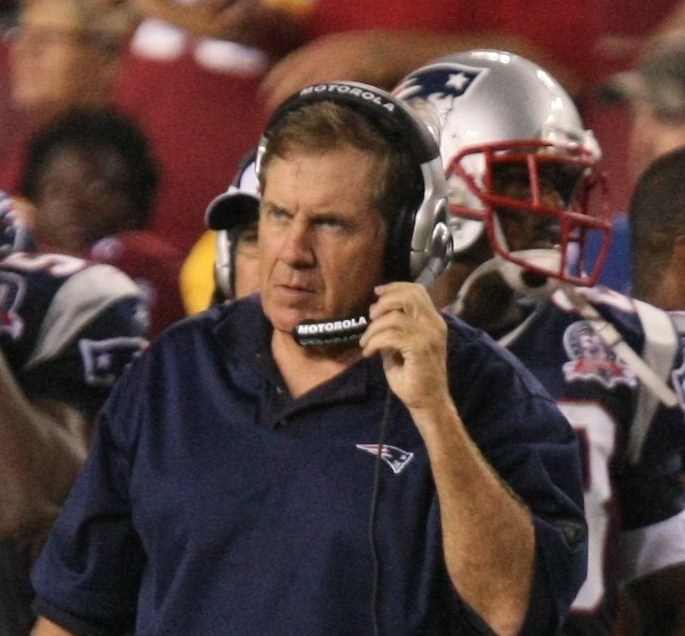
The Pro Football Hall of Fame in Canton, Ohio, is built on the bedrock of football immortality. Its busts are reserved for the game’s most transformative figures, those whose legacies are unquestioned and whose credentials are unimpeachable. For over two decades, the assumption was that the moment Bill Belichick retired, his gold jacket was a mere formality and his first-ballot induction a foregone conclusion. That assumption, according to sources speaking to ESPN, is now shockingly incorrect. The architect of the New England Patriots dynasty, an eight-time Super Bowl champion, will reportedly not be a first-ballot Hall of Famer.
A Legacy Unparalleled, Yet a Vote Divided
On pure football merit, the notion seems incomprehensible. Belichick’s resume is the stuff of fantasy: six Super Bowl titles as a head coach, two more as a defensive coordinator, a record 31 playoff victories, and a two-decade stranglehold on the AFC East. He is widely considered the greatest defensive strategist in NFL history and the most successful head coach the league has ever seen. His impact reshaped how teams are built, how games are planned, and how excellence is sustained.
Yet, the Hall of Fame selection process is not a simple tally of rings. It is a nuanced, and often secretive, debate among a 50-person selection committee. The reported snub suggests that for a contingent of voters, Belichick’s legacy is inextricably linked to the controversies that shadowed his dynasty. The Spygate and Deflategate scandals, long points of contention for rivals and pundits, appear to have found a tangible foothold in the hallowed voting room. The argument, as inferred from the sources, is that a first-ballot induction should be reserved for figures of unassailable achievement and character—a standard some voters believe Belichick’s complex story does not meet.
- Unmatched On-Field Achievement: 6x Super Bowl Champion (HC), 2x Super Bowl Champion (DC), 31 Playoff Wins, 3x AP NFL Coach of the Year.
- The Shadow of Controversy: NFL sanctions for Spygate (2007) and Deflategate (2015) created a persistent narrative of rule-bending.
- The Post-Brady Era: A losing record and lack of postseason success without Tom Brady is cited by some as a detractor.
Expert Analysis: The Precedent and the Principle
To understand this decision, one must look at Hall of Fame history. The “first-ballot” designation is an unofficial but powerful tier of honor. While many greats wait years, those enshrined on the first try—like Joe Montana, Lawrence Taylor, and Peyton Manning—are seen as transcending the sport. The committee has shown a willingness to make even the most iconic figures wait, often for reasons beyond statistics.
“This isn’t about whether Belichick belongs in the Hall—he absolutely does,” notes a veteran football historian and former committee member, speaking on background. “This is about the committee using its only leverage: timing. A ‘yes’ or ‘no’ vote is binary. But a ‘wait’ vote is a statement. It suggests that while the football accomplishments are overwhelming, there are other elements of a candidate’s career the group believes need time for fuller historical context or, in some voters’ eyes, atonement.”
The parallel often drawn is to wide receiver Terrell Owens. A statistical lock for Canton, Owens was forced to wait three years, largely due to perceptions about his conduct and impact on teams. The Belichick decision, however, is on another scale entirely. It applies this principle of delayed gratification to a figure whose coaching tree and strategic imprints are woven into the fabric of the modern NFL. The message from a segment of the committee is clear: unprecedented success does not automatically grant unanimous cultural absolution.
The Domino Effect: Predictions for a Crowded Coach’s Wing
This development sends seismic waves through future Hall of Fame classes. Belichick not being first-ballot creates an immediate logjam in the Coach/Contributor category, which typically sees only one or two inductees per year.
First, it likely paves a clearer first-ballot path for other legendary figures eligible in the coming years, most notably quarterback Tom Brady. Separating the two icons, at least in the timing of their enshrinement, now seems a certainty and allows Brady’s induction to be a singular, unshared celebration.
Second, it benefits other worthy coaches and contributors who have been waiting. Names like Mike Holmgren, Mike Shanahan, and Dick Vermeil could see their candidacies gain traction as the committee navigates a post-Belichick-but-waiting-on-Belichick landscape. Furthermore, it sets a fascinating precedent for other coaches with complex legacies. Will Sean Payton’s Bountygate suspension be a topic of debate? How will the committee weigh the off-field narratives of future candidates?
The most immediate prediction is one of resolved inevitability. Belichick will almost certainly be elected in his second or third year of eligibility. The weight of his football achievements is simply too great to deny indefinitely. But that one-year pause will become a permanent footnote to his story—a testament to the fact that his dynasty, for all its glorious wins, was never fully embraced by the entire football establishment.
A Complicated Crown: The Lasting Impact of the Decision
The reporting of this decision does more than alter Belichick’s personal timeline to Canton. It fundamentally reframes the public and historical discussion of the Patriots’ dynasty. For years, debates about Belichick’s greatness were academic, centered on his synergy with Brady. This vote makes the controversies a central, institutionalized part of his legacy, endorsed not by talking heads but by the Hall’s gatekeepers.
It also raises profound questions about the criteria for first-ballot status. Is it purely a football judgment? Or is the Hall of Fame, consciously or not, in the business of moral or ethical arbitration? By acknowledging that off-field “character” considerations can delay the sport’s most accomplished coach, the committee has blurred that line forever.
In the end, Bill Belichick’s bust will one day stare out from the halls in Canton. The cold, bronze features will capture his grim determination. But the story of that bust will now always include the year it arrived. The delay, however brief, ensures that his legacy will be debated not in terms of if he changed football, but how he changed it—the ruthless brilliance, the shadow of scandal, and the undeniable, complicated truth that he was both the greatest winner the game has ever known and, in the eyes of enough voters to matter, not quite worthy of its most immediate honor.
Source: Based on news from ESPN.
Image: CC licensed via commons.wikimedia.org