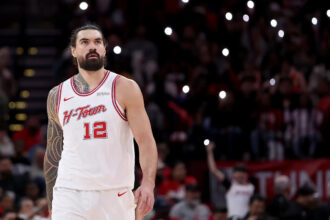
Houston Rockets’ Rebounding Anchor Lost: Steven Adams Out for Season After Ankle Surgery
The Houston Rockets’ physical identity, meticulously built over the past two seasons, has suffered a massive blow. Veteran center Steven Adams, the bruising heart of the team’s league-leading rebounding effort, has undergone season-ending surgery on his left ankle, as reported by ESPN. The procedure, confirmed Wednesday, closes the book on Adams’ 2024-25 campaign and forces a dramatic recalibration for a Rockets team with playoff aspirations.
A Devastating Blow to Houston’s Physical Identity
The injury occurred on January 18th in a home victory over the New Orleans Pelicans, a seemingly innocuous moment that has now reshaped Houston’s season. Initially diagnosed as a severe Grade 3 ankle sprain by Head Coach Ime Udoka, the decision to proceed with surgery indicates the damage was more complex than initially hoped. Adams, 32, had been a foundational piece, averaging 5.8 points and 8.6 rebounds in just 22.8 minutes per game. His impact, however, transcended the box score.
Adams’ role was singular and irreplaceable: impose will. His bone-jarring screens, relentless offensive rebounding, and sheer physical presence created space and opportunities for Houston’s young core of Jalen Green, Amen Thompson, and Jabari Smith Jr. The Rockets didn’t just lead the NBA in rebounding; they dominated the glass with an average of 49 rebounds per game, a direct testament to Adams’ gravitational pull in the paint. His absence leaves a void not easily filled by statistics alone.
Expert Analysis: What the Rockets Lose Beyond the Stats
From a tactical standpoint, Adams’ season-ending surgery strips the Rockets of their primary enforcer. His skill set is a rarity in the modern NBA—a player whose value peaks in the trenches. “Steven Adams is the ultimate force multiplier,” says a Western Conference scout. “He doesn’t need plays called for him to affect winning. His screening is elite, creating open looks for shooters and driving lanes for playmakers. Defensively, he’s a one-man rebounding clinic, often occupying two opponents and allowing his teammates to clean up.”
The immediate on-court ramifications are stark:
- Rebounding Regression: Houston’s hold on the top rebounding spot is now severely threatened. While Alperen Şengün is a brilliant offensive talent, the duo of Adams and Şengün, or Adams as the sole anchor with small-ball units, provided relentless board coverage.
- Defensive Physicality: Adams was Houston’s best option against the conference’s bruising bigs like Nikola Jokić, Anthony Davis, and Domantas Sabonis. His ability to absorb contact and hold ground was a strategic luxury now gone.
- Offensive Flow: The “Steven Adams Screen” is an offensive set in itself. His absence may lead to more stagnant half-court offense, putting additional creation pressure on Green and Fred VanVleet.
Navigating the Void: Internal Options and Roster Implications
Coach Ime Udoka now faces his greatest rotational challenge of the season. The primary burden will fall on third-year big man Alperen Şengün, who will see increased minutes and must now balance his creative offensive role with heightened rebounding and defensive responsibilities. Jock Landale, who brings energy and a solid screen game, is the most direct stylistic replacement and will see a significant uptick in playing time.
However, the Rockets may also be forced to experiment with smaller, more versatile lineups. This could mean extended minutes for Jabari Smith Jr. at the five, leveraging his shooting to spread the floor, though it comes at the cost of interior bulk. The development of rookie forward/center Cam Whitmore could also be accelerated in certain matchups. The front office, led by General Manager Rafael Stone, will undoubtedly scour the buyout market, but finding a player who replicates even 70% of Adams’ unique skill set is a near-impossible task.
Financially, the news is a sobering reminder of the risk in investing in veteran big men. Adams signed a three-year, $39 million fully guaranteed extension just last June. This surgery places the second year of that deal in question, depending on his rehabilitation timeline. His health moving forward becomes a critical long-term variable for the franchise’s cap sheet and roster construction.
Season Outlook and Predictions: Can the Rockets Adapt?
Prior to the injury, the Rockets were establishing themselves as a tough, playoff-caliber team in the deep Western Conference. Adams was the cornerstone of that identity. His loss doesn’t just remove a player; it removes a style of play. The path to the postseason becomes markedly steeper.
Prediction: The Rockets will remain competitive, but their ceiling has been lowered. They will likely fall from the top of the rebounding rankings, and their defense will be more vulnerable against teams with size. The playoff race in the West is a gauntlet, and Houston’s margin for error has evaporated. Their success now hinges on two factors: a leap in consistency from Jalen Green as a primary scorer, and Şengün evolving into a two-way anchor capable of carrying a heavier load. A play-in tournament berth remains a realistic goal, but a guaranteed top-six seed now seems out of reach without their physical linchpin.
A Conclusion Forged in Adversity
The season-ending surgery for Steven Adams is a brutal twist in Houston’s promising season narrative. It is a test of resilience for a young team learning how to win. Adams brought a blue-collar ethos that perfectly complemented the team’s youthful exuberance. His journey back to the court will be a long one, but his influence in the locker room and on the team’s culture will be needed now more than ever.
For the 2024-25 Houston Rockets, the mission is clear but profoundly more difficult: find a new way to grind. They must collectively replace the screens, the rebounds, and the sheer intimidation factor that number 4 brought every night. How they respond to this adversity will define not only this season but the character of this burgeoning team for years to come. The Rockets’ playoff hopes aren’t dead, but they must now fight for them without their strongest soldier.
Source: Based on news from Deadspin.
Image: CC licensed via commons.wikimedia.org