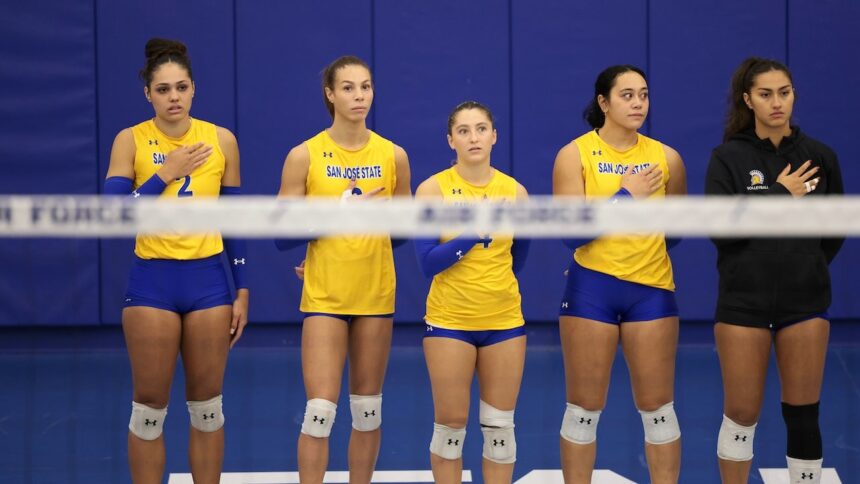
SJSU Found in Violation of Title IX Over Transgender Athlete Case, Sparking National Debate on Sports and Student Welfare
The intersection of transgender rights, women’s sports, and student mental health has ignited a fierce national debate, and a new ruling has poured fuel on the fire. The U.S. Department of Education’s Office for Civil Rights (OCR) has announced that San Jose State University violated Title IX in its handling of a transgender athlete on its women’s volleyball team. The finding comes alongside harrowing personal testimony from a former team co-captain, Brooke Slusser, who claims the ensuing controversy triggered a severe personal health crisis. This case is no longer a theoretical policy discussion; it is a deeply human story with a federal compliance ruling at its core, setting a significant precedent for colleges nationwide.
The Federal Finding and the University’s Response
On Wednesday, the OCR concluded its investigation into SJSU, a member of the California State University system. The probe determined the university failed to comply with Title IX, the federal law prohibiting sex-based discrimination in federally funded education programs. The violation specifically pertained to the participation of a transgender athlete on the women’s volleyball team in past seasons.
In a carefully worded statement, SJSU acknowledged the federal notification. “The University is in the process of reviewing the Department’s findings and proposed resolution agreement,” officials stated. They reiterated a commitment to “providing a safe, respectful, and inclusive educational environment for all students while complying with applicable laws and regulations.” This dual promise—to both inclusivity and compliance—highlights the tightrope institutions must now walk. The “proposed resolution agreement” will likely mandate specific policy changes, training, and possibly corrective measures, the details of which will be closely scrutinized as a model for other schools.
A Player’s Perspective: Brooke Slusser’s Personal Ordeal
While the federal finding addresses legal compliance, the human impact is captured in the account of Brooke Slusser, a former co-captain of the SJSU volleyball team. In an interview with Fox News Digital, Slusser revealed that the national firestorm surrounding her transgender teammate had devastating personal consequences.
Slusser describes developing severe anorexia and crippling sleep issues during the period of intense media and public scrutiny. She directly attributes these health crises to the stress and polarization of the controversy. “This wasn’t just about sports for us; it was our daily reality, our locker room, our team dynamic being dissected on a national stage,” a sentiment she expressed, framing the issue as one of student welfare beyond the playing court. Her story introduces a critical, often overlooked dimension to the debate: the psychological toll on all athletes caught in the crossfire of a raging culture war.
- Mental Health Toll: Slusser’s experience underscores the potential for severe mental health impacts on student-athletes in high-pressure, controversial situations.
- Team Dynamics: Her account suggests the controversy fundamentally altered team cohesion and the supportive environment crucial to collegiate athletics.
- Beyond Policy: This highlights that the consequences of such cases extend far beyond legal statutes into the realm of student care and duty of oversight.
Expert Analysis: The Legal and Ethical Quagmire
Sports law and Title IX experts see the SJSU ruling as a landmark moment. “The OCR’s action signals a clear intent to enforce Title IX in the context of transgender participation, but it also reveals the immense complexity institutions face,” notes Dr. Elena Rodriguez, a professor of sports law and ethics. “They are balancing federal non-discrimination mandates, potential competitive fairness concerns under Title IX’s original spirit, and now, as we see in Slusser’s case, a profound duty of care to the mental and physical health of all their student-athletes.”
The legal landscape is itself in flux. While the Biden administration has proposed rules broadly affirming that blanket bans on transgender athletes violate Title IX, these rules also allow for restrictions in certain competitive contexts. The SJSU case appears to fall under the administration’s interpretation of non-discrimination. However, numerous states have passed laws restricting transgender women and girls from participating in women’s sports, creating a direct conflict with federal guidance that will inevitably be decided by the courts.
From an ethical standpoint, the case presents a stark dilemma. How does an institution affirm the identity and inclusion of one student without, as alleged by Slusser, creating an environment detrimental to the well-being of others? There are no easy answers, and the SJSU saga illustrates how policy decisions made at an administrative level have deeply personal, sometimes traumatic, repercussions in the lives of young adults.
Predictions and Ramifications for Collegiate Athletics
The fallout from the SJSU case will ripple across the NCAA and all collegiate athletic conferences. We can anticipate several key developments:
- Policy Overhauls: Universities nationwide will urgently review their own transgender athlete participation policies to ensure alignment with the OCR’s interpretation of Title IX, as demonstrated in this ruling.
- Increased Scrutiny: The OCR will likely face pressure to investigate similar complaints at other institutions, making this a test case. Both advocacy groups and critics of transgender inclusion in women’s sports will use the finding to bolster their arguments.
- Mental Health Protocols: Athletic departments may be forced to develop new, robust mental health support systems specifically designed to help teams navigate the unique pressures of high-profile, identity-related controversies.
- Recruitment and Team Culture: This public saga could influence recruitment, as potential athletes and their families weigh the possibility of being thrust into similar controversies. Coaches will need unprecedented training in managing divided locker rooms.
Ultimately, the path forward is fraught. The core tension between inclusion, fairness, and student welfare remains unresolved at a national level. The SJSU ruling is a compliance order, not a philosophical solution. It mandates how schools must act under current federal interpretation but does not soothe the raw human tensions at the heart of the issue.
Conclusion: A Precedent of Pain and Policy
The San Jose State University Title IX violation is more than a bureaucratic finding; it is a story of conflicting rights, profound personal suffering, and institutional failure. The federal government has drawn a line on compliance, but the university, and indeed the nation, is left to grapple with the messy aftermath. Brooke Slusser’s account of anorexia and anguish serves as a sobering reminder that behind the headlines about policies and pronouns are real students bearing the brunt of a national conflict.
As SJSU reviews its resolution agreement, the entire landscape of collegiate athletics watches and waits. The challenge for SJSU and every university will be to craft policies that do not merely check legal boxes but actively foster an environment where all student-athletes—transgender and cisgender alike—can compete, learn, and thrive without sacrificing their mental or physical health. The true test of Title IX compliance in this new era will be measured not just in court documents, but in the well-being of the students it was originally designed to protect.
Source: Based on news from Fox Sports.