Beyond Spygate: Inside a Hall of Fame Voter’s Contrarian Stance on Bill Belichick
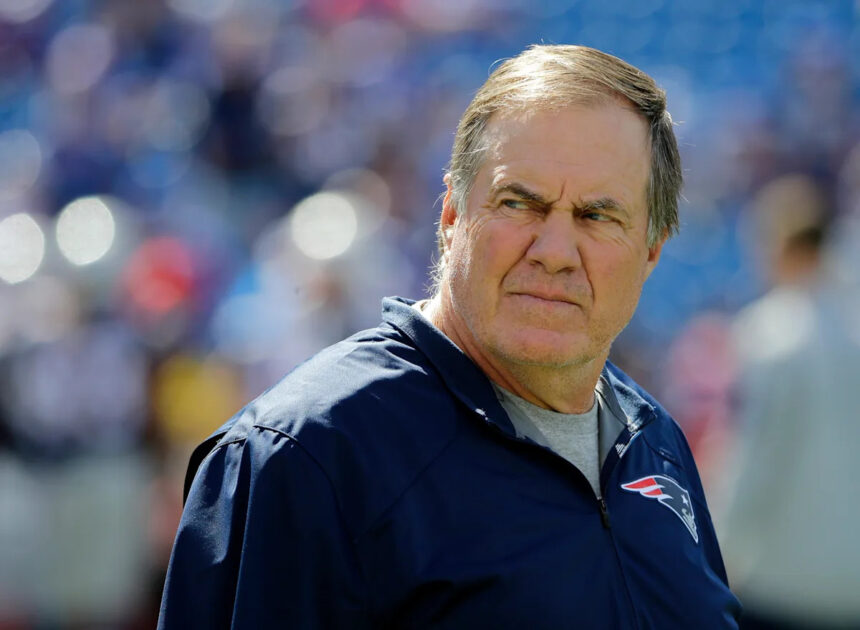
The news sent shockwaves through the football world: Bill Belichick, architect of the New England Patriots dynasty and winner of a record six Super Bowls as a head coach, was not a first-ballot Pro Football Hall of Famer. While many immediately pointed to the shadow of Spygate and Deflategate as the likely culprits, the first voter to publicly explain his decision revealed a far more nuanced, and perhaps more controversial, rationale. It wasn’t about scandal. It was about principle, precedent, and a unique interpretation of the Hall’s highest honor.
The Unlikely Dissent: A Voter’s Philosophical Stand
In the wake of the surprising result, Vahe Gregorian, a respected columnist for the Kansas City Star and the Hall of Fame voter representing the Kansas City Chiefs, stepped forward. His column was not a hit piece. In fact, he began with a powerful concession: he believes Bill Belichick belongs in the Hall of Fame. This admission made his subsequent reasoning all the more compelling. Gregorian’s vote was not a rejection of Belichick’s resume, but a deliberate act rooted in the first-ballot standard he personally upholds.
For Gregorian, a first-ballot induction is not merely a chronological event; it is a separate, rarefied tier of immortality. It is reserved, in his view, for those whose candidacy is “transcendent and unequivocal,” beyond any whisper of debate about their standing relative to peers. While Belichick’s achievements are monumental, Gregorian pointed to the existence of other all-time great coaches—like Don Shula, Chuck Noll, and Bill Walsh—and the debates that swirl around their respective places in history. His stance suggests that for a coach to be first-ballot in his eyes, they must not only be the greatest but exist in a consensus sphere of their own, untouched by comparative “yeah, but…” conversations.
Deconstructing the “Unanimous” Expectation
Gregorian’s explanation shatters the common fan assumption that a figure of Belichick’s stature should be a unanimous selection. The Hall of Fame process, by design, is deliberative and often contentious. The fact that at least 11 of 50 voters withheld their votes indicates a diversity of opinion that goes far beyond petty grudges or scandal-based grievances. These voters are seasoned journalists and historians tasked with a solemn duty, and their debates often hinge on philosophical distinctions invisible to the public.
This incident reveals several key facets of the selection process:
- Individual Interpretation: Each voter applies their own criteria for what constitutes a “first-ballot” legend, leading to legitimate, if surprising, outcomes.
- Historical Context: Voters constantly weigh candidates against the entire tapestry of the sport’s history, a complex and subjective exercise.
- The Power of Debate: The closed-door room is meant for discussion, and a runaway, uncontested candidacy is rare, even for the most accomplished.
By framing his decision around Belichick’s standing among the pantheon of coaches rather than his win-loss record, Gregorian elevated the discussion from tabloid fodder to a legitimate historical debate.
The Ripple Effect: What This Means for Belichick and the Hall
The immediate consequence is merely a one-year delay. Bill Belichick will almost certainly be enshrined in Canton in 2025. However, Gregorian’s public rationale sets powerful precedents and raises intriguing questions for the future.
For Belichick: This episode oddly burnishes his legacy in a new way. It moves the post-career narrative away from scandal and toward a pure evaluation of his historical standing among the Shulas and Lombardis. The debate is now about his seat at the Mount Rushmore of coaches, not about videotaping signals. It frames his eventual induction as part of a grand, scholarly conversation about coaching greatness.
For the Hall of Fame: It exposes the often-opaque voting process to healthy scrutiny. It demonstrates that voters take their roles seriously enough to make difficult, conscience-driven calls, even when they are wildly unpopular. Furthermore, it establishes a fascinating benchmark. If Belichick, with six Super Bowls, isn’t a unanimous first-ballot choice for some, who could be? This raises the bar astronomically for future legends like Tom Brady or Peyton Manning, suggesting that even they might face similar philosophical holds.
Looking Ahead: A New Paradigm for “First-Ballot”
Vahe Gregorian’s vote is a landmark moment in Hall of Fame discourse. It signals that for a segment of the electorate, the “first-ballot” tag is a distinct honor, not an automatic courtesy bestowed upon statistical kings. This philosophy may increasingly be applied to other positions, particularly quarterbacks and coaches, where debates about era, supporting cast, and style of play are richest.
We can predict several outcomes from this:
- Increased Transparency: More voters may feel compelled to explain nuanced votes, improving public understanding of the process.
- Sharpened Debates: Future candidates with complex legacies (both on and off-field) will face even more rigorous first-ballot scrutiny.
- Enhanced Stature: When Belichick does get inducted, the ceremony will carry the weight of this deliberative journey, perhaps making the honor feel even more earned through comprehensive validation.
Ultimately, the quest for unanimous, effortless induction may be a fool’s errand in a room designed for debate. What Gregorian’s column teaches us is that the Pro Football Hall of Fame’s greatest strength is also its most frustrating feature: it is a human institution, stewarded by individuals who bring their own definitions of eternity to the table. Bill Belichick’s delayed enshrinement isn’t a stain on his legacy; it’s proof that his legacy is so colossal, it requires the full measure of time and debate to properly place it in history.
Source: Based on news from Yahoo Sports.