Bill Belichick Fires Two UNC Assistant Coaches: A Calculated Move or a Sign of Instability?
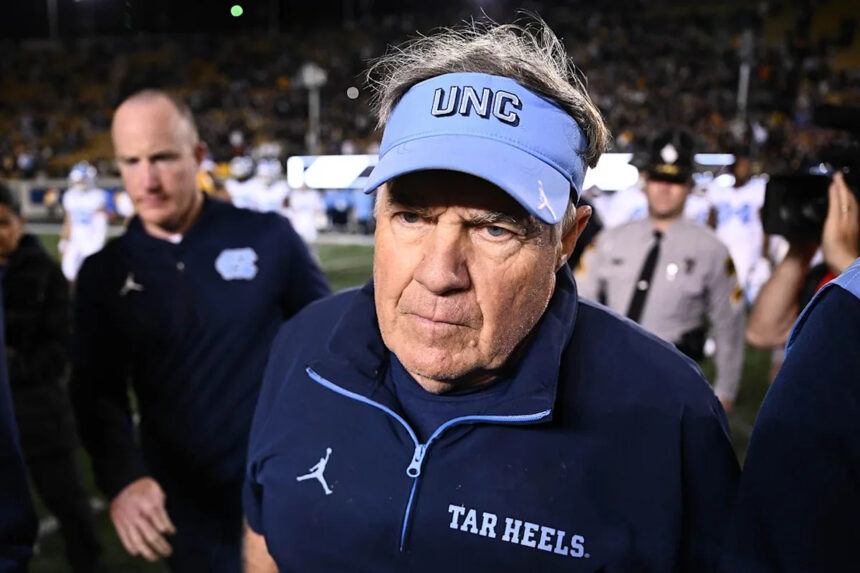
The legend arrived in Chapel Hill with the weight of six Super Bowl rings and an aura of invincibility. But the college football landscape, as Bill Belichick is swiftly learning, operates by a different set of rules. In the wake of a dismal 4-8 debut season leading the North Carolina Tar Heels, the most successful NFL coach of the 21st century has made his first decisive, public move. As ESPN reported on December 12, offensive coordinator Freddie Kitchens and special teams coordinator Mike Priefer have been relieved of their duties. The firings send a stark message: the standard in Carolina is changing. But as Belichick holds the axe, one unavoidable question now hangs over the entire program: Is Bill Belichick’s job safe, or is he merely rearranging the deck chairs on a ship he might not captain for long?
A Disappointing Debut and the First Fallout
Expectations for Belichick’s first foray into college football since the 1970s were a complex mix of sky-high optimism and pragmatic curiosity. The result was a season that can only be described as a profound disappointment. The Tar Heels’ 4-8 record was marked by inconsistent offense, shocking special teams lapses, and a failure to close out close games—hallmarks of a team lacking the precise, disciplined identity Belichick’s teams are famous for.
In a statement, Belichick struck his trademark tone of curt professionalism, thanking Kitchens and Priefer for their “commitment and many contributions.” However, the action spoke louder than any prepared remark. Letting go of Kitchens, a trusted former NFL colleague, and Priefer, a seasoned special teams veteran, is a clear admission that Year One was a systemic failure, not just a talent deficit. The Tar Heels won four games and lost eight, and in Belichick’s world, that accountability starts with the coaching staff he assembled.
- Offensive Struggles: Under Kitchens, the offense often looked stagnant and predictable, failing to consistently leverage the athletic talent on the roster.
- Special Teams Woes: Priefer’s units were a liability, with critical missed kicks and coverage breakdowns directly contributing to losses.
- Cultural Mismatch: The NFL-style, no-nonsense approach appeared to clash with the rhythms of recruiting and managing collegiate athletes.
Expert Analysis: The Belichick Method Under a Microscope
From a strategic standpoint, these firings are pure, unadulterated Belichick. In New England, he was notorious for making hard, unsentimental decisions on personnel—players and coaches alike—to maintain a competitive edge. He is applying the same ruthless calculus in Chapel Hill. By moving quickly, he accomplishes several goals:
He reasserts control. After a losing season, narrative control is vital. This move signals to a restless fanbase and a skeptical media that he is not content and change is imminent.
He creates a buffer. By holding his assistants accountable, Belichick temporarily shifts the spotlight and the pressure away from his own seat. The message becomes about fixing problems, not yet about the problem-solver himself.
He tests the university’s resolve. This is the most critical layer. Belichick is, in essence, forcing UNC’s administration to double down on his project. Firing his chosen aides requires him to hire new ones, creating deeper investment and making a potential future separation more complicated and costly for the school.
However, the college game differs profoundly. “In the NFL, Belichick’s authority was absolute,” notes a veteran ACC analyst. “At UNC, he has to answer to an athletic director, boosters, and a recruiting board that requires a more diplomatic touch. Firing respected coaches can spook potential replacements and make recruits wary of instability. This isn’t Foxboro; it’s a different ecosystem.”
Predictions: What’s Next for UNC Football?
The path forward for the Tar Heels is now fraught with both opportunity and peril. Belichick’s next hires will be the most telling indicator of the program’s trajectory and his own security.
Scenario 1: The Home Run Hires. Belichick attracts innovative, respected coordinators with strong recruiting ties to the Southeast. The new blood ignites the offense, solidifies special teams, and the Tar Heels show dramatic improvement in 2025, finishing with a winning record and a bowl berth. In this scenario, Belichick’s job security solidifies, and the narrative flips to “the genius adjusts.”
Scenario 2: The Retread Cycle. Belichick dips back into his pool of aging NFL contacts, bringing in names with professional pedigree but little college recruiting experience. The on-field product shows minor improvement, but recruiting rankings stagnate or fall. A 5-7 or 6-6 season in 2025 would leave the program in purgatory and place Belichick squarely on the hot seat, with boosters questioning the long-term viability of the experiment.
Scenario 3: The Early Exit. If the 2025 season begins with similar struggles and empty seats in Kenan Stadium, the pressure from donors and the administration could become untenable. The school may decide to cut its losses on a massive contract, concluding that the Belichick era, however historic, was a costly misalignment.
Conclusion: A Safe Seat for Now, But the Clock is Ticking
So, is Bill Belichick’s job safe? The short answer is yes—for now. The financial and reputational capital invested in his hiring grants him at least another season, likely two, to prove this can work. Firing a legend after one season is a public relations nightmare no university wants. These assistant coach firings are a classic Belichickian tactic to buy time and demonstrate proactive leadership.
But the longer answer is that his safety is entirely conditional. The firings of Freddie Kitchens and Mike Priefer are not the end of a story; they are the violent preamble to the most critical chapter of Belichick’s late career. He has successfully identified the first set of problems. His legacy at UNC will be defined by what he builds in their place.
The disappointing season is now officially in the rearview. The message from the head coach is clear: accountability has been served. The pressure, however, has not been relieved; it has merely been redistributed. All of it now lands back on the hoodie itself. In Chapel Hill, the greatest NFL coach of all time isn’t just fighting for a winning record. He’s fighting to prove that his legendary method can translate, and that this grand experiment wasn’t a mistake. The 2025 season can’t start soon enough.
Source: Based on news from Yahoo Sports.