Senegal Boss Pape Thiaw Handed Major Ban After Afcon Final Chaos
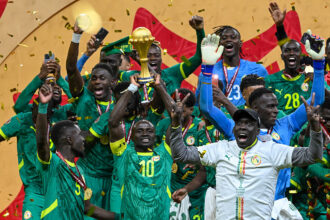
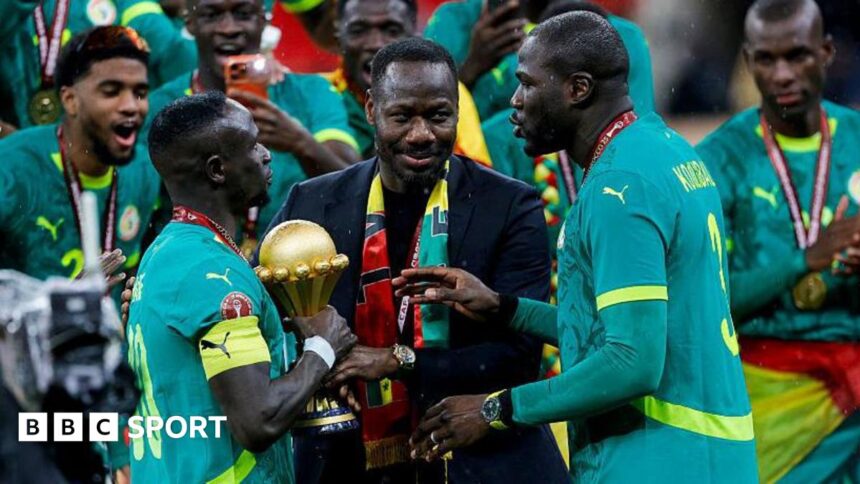
The intoxicating high of Senegal’s second Africa Cup of Nations title has been swiftly tempered by a sobering and severe sanction from the continent’s governing body. Head coach Pape Thiaw, the architect of the Teranga Lions’ 2025 triumph, finds himself exiled from the touchline for the majority of the team’s upcoming qualifying campaign, a stark punishment for the chaotic scenes that marred the final moments of his greatest professional achievement.
The Confederation of African Football (CAF) has banned Thiaw for five of Senegal’s six 2027 Afcon qualifiers and issued a staggering $100,000 fine. The charges: unsporting conduct and bringing the game into disrepute. This decisive action stems from Thiaw’s instruction for his players to leave the pitch in protest after a controversial stoppage-time penalty was awarded to Morocco, a move that threatened to derail the final entirely. While Senegal ultimately returned to secure a 1-0 victory, the fallout has created a significant hurdle for the reigning champions.
A Final Unraveled: The Rabat Flashpoint
To understand the weight of CAF’s decision, one must revisit the tense, fractious climax of the final in Rabat. Senegal led via Ismaila Sarr’s late header, a goal itself shrouded in controversy as Sarr nodded home moments after referee Jean-Jacques Ndala had appeared to whistle for a foul on Morocco’s Achraf Hakimi. Play continued, the goal stood, and Senegalese celebrations were cut with confusion.
That simmering injustice boiled over deep into added time. When Ndala pointed to the spot for a Moroccan penalty, interpreting a coming-together in the box as a foul, Thiaw’s composure shattered. Still incensed by the earlier non-call on Hakimi, the coach made a fateful decision. He gestured vehemently to his players, commanding them to walk off the field. For several minutes, the spectacle of a continental final descended into disarray, with Senegalese players heading toward the tunnel before being persuaded to return. Morocco’s subsequent penalty miss and the final whistle that followed did little to quell the storm.
CAF’s disciplinary committee viewed this act not as a spontaneous outburst of passion, but as a premeditated and dangerous breach of protocol. By ordering his team off, Thiaw crossed a line that football authorities are determined to defend, setting a precedent they could not afford to ignore.
Expert Analysis: The Price of Protest and CAF’s Stern Message
This sanction is among the most severe ever handed to a coach in African football history, particularly one who is a sitting champion. It sends an unequivocal message. “CAF is drawing a very clear boundary here,” says sports law analyst Dr. Amara Diouf. “The unsporting conduct charge relates to the act of refusing to continue play, but bringing the game into disrepute is the heavier accusation. It implies that Thiaw’s actions damaged the commercial integrity, global reputation, and very spirit of CAF’s flagship event. The fine and ban reflect that gravity.”
From a tactical and psychological standpoint, Thiaw’s gamble was colossal. While it may have galvanized his players in the moment by channeling a ‘us against the world’ mentality, it has now cost him dearly. The ban strategically targets Senegal’s path to the 2027 finals, ensuring the champion nation cannot be complacent. Thiaw will be a spectator for all but one qualifier, forced to rely on his assistants to execute his vision from the stands.
Key implications of the ban include:
- Severe Disruption: Thiaw cannot direct operations on matchday for 83% of the qualifying campaign.
- Tactical Handicap: In-game adjustments, substitutions, and direct touchline motivation must be delegated.
- Psychological Blow: The team must navigate the pressure of being champions and favorites without their leader present.
- Financial Penalty: The $100,000 fine is a personal and symbolic burden, underscoring the ruling’s severity.
Navigating the Qualifying Wilderness: Senegal’s Path Without Thiaw
Senegal’s Football Federation now faces a critical period of adaptation. The core question is how a team built in Thiaw’s intense, passionate image will function without its figurehead on the sideline. The responsibility will likely fall to a trusted assistant, who must manage games with the weight of expectation but without the ultimate authority.
This scenario tests the squad’s maturity and leadership core. Players like Kalidou Koulibaly, now potentially in a twilight leadership role, and the emerging on-field generals will need to become even more vocal and tactically aware. The team’s style, often characterized by high emotion and physicality, may need to be tempered with cooler heads to avoid further disciplinary pitfalls.
Furthermore, the first qualifiers will be played under a microscope. Opponents will sense vulnerability, and referees will be acutely aware of Senegal’s recent history. Avoiding any perception of collective dissent or protest will be paramount. The federation must work closely with CAF to ensure a clear line of communication for Thiaw’s remote involvement, within the strict limits of the ban.
Predictions and Lasting Repercussions
While Senegal possesses the talent to top their qualifying group even with a diminished bench presence, the journey will be far rockier. Predictions hinge on two factors:
- Initial Stumble Potential: Early matches could see dropped points as the new sideline dynamic settles. The absence of Thiaw’s in-game management in tight contests is a tangible disadvantage.
- Ultimate Qualification: The sheer quality of the Senegalese squad should still see them through to the 2027 Afcon. However, they may not cruise as imperiously as expected, and the process will be a mental marathon.
The broader repercussion is for coaches across Africa. Thiaw’s ban is a landmark case that will be cited for years. It establishes that unsporting conduct that threatens the completion of a match, especially a final, will be met with career-altering penalties. Coaches will now think twice, or three times, before considering a walk-off as a tactical or protest tool, no matter the perceived injustice.
Conclusion: A Pyrrhic Victory and a Legacy Redefined
Pape Thiaw’s legacy is now irrevocably split into two chapters: the triumphant coach who led Senegal to the pinnacle of African football, and the disciplined figure who risked it all in a moment of fiery protest. His ban serves as a somber reminder that in the modern game, conduct is scrutinized as intensely as results.
For Senegal, the 2025 Afcon victory will forever have an asterisk in the history books, not for the quality of their football, but for the tumultuous manner in which it concluded. The coming qualifying campaign transforms from a victory lap into a test of resilience. How they navigate this period of enforced absence will define their character as much as any trophy. The message from CAF is clear: the integrity of the game is non-negotiable, and no individual, not even a champion coach, is above it. Thiaw’s exile has begun, and the true cost of Rabat’s chaos is only just coming due.
Source: Based on news from BBC Sport.