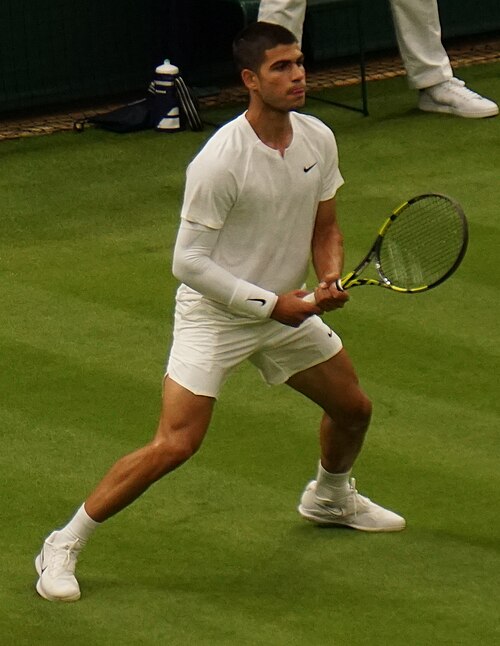
Carlos Alcaraz Shatters 88-Year Record, Becomes Youngest Man to Complete Career Grand Slam
In the cathedral of Rod Laver Arena, under the searing Melbourne lights, history did not just happen—it was seized. On Sunday night, Carlos Alcaraz, with the audacity of youth and the weight of destiny on his shoulders, ended an 88-year wait. By defeating the indomitable Novak Djokovic 2-6, 6-2, 6-3, 7-5 in the Australian Open final, the 22-year-old Spaniard didn’t just win his first title at Melbourne Park. He completed the Career Grand Slam and, in doing so, rewrote the record books, becoming the youngest man in tennis history to claim all four major singles titles. The record, held by American legend Don Budge since 1938, finally has a new, electrifying owner.
The Night the Torch Was Forged: Anatomy of a Historic Final
The match began as a Djokovic masterclass. The 10-time champion, seeking a record-extending 25th Grand Slam, moved with serene authority, painting the lines and suffocating Alcaraz with depth to take the first set 6-2. It was a stark reminder of the Serbian’s perfect record in Australian Open finals. Yet, what unfolded next was a breathtaking display of tactical brilliance and mental resilience from the challenger.
Alcaraz, refusing to be drawn into a baseline slugfest on Djokovic’s terms, shifted gears. He began injecting more power, more shape, and crucially, more variety into his groundstrokes. His forehand, a weapon of mass construction, started finding its range. The second set saw a complete momentum shift as Alcaraz leveled the match, breaking Djokovic’s serve twice with a combination of blistering winners and intelligent court positioning.
The pivotal third set was where the match was truly won. Alcaraz broke early and defended his serve with a mix of thunderous aces and delicate drop shots—a signature Alcaraz versatility that kept the champion off-balance. As Djokovic’s unforced error count rose, Alcaraz’s confidence soared. The fourth set was a tense affair, with Djokovic fighting to force a decider, but Alcaraz held firm. Securing a crucial late break, he served out the match, collapsing to the court in a moment of pure, history-soaked euphoria.
Beyond the Numbers: The Significance of the 88-Year Record
While the scoreline tells the story of the final, the calendar tells the story of a sporting epoch. Don Budge’s record had survived the Open Era revolution, the reigns of Laver, Borg, Sampras, Federer, Nadal, and Djokovic himself. For context, when Budge set the mark in 1938:
- Tennis was an amateur sport, played primarily on grass.
- The physical and competitive demands were incomparable to today’s global, year-round tour.
- No male player since had managed to collect all four slams at a younger age, despite the games’ greatest champions having decades-long careers.
Alcaraz’s achievement condenses a career’s worth of greatness into a breathtakingly short window. His Grand Slam collection now reads:
- US Open: 2022, 2024
- Wimbledon: 2023, 2025
- French Open: 2024
- Australian Open: 2026
This isn’t just about winning; it’s about dominating on every surface—clay, grass, hard court—with a stylistic fluency that feels revolutionary. He didn’t just break Budge’s record; he announced the arrival of a complete, all-surface dominator for the modern age.
Expert Analysis: What Makes Alcaraz a Generation-Defining Talent?
Alcaraz’s success is not a fluke but the product of a unique and terrifyingly complete arsenal. Tennis analysts point to a fusion of qualities rarely seen in one player, let alone one so young.
Fearless Aggression Meets Vintage Craft: He possesses the raw power and baseline aggression of a 21st-century champion but pairs it with a throwback love for net play, drop shots, and tactical nuance. He is as comfortable blasting a 100mph forehand as he is winning a 20-shot rally end with a feathery volley.
Elite Mental Fortitude: To rebound from a one-sided first set against the greatest hard-court player in history, in his fortress, requires more than skill. It requires a champion’s psyche. Alcaraz has repeatedly shown he thrives under maximum pressure, a trait that separates the very good from the immortal.
Physical Dynamism: His speed, explosiveness, and defensive capabilities are peerless. He turns defense into offense in a single shot, often leaving opponents and audiences breathless.
In defeating Djokovic—the man who had been his idol and his obstacle—Alcaraz didn’t just win a match. He likely closed one chapter of tennis history while forcefully penning the first lines of the next.
The Future of Tennis: Predictions in the Wake of History
With this victory, the landscape of men’s tennis has been irrevocably altered. The conversation shifts from “Who can challenge the Big Three’s legacy?” to “How high can Carlos Alcaraz’s ceiling go?”
The Chase for the Grand Slam Record: At 22 with 6 Grand Slams, Alcaraz has put himself on a trajectory that invites comparisons with the all-time Slam count. While Djokovic’s 25 remains a distant peak, Alcaraz’s age and rate of accumulation suggest he will be the primary contender to challenge that number in the coming decade.
A New Rivalry for the Ages: The Djokovic-Alcaraz rivalry is now the central axis of the sport. This result proves it is a true two-way battle, with the younger star claiming victories on clay, grass, and now hard courts. Their clashes will define the next few seasons.
The Golden Slam Pursuit: With the Career Grand Slam secured, the next historic target will be the calendar-year Grand Slam—winning all four in a single season. Given his prowess on every surface, Alcaraz is perhaps the first player in years for whom that feat seems a plausible, if monumental, goal.
Conclusion: A Legacy Forged in Melbourne
Carlos Alcaraz arrived in Melbourne as a prodigy with a resume. He leaves as a legend with a legacy. By snapping Novak Djokovic’s perfect final streak at the Australian Open and dismantling an 88-year-old record, he has accomplished a feat that eluded Federer, Nadal, and Djokovic in their youth. This was more than a tournament win; it was a coronation and a paradigm shift.
He plays with a joy that captivates and a ferocity that conquers. In an era once thought impossible to follow, Carlos Alcaraz is not just following—he is leading, charging into tennis’s future with every element of the game at his command. The youngest Career Grand Slam champion in history has not just entered the pantheon; he has thrown the doors wide open for a new era of greatness, and it is only just beginning.
Source: Based on news from India Today Sport.
Image: CC licensed via commons.wikimedia.org