Williams Unveils 2026 Livery: A Bold Visual Declaration for a New Era
The world of Formula 1 is perpetually forward-looking, but every so often, a team makes a statement so visually arresting it demands the present moment’s full attention. Williams Racing, a name synonymous with heritage and a relentless pursuit of a return to glory, has done precisely that. In a reveal that has sent ripples through the F1 community, the Grove-based outfit has pulled back the covers on the livery that will adorn their challenger for the landmark 2026 season. This is not merely a new paint job; it is a meticulously crafted visual manifesto, signaling a profound shift in philosophy and ambition as the sport stands on the precipice of a revolutionary new technical era.
Decoding the Design: A Modern Tribute, A Future-Focused Vision
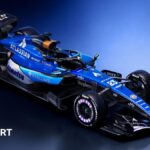
Gone are the familiar, traditional blues that have defined the team for decades. In their place is a striking, contemporary palette that balances aggression with elegance. The core of the livery is a deep, almost obsidian black, serving as a powerful canvas. Over this, Williams has applied dynamic slashes of a vibrant, electric blue and crisp white, creating a sense of speed even while the car stands still. The lines are sharper, more angular, and deliberately technical in appearance, echoing the computational fluid dynamics maps that birth these machines.
Most notably, the design makes a conscious nod to the team’s storied past. The shape and flow of the color blocks subtly evoke the iconic liveries of the 1990s championship-winning cars, particularly in the treatment around the engine cover and sidepods. This is a heritage-inspired modernization, a way of carrying the team’s DNA into the future without being shackled by it. The inclusion of the Komatsu logo as title partner is integrated seamlessly, its red accent providing a potent contrast point that avoids clashing with the primary scheme. Every element feels intentional, speaking to a cohesive design philosophy that extends beyond aerodynamics and into brand identity.
More Than Paint: The Strategic Significance of the 2026 Reveal
Revealing a livery this far in advance of the season it will race in is a strategic masterstroke. The 2026 season represents the single biggest regulatory shift in a generation, with new power unit formulas and chassis rules designed to create closer racing. By unveiling their colors now, Williams achieves several critical objectives:
- Market Dominance in the “Silly Season”: With the driver market in constant flux and technical announcements often leaked, a full livery reveal captures the media and fan cycle entirely, projecting an image of stability and forward planning.
- A Statement of Intent to Partners and Talent: This bold new look is a powerful recruitment tool. It signals to engineers, drivers, and commercial partners that Williams is not looking backward, but is building a confident, aggressive entity for the future.
- Fan Engagement and Commercial Momentum: It launches a two-year narrative. This livery will define the team’s merchandise, marketing, and digital presence leading up to 2026, building immense commercial and fan engagement momentum well before the car hits the track.
This move underscores the leadership’s understanding that modern F1 is a 365-day-a-year spectacle. The on-track product is paramount, but the off-track narrative, built through such reveals, is crucial for sustaining and growing a team’s ecosystem.
The 2026 Context: A Window of Opportunity for the Historic Team
To understand the weight of this reveal, one must appreciate the 2026 landscape. The sweeping new regulations are designed to reset the competitive order. For a team like Williams, with its proud history but recent struggles at the back of the grid, this represents the ultimate regulatory reset opportunity. The livery reveal is the first public-facing component of a vast, behind-the-scenes project that has been underway for years.
The 2026 car will be a clean-sheet design. Every assumption about aerodynamics, packaging, and power unit integration is being questioned. Williams’s early visual commitment is a proxy for their technical commitment. It tells the world that their design and engineering teams, bolstered by new investments and facilities, are fully immersed in the 2026 challenge. The livery’s technical aesthetic and confident demeanor are deliberately chosen to reflect the cutting-edge work happening in Grove and to attract the talent necessary to capitalize on the new rules.
Predictions and Implications: Can the Look Translate to Pace?
While a beautiful car does not guarantee a fast one, in Formula 1, perception often precedes reality. This livery reveal sets a new, high benchmark for Williams’s brand and raises expectations accordingly. Our analysis suggests several potential outcomes:
- Short-Term Morale and Perception Boost: Immediately, this solidify’s the team’s image as a forward-thinking operation under the leadership of James Vowles. It will energize the workforce and fanbase.
- The 2025 “Phantom” Season: The 2025 season may now feel like an extended prelude for Williams. The focus will intensely shift to 2026 development early, making next year’s results less indicative of the team’s ultimate trajectory.
- The True Test: February 2026: The ultimate judgment will come when the actual, physical 2026 car—not just its livery—rolls out for pre-season testing. The correlation between this bold visual confidence and on-stop stopwatch performance will define the next decade for the team.
The risk is clear: such a prominent and early declaration raises the stakes. Failure to be competitive in 2026 would make this bold livery a symbol of unfulfilled promise. However, the greater risk in modern F1 is irrelevance, and Williams has decisively avoided that.
Conclusion: A Line in the Asphalt
Williams’s 2026 livery reveal is far more than a simple color change. It is a line in the asphalt, a definitive demarcation between the team’s past chapters and the future it is determined to write. By marrying a respectful nod to its legendary heritage with a brutally modern and aggressive visual language, Williams has crafted an identity fit for the sport’s next era. This is a statement of ambition, a recruitment drive, and a commercial strategy all wrapped in a stunning package.
The message is unequivocal: Williams Racing is not just participating in the 2026 regulatory revolution; it intends to help lead it. The paint has been chosen, the flag has been planted. The two-year countdown to see if the machine beneath can live up to the striking promise of its shell has now dramatically begun. The F1 world will be watching, and for the first time in years, Williams has forcefully commanded its gaze not with nostalgia, but with the compelling vision of a future it aims to own.
Source: Based on news from Sky Sports.