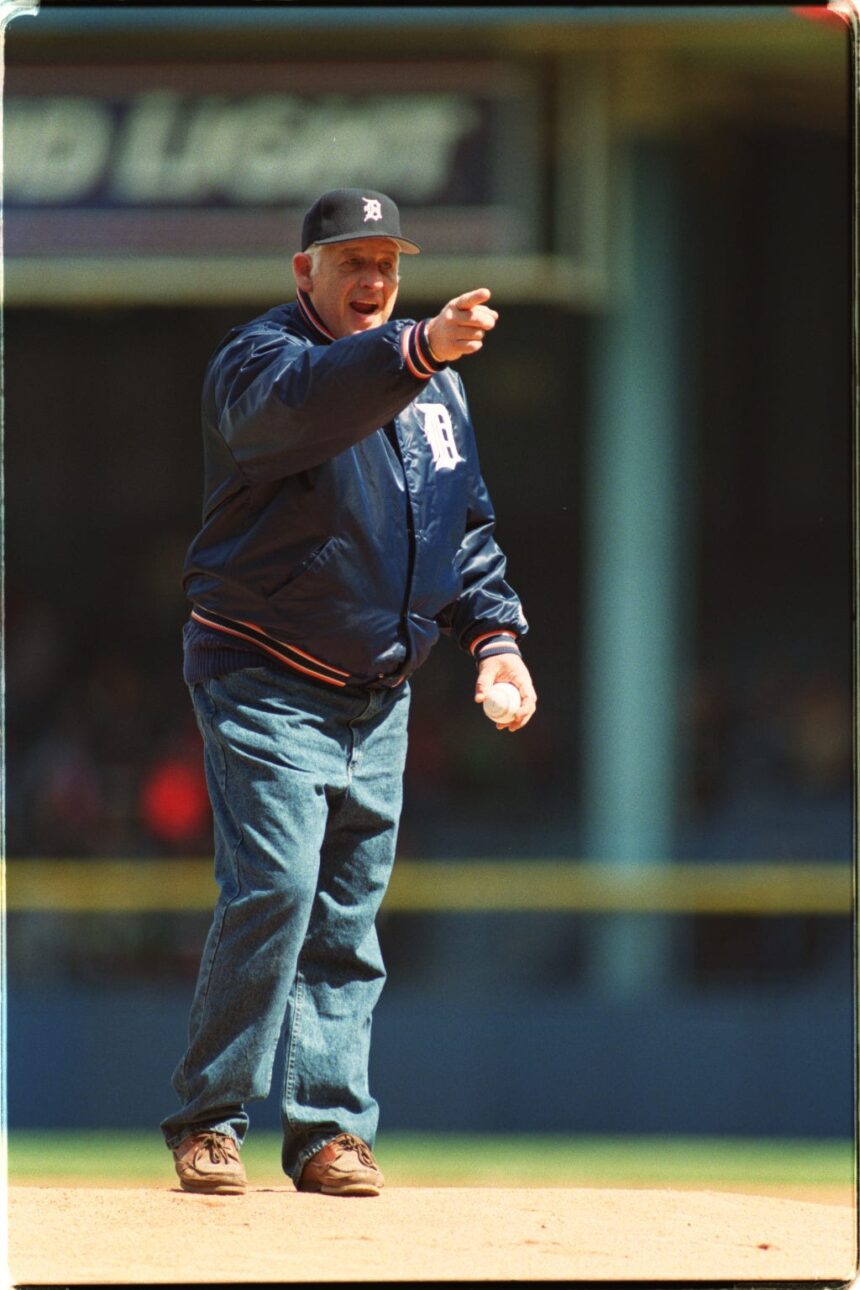
Mickey Lolich, Detroit Tigers’ 1968 World Series Titan, Dies at 85
The baseball world mourns the loss of a singular October legend. Mickey Lolich, the portly, mustachioed Detroit Tigers left-hander who authored one of the most heroic pitching performances in World Series history, has died at the age of 85. With a workhorse’s arm and a blue-collar ethos, Lolich defied the spotlight and the odds in 1968, delivering three complete-game victories to wrest the championship from the St. Louis Cardinals and cement his legacy as a Motor City immortal.
The Unlikely Hero: How Lolich Stole the 1968 World Series
Entering the 1968 Fall Classic, the narrative was laser-focused on a historic duel of right-handed aces. The St. Louis Cardinals boasted the ferocious Bob Gibson, coming off a season with a microscopic 1.12 ERA. The Tigers countered with 31-game winner Denny McLain, the American League’s MVP and Cy Young Award winner. The stage was set for a clash of titans, but it was the unheralded man in the Tigers’ rotation who would become the series’ defining figure.
After Gibson dominated Game 1 and McLain faltered in Game 2, the Tigers faced an 0-2 deficit. The burden fell to Lolich in Game 2. He responded with a complete-game, five-hit effort, striking out nine to secure Detroit’s first win. After the Tigers clawed back to even the series, Lolich took the ball again in Game 5, outdueling future Hall of Famer Steve Carlton in a tense 5-3 victory. The stage was set for a climactic Game 7 rematch against Gibson himself.
On just two days’ rest, Lolich delivered the masterpiece of his career. In a legendary pitcher’s duel, he bested Gibson, holding the Cardinals to a single run on five hits. The iconic moment came in the seventh inning when Lolich fielded a bunt and, with a no-look, behind-the-back flip, nabbed the speedy Lou Brock at third base, snuffing out a critical Cardinals rally. His third complete game in seven days secured the Tigers’ championship and earned him the World Series MVP award, a title forever etched in baseball lore.
The Blue-Collar Ace: Durability and Dominance Defined
While the 1968 World Series was his crowning achievement, Mickey Lolich’s career was a testament to relentless durability and underrated excellence. In an era when the starting pitcher’s role was sacred, Lolich was its high priest. He was a pitcher, not a thrower, mastering a sharp slider and a deceptive delivery that belied his stocky frame. He famously embraced his everyman image, calling himself “a beer drinker’s idol,” a phrase that endeared him to the working-class fans of Detroit.
His statistical footprint is that of an inner-circle workhorse. Consider these career achievements that underscore his legendary durability:
- Fifth all-time in strikeouts by a left-hander (2,832), trailing only Randy Johnson, Steve Carlton, CC Sabathia, and Clayton Kershaw.
- Struck out more batters than Hall of Fame legends Bob Feller, Warren Spahn, and Christy Mathewson.
- Won 15 or more games eight times in his 16-year career.
- Threw an astonishing 195 complete games.
- Missed only one start due to injury, a testament to his rubber arm and toughness.
For the Detroit Tigers, his records remain untouched: he is the franchise’s all-time leader in strikeouts (2,679), starts (459), and shutouts (39). His 1971 season was arguably his finest, leading the league with 308 strikeouts and 29 complete games while posting a 2.92 ERA.
Expert Analysis: Lolich’s Legacy in the Modern Game
From a historical perspective, Lolich’s career represents the end of an era and a benchmark for pitching stamina. “What Lolich did in 1968 is almost incomprehensible today,” says Dr. Evelyn Grant, a baseball historian. “To pitch three complete games in a World Series, including the clincher on short rest against Bob Gibson, is a feat of physical and mental fortitude that the modern, specialized game simply doesn’t allow for. He wasn’t just a great story; he was an elite pitcher whose workload and consistency are staggering by any measure.”
His relative absence from the Hall of Fame conversation—he peaked at 25.5% on the BBWAA ballot—is often cited as one of the institution’s oversights. When evaluated by advanced metrics like WAR (Wins Above Replacement), Lolich ranks favorably alongside many enshrined contemporaries. His case is strengthened by his peak performance when the stakes were highest, a hallmark of greatness.
“Lolich’s legacy is twofold,” notes former MLB general manager and analyst, Ben Carter. “First, he has one of the five greatest World Series pitching performances of all time. Second, he provides the ultimate counter-argument to the ‘win’ as a pitching statistic. He played for some mediocre Tigers teams post-1968 and still piled up strikeouts and innings. In today’s game, with his stuff and competitiveness, he’d be a perennial Cy Young contender.”
Predictions: How Lolich’s Passing Reshapes Historical Memory
The passing of a sports icon inevitably sharpens the focus on their legacy. In the case of Mickey Lolich, we can anticipate several shifts in how his career is remembered and celebrated.
A Renewed Push for Hall of Fame Recognition: The Veterans Committee will face increased pressure to re-examine Lolich’s candidacy. As the memory of his regular-season dominance fades for younger voters, his World Series heroism becomes an even brighter beacon. His story is a compelling one for the Era Committee to consider, emphasizing value beyond traditional win-loss records.
Solidification as a Detroit Icon: Within Michigan, Lolich will ascend even further into the pantheon of sports gods alongside figures like Al Kaline, Joe Louis, and Steve Yzerman. His narrative—the underappreciated worker who delivered when it mattered most—perfectly aligns with the city’s identity. Expect his number (29) to be a permanent fixture at Comerica Park tributes.
Educational Benchmark for Young Fans: As baseball continues to evolve, Lolich’s 1968 World Series will be used as a fundamental teaching tool. It will illustrate a bygone era of pitcher usage, the importance of situational pitching, and the timeless drama of an underdog rising to the occasion. His name will forever be linked with Gibson and McLain, completing the triumvirate of that unforgettable series.
Conclusion: A Toast to the Beer Drinker’s Idol
Mickey Lolich was an anomaly: a superstar who looked like the guy mowing his lawn next door, a pitcher whose greatest moment came when everyone was looking the other way. He didn’t just win the 1968 World Series; he personally carried it on his broad left shoulder, defying fatigue and expectation with each gritty inning. Beyond the rings and the records, he represented a connection between the game and its fans that felt authentic and unvarnished.
His passing marks the end of a chapter for the Detroit Tigers and for baseball. We are left with the statistics that speak to incredible longevity, the footage of a behind-the-back flip that defined a championship, and the enduring image of a happy warrior who loved the game, loved his team, and loved the fans who saw themselves in him. So here’s a final toast, with a cold beer, to Mickey Lolich—the everyman who was, in truth, anything but ordinary. His place in the heart of baseball history is complete, secure, and utterly unforgettable.
Source: Based on news from Yahoo Sports.