Inside Manchester City’s Blueprint: The Strategic Rebuild for Life After Pep
The mere whisper of transition at a footballing superpower is enough to send tremors through its foundations. For Manchester City, a club that has woven winning into its very fabric under Pep Guardiola, the thought of a future without the Catalan maestro is the ultimate test of long-term vision. Yet, contrary to the fear such a prospect might inspire, a quiet, confident evolution is already underway at the Etihad Stadium. The recent January transfer window, highlighted by the marquee signings of Antoine Semenyo and Marc Guehi, wasn’t just about squad reinforcement; it was a powerful statement of intent. It signaled a club not clinging to a glorious present, but proactively architecting a sustainable future, ensuring the powerbase built over a decade remains unshaken when the inevitable changing of the guard arrives.
The Guardiola Inheritance: More Than Just Trophies
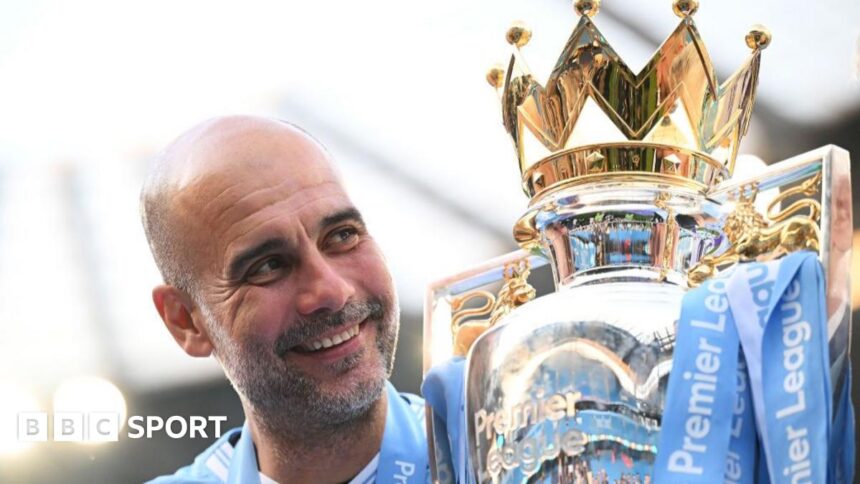
To understand City’s roadmap, one must first appreciate what Guardiola’s legacy will truly be. It extends far beyond the glittering array of Premier League titles and Champions League glory. His most profound gift will be a footballing philosophy so deeply embedded that it becomes the club’s identity. From the academy pitches to the first-team training ground, the principles of possession, positional play, and intense pressing are now the City gospel.
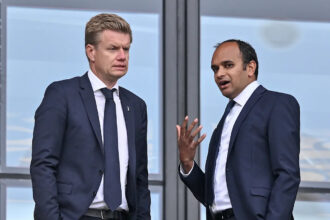
This institutionalization of a style is the first and most critical pillar of the post-Pep plan. The club’s hierarchy, led by Director of Football Txiki Begiristain, is no longer recruiting for a manager; they are recruiting for a systemic continuity. Old habits of revolving everything around one generational coach are dying hard, but City is ensuring the machine can run independently. The aim is to make the manager’s role, while still vital, more plug-and-play within a defined and successful structure.
Strategic Evolution in the Transfer Market
The January 2024 window offered a compelling case study in this new, forward-thinking approach. The acquisitions of Bournemouth’s dynamic forward Antoine Semenyo and Crystal Palace’s defensive linchpin Marc Guehi were notable not merely for the players’ quality, but for their strategic profile.
- Age Profile & Resale Value: Both signings follow a deliberate shift towards securing elite, yet young, Premier League-proven talent. This marks an evolution from signing ready-made global stars to building a core with peak years ahead and inherent market value.
- Leadership DNA: Guehi, in particular, exemplifies a search for specific character traits. A composed, vocal leader at just 23, he fits the model of a future captain, addressing squad personality needs years in advance.
- Market Dominance: Successfully securing such in-demand, English-based targets against rival interest maintains City’s aura in the market. It proves the project remains compelling beyond the allure of Guardiola himself.
This is a scouting and recruitment machine operating on a different timeline. Decisions are being made with the next cycle, and the next coach, firmly in mind. The squad is being future-proofed.
Architecting the Squad for the 2025-26 Season
If reports and contract situations are any guide, the club is working towards a pivotal summer in 2025. By then, the vision for the next era will crystallize. We can already see the contours of the squad taking shape:
The Bedrock: Players like Erling Haaland, Phil Foden, and Jérémy Doku will be entering their absolute prime, forming an irrepressible attacking core. Rodri’s influence will remain monumental. These are the assets any new manager would crave.
The New Guard: Alongside them, the Semenyos and Guehis—players acquired with this specific transition in mind—will be integrated and ready to assume greater responsibility. The academy pipeline, producing talents like Rico Lewis, ensures a constant flow of system-ready players.
The Managed Transition: This phased approach allows for the gradual phasing out of the remaining legends of the Guardiola era without the need for a traumatic, wholesale rebuild. It’s a masterclass in proactive succession planning.
The Managerial Conundrum: Who Follows the Unfollowable?
The elephant in the room remains: who could possibly sit in the dugout after Pep? The club’s strategy effectively narrows the field to a specific type of candidate. The next appointment is unlikely to be a dramatic stylistic revolutionary. Instead, look for a coach who can nurture and refine the existing model, while perhaps adding a fresh tactical nuance.
Names like Xabi Alonso, with his burgeoning reputation and deep understanding of possession-based football, or Mikel Arteta, who embodies the Guardiola philosophy, naturally fit the profile. The key is that they would inherit a squad meticulously built to play the City way, reducing the need for a difficult and lengthy adaptation period. The club is minimizing the risk for its next boss, making the job arguably the most attractive in world football.
Conclusion: A Dynasty Built to Last
Manchester City’s current activity transcends typical transfer business. It is the careful, calculated work of an organization that has studied history and seen how dynasties crumble when they become overly reliant on a single individual. The plan for life after Guardiola is not a reactive scramble for a replacement; it is the deliberate construction of an empire that can withstand the departure of its emperor.
The signings of Semenyo and Guehi are early indicators of this profound shift. They are investments in a future where winning remains the non-negotiable norm. While the Premier League watches and waits for a potential power vacuum, City’s leadership is quietly ensuring there will be none. The transition, when it comes, will be an evolution, not a revolution. The foundations at the Etihad are not just strong; they are self-sustaining, built for the next chapter of dominance. The rest of football has been warned: Manchester City’s project was never just about Pep. It was about forever.
Source: Based on news from BBC Sport.