Scotland’s Selection Shocker: Lions Trio Axed for Six Nations Opener in Rome
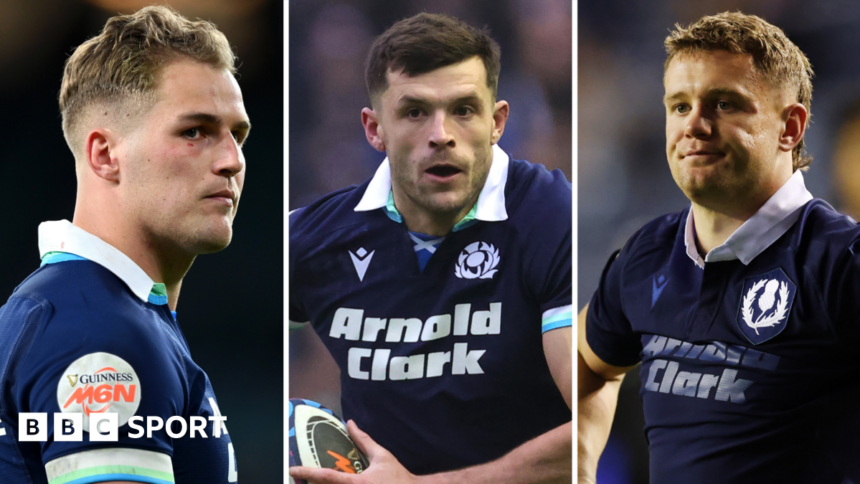
In a move that has sent seismic waves through the rugby world, Scotland head coach Gregor Townsend has delivered a selection bombshell for the Six Nations opener against Italy. The team sheet for Saturday’s clash in Rome is conspicuous for the absent names of Duhan van der Merwe, Darcy Graham, and Blair Kinghorn—three of the nation’s most potent attacking weapons and recent British and Irish Lions tourists. In a championship where fine margins decide fortunes, Townsend has boldly opted for a radical recalibration of his back three, placing trust in form and a specific tactical blueprint over established star power.
Deciphering Townsend’s Bold Gambit
To omit one marquee winger might be considered a tactical tweak. To leave out both your all-time top try-scorers, alongside your first-choice full-back, constitutes a profound statement of intent. The decision is not born from injury but from a clear, and arguably ruthless, coaching vision. Van der Merwe and Graham, with 28 and 24 international tries respectively, are game-breakers capable of moments of individual magic. Kinghorn, having cemented the 15 jersey, offers a second playmaking axis and aerial prowess. Their collective demotion signals a shift in priority.
Gregor Townsend’s chosen back three reveals his thinking:
- Kyle Steyn: The Glasgow captain offers relentless work-rate, defensive solidity, and underrated finishing. His leadership on the wing is a key asset.
- Jamie Dobie: The surprise package. The Glasgow Warrior, more familiar at scrum-half, is handed his first Six Nations start on the wing, highlighting Townsend’s desire for a footballer with a deft kicking game and playmaking skills across the backline.
- Tom Jordan: The Bristol full-back, qualified through residency, gets the nod at 15. His powerful, direct running and robust defense provide a different profile to Kinghorn’s elusive style.
This selection suggests a game plan built on territorial control, kicking pressure, and structured phase play, over the unpredictable brilliance of the omitted trio. With Finn Russell pulling the strings at fly-half, Townsend may be seeking more nuanced, multi-phase construction to break down an improved Italian defense.
Expert Analysis: Risk, Reward, and the Rome Conditions
The Stadio Olimpico in February can be a challenging environment, and this selection appears tailored for a potential arm-wrestle. “This is the biggest selection call of Townsend’s tenure,” says a former Scotland international. “He’s not just rotating; he’s fundamentally changing his side’s DNA for this one game. The message is clear: work ethic and game management trump pure X-Factor in this specific fixture.”
The inclusion of Jamie Dobie is particularly fascinating. A specialist scrum-half covering the wing indicates a “footballer first” philosophy. He can act as a secondary distributor, offer a clever grubber in behind the defense, and sweep effectively in backfield coverage—a crucial role against Italy’s tactical kickers. Meanwhile, Kyle Steyn’s defensive reliability will be vital against the elusive Ange Capuozzo.
However, the risks are palpable. Scotland have, in recent years, often relied on Van der Merwe or Graham to produce a try from nothing when the attack stutters. That safety net has been removed. The bench impact is also altered; with Darcy Graham among the replacements, his potential entry against tiring legs is a potent weapon. But the absence of Van der Merwe and Kinghorn from the 23 entirely reduces Townsend’s ability to change the game’s complexion dramatically if Plan A falters.
Predictions for the Rome Showdown
This selection will either be hailed as a masterstroke or a monumental miscalculation. Italy, under Gonzalo Quesada, will be more disciplined and structured than in previous years. They will target the new-look Scottish back three with high balls and seek to disrupt their defensive positioning.
Key battles to watch:
- Scotland’s Kick Chase: With Dobie, Jordan, and Steyn, the chase must be aggressive and coordinated to pin Italy back.
- Midfield Creativity: With less proven finishers outside, the pressure on Finn Russell, Sione Tuipulotu, and Huw Jones to create clear chances intensifies.
- Italian Response: How will Italy adjust their defense without the specific threat of Van der Merwe’s power or Graham’s stepping? They may feel emboldened to press harder.
Prediction: Scotland’s pack, with a settled and powerful front five, should provide a platform. This will be a tighter, more grinding affair than many anticipate. If Scotland dominate territory and execute their tactical plan, they can grind out a win. However, if the game becomes loose and broken, the absence of their most lethal finishers could prove costly. Expect a Scotland victory by less than 10 points, in a performance defined by control rather than flair.
Conclusion: A Defining Moment for Townsend’s Scotland
Gregor Townsend has never been a coach afraid of controversy or unconventional thinking. This selection, however, is his boldest stroke yet. It is a decision that defines his philosophy and places immense trust in a specific system over iconic individuals. The omission of Duhan van der Merwe, Darcy Graham, and Blair Kinghorn is not a dismissal of their quality, but a stark declaration that the team’s system is paramount.
Saturday in Rome is now about more than just starting the Six Nations with a win. It is a validation—or repudiation—of a coaching ideology. A convincing victory will see Townsend praised for his foresight and courage. A defeat, particularly one where chances go begging, will invite fierce scrutiny. One thing is certain: all eyes will be on that new-look back three, as Scotland embark on their championship journey not with a roar from their usual heroes, but with a calculated whisper of tactical revolution.
Source: Based on news from BBC Sport.