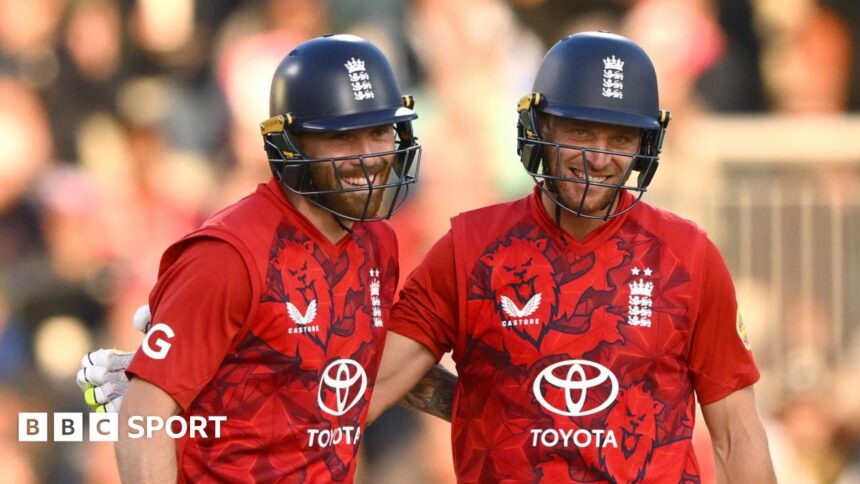
2026 T20 World Cup: The Tactical Revolution Set to Redefine Cricket
It feels like only yesterday that Virat Kohli’s tears of joy and Hardik Pandya’s final over heroics in Barbados sealed India’s long-awaited World Cup triumph. Yet, the relentless march of the cricket calendar brings us to the precipice of another global spectacle. As the 2026 T20 World Cup prepares to launch in Colombo this Saturday, a palpable sense of evolution hangs in the air. Hosted across the contrasting landscapes of India and Sri Lanka, this edition promises a festival of sixes and record-breaking totals. But beneath the expected pyrotechnics, a deeper, more cerebral game is taking shape. Drawing from the cutting-edge experiments of global franchise leagues and recent international series, we dissect the tactical trends poised to dominate cricket’s grandest T20 stage.
The Strategic Surrender: Is “Retired Out” Going Mainstream?
The most radical shift in T20 thinking revolves around the sanctity of the wicket. The “retired out” tactic, once a theoretical gambit, has been normalized in leagues like the IPL. The premise is brutally logical: in a format where every ball is a precious commodity, a batter struggling for timing is a liability, not an asset. The option to voluntarily replace a slow-scoring anchor with a fresh, power-hitting finisher is no longer taboo; it’s a legitimate strategic weapon.
We predict the 2026 World Cup will be the tournament where this moves from franchise novelty to international standard. Imagine a scenario where a top-order batter, bogged down on a tricky Colombo turner after 30 balls, simply walks off at the 15-over mark, making way for a specialist death hitter. This demands immense tactical courage and a complete cultural shift, prioritizing team runs over individual milestones. Captains and coaches who embrace this data-driven pragmatism will gain a crucial, if controversial, edge.
The Powerplay Chess Match: Aggression vs. Preservation
The first six overs will witness a fascinating clash of philosophies. The traditional approach of maximizing powerplay runs is being challenged by a more nuanced tactic: preserving wickets for the middle-over assault. Teams are realizing that losing two quick wickets in a frenetic powerplay can cripple an innings more than scoring only 45 runs.
Look for these key powerplay trends:
- Role-Specific Openers: The era of two identical openers is fading. We’ll see more partnerships pairing a pure aggressor with a stabilizer, a player adept at rotating strike and tackling match-up specific bowlers.
- Spin in the Powerplay: Especially in Sri Lankan conditions, captains won’t hesitate to introduce mystery spin or left-arm orthodox within the first four overs to disrupt right-hand heavy top orders.
- Targeted Bowling: Bowlers will employ wide lines, slow bouncers, and relentless back-of-a-length deliveries outside off to restrict the traditional arc, forcing batters to innovate riskier shots.
The Middle-Over Maelstrom: Match-Ups and 360-Degree Innovation
The period between overs 7-16 has transformed from a consolidation phase into a calculated attack zone. The driver of this change is the relentless focus on match-ups. Data analytics will dictate every move, with left-right batting combinations used mercilessly to force bowling changes and disrupt fielding plans.
Batters are now expected to be complete 360-degree players. The ramp, the scoop, the reverse-swat, and the inside-out loft over extra cover are no longer exotic shots but standard requirements. The rise of the “hybrid all-rounder” is key here—players who can bowl two overs of handy spin or pace and hit 20 off 8 balls are more valuable than a specialist who does only one job.
For bowlers, versatility is non-negotiable. The death-bowling specialist who only bowls the final two overs is a luxury. Now, every frontline bowler must have a plan for each phase, with a deep bag of variations: slower balls, wide yorkers, and pace-off deliveries aimed at the larger Asian boundaries.
The Bowling Revolution: Defending Totals in a Batter’s World
With flat pitches and short boundaries in India, and turning tracks in Sri Lanka, bowlers face a monumental task. The response has been a wave of innovation and specialization.
- The Rise of the “Niche” Bowler: Expect to see more bowlers with specific, hard-to-pick skills: left-arm wrist-spin, high-release point off-spin, or bowlers with exceptional change-of-pace disguises.
- Data-Driven Field Placements: Fielding setups will be hyper-personalized, based on a batter’s historical shot-probability maps. You’ll see unconventional fields with four players on the leg-side boundary or a straight long-on and long-off from ball one of the death overs.
- Tactical Time-Wasting & Game Management: In high-pressure moments, savvy captains will use every legal tool to break momentum—strategic conferences, deliberate field changes, and calculated DRS reviews to ice the batter. It will be gamesmanship at its most intense.
Conclusion: A Tournament of Brains and Brawn
The 2026 T20 World Cup will be a spectacle defined by its contrasts. It will showcase the raw power of modern athletes clearing gargantuan boundaries, but it will be won by the sharpest minds in the dugout. The teams that triumph will be those that fully embrace the sport’s tactical evolution: unafraid to retire a struggling star, obsessive about match-ups, and blessed with players whose skills are as flexible as their thinking. As the first ball is bowled in Colombo, we are not just witnessing another cricket tournament; we are watching the future of the sport unfold. The message is clear: in the T20 arena, standing still is the fastest way to get left behind.
Source: Based on news from BBC Sport.