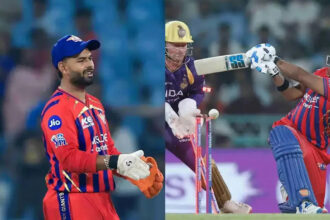
Delhi’s Roaring Fortress: Arun Jaitley Stadium Awaits the T20 World Cup 2026 Spotlight
The heart of India’s capital doesn’t just beat; it roars. And in early 2026, that roar will resonate across the cricketing globe as the historic Arun Jaitley Stadium takes center stage for the ICC Men’s T20 World Cup. This is not just another venue on the roster; it is a living, breathing chronicle of the sport, a coliseum where history and hysteria collide. While modern arenas boast sleek facades, Delhi’s iconic ground offers something far more potent: an unmatched, electric atmosphere generated by 55,000 passionate fans. As the city prepares to host six crucial matches, the world is set to witness cricket in one of its most authentic and unforgiving cauldrons.
A Tale of Two Eras: From Kotla’s Legacy to a Modern Fortress
To understand the significance of the Arun Jaitley Stadium hosting T20 World Cup 2026 matches, one must journey back to its origins. Established in 1883 as the Feroz Shah Kotla Stadium, its hallowed turf has witnessed the entire evolution of Indian cricket. From hosting its first Test in 1948 against the West Indies to being the stage for legendary feats—like Anil Kumble’s perfect 10-wicket haul against Pakistan in 1999—the ground is steeped in narrative.
In recent years, the stadium has undergone a transformative, if sometimes uneven, journey. Critics have pointed to its mixed bag of facilities, a characteristic of many historic venues adapting to the 21st century. Yet, this very juxtaposition is its charm. Nestled within the bustling heart of New Delhi, the stadium is an island of sporting frenzy amidst ancient history and modern politics. The recent renaming in honor of former DDCA president Arun Jaitley signified a new chapter, but the soul of the Kotla remains intact—a soul that comes alive through its spectators.
The Unmatchable X-Factor: The Delhi Crowd
If pitches are the canvas, the crowd is the soundtrack. And at the Arun Jaitley Stadium, the soundtrack is deafening. The key fact is undeniable: the 55,000-strong crowd has made games incredibly memorable. This is not a passive audience; it is a participatory, knowledgeable, and fiercely vocal entity.
- Intimidating Atmosphere for Visitors: Touring teams often cite Delhi as one of the most challenging venues in India. The crowd’s energy, especially under lights, can be a tangible 12th man for the Indian team, turning the stadium into a fortress.
- Passionate for All Cricket: As seen during multinational tournaments like the IPL and now earmarked for the T20 World Cup 2026, Delhiites embrace the global game with equal fervor. The support for international stars is rapturous, creating a festival-like environment.
- A Catalyst for Drama: High-pressure moments are amplified tenfold by the stadium’s roar. A momentum shift, a spectacular boundary, or a crucial wicket triggers seismic waves of noise that can unsettle the coolest of customers.
This makes every match here, from the opening fixture between Netherlands vs Namibia on February 19, a must-watch event, promising an atmosphere that will be beamed as a defining feature of the World Cup.
Pitch Report and Tactical Analysis: What to Expect in 2026
The playing conditions at Arun Jaitley Stadium have evolved. Traditionally known as a slow, low track favoring spinners, the pitch in recent years has shown more variety, often curated to produce high-scoring T20 spectacles.
Expert analysis suggests the following key tactical battlegrounds for the 2026 World Cup matches:
- Powerplay Prowess: The new ball might offer the best time for batting. Teams winning the toss may prefer to chase, considering potential dew later in the evening. Aggressive starts will be paramount.
- Middle-Phase Chess Match: The pitch traditionally slows down as the game progresses. This middle period (overs 7-15) will be a critical duel between batters looking to manipulate the field and versatile spin bowlers who can vary their pace and trajectory.
- Death Bowling Crucible: With shorter boundaries in certain areas, executing yorkers and slower balls at the death will be a high-risk, high-reward skill. Bowlers with exceptional nerve will be worth their weight in gold.
This balanced pitch character means no team can afford to be one-dimensional. Success will require adaptive game plans and deep squads.
Predictions and Players to Watch in Delhi’s Cauldron
With six matches scheduled, the Arun Jaitley Stadium will be a pivotal venue in the group stages, potentially hosting key clashes that decide qualification for the Super Eight stage. The opening match between Netherlands and Namibia sets a fascinating tone, pitting two ambitious Associate nations in a high-stakes duel where handling the occasion will be as important as skill.
Based on the conditions and atmosphere, certain player types are predicted to thrive:
- The Spin All-Rounders: Players like Shakib Al Hasan, Glenn Maxwell, or a local Indian hero like Axar Patel could be devastating, contributing with both bat and ball on a potentially gripping surface.
- The Agile Power-Hitters: Batters who can muscle the ball into the shorter boundaries and also run hard for twos on the large outfield, like a David Miller or a Suryakumar Yadav, will be invaluable.
- The Ice-Cool Finishers: In a venue where pressure is externally generated by the crowd, players with a proven pedigree in closing innings, such as a Hardik Pandya or a Marcus Stoinis, could decide tight contests.
Do not be surprised if this historic ground produces at least one iconic, match-defining individual performance that becomes a lasting memory of the tournament.
Conclusion: More Than a Stadium, It’s an Experience
The T20 World Cup 2026 is not merely coming to Delhi; it is immersing itself in a cricketing culture that is raw, real, and relentless. The Arun Jaitley Stadium, with its rich tapestry of history and its modern-day army of fervent fans, promises to be more than a backdrop. It will be an active protagonist in the World Cup story. For the players, it will be the ultimate test of nerve. For the fans in the stands, it will be a celebration of the sport in its most vibrant form. And for the millions watching worldwide, it will offer a visceral, unforgettable glimpse into why cricket in India is not just a game, but a pulsating way of life. When the first ball is bowled in February 2026, the world will hear Delhi’s roar—a sound that echoes from the Kotla of 1883 to the global spectacle of tomorrow.
Source: Based on news from India Today Sport.
Image: CC licensed via www.piqsels.com