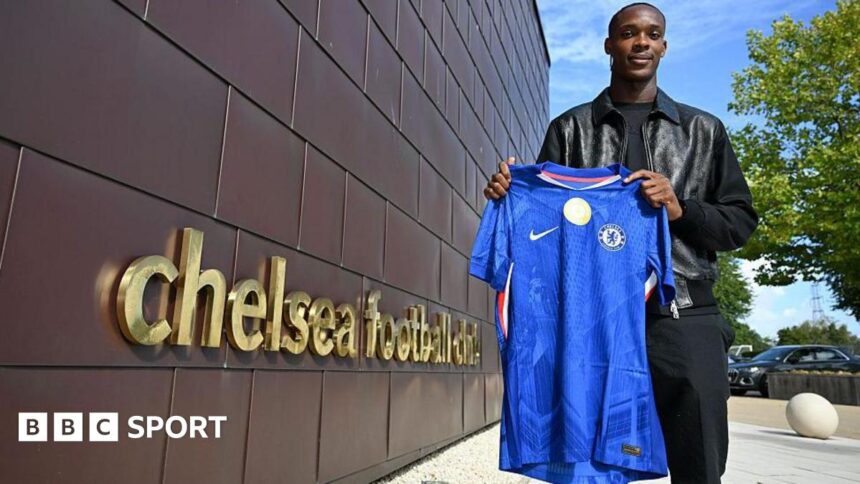
Are Chelsea-Strasbourg Transfer Deals a Threat to Football’s Competitive Soul?
The January transfer window had barely shut when the numbers began to tell a story that transcends a simple player transaction. With David Datro Fofana’s deadline-day loan to RC Strasbourg, a remarkable milestone was quietly reached: the 12th direct transfer between the French club and Chelsea FC in just over a year. This isn’t mere coincidence or savvy scouting; it’s the most visible manifestation of a new, corporate model of football club ownership. As Emmanuel Emegha prepares to become the latest Strasbourg star to make the westward journey to London at season’s end, a pressing question looms: is this intricate web of deals, facilitated by common ownership, bad for the beautiful game?
The BlueCo Blueprint: A Network, Not a Rivalry
To understand the transfer traffic, one must first examine the ownership map. In June 2023, Chelsea’s controlling entity, BlueCo, completed a takeover of Strasbourg, adding the historic Alsatian club to its portfolio. The stated vision was one of “multi-club ownership,” a model where a holding company controls several teams across different leagues. The purported benefits are clear: shared resources, streamlined scouting, and a pathway for player development. For Chelsea, Strasbourg represents a fertile testing ground. For Strasbourg, it promises access to elite talent and financial muscle.
However, the reality of the past year has felt less like symbiotic partnership and more like corporate resource allocation. The movement hasn’t been one-way, but the power dynamic is unequivocal. Chelsea has acted as the clear hub, with Strasbourg often resembling a feeder club or a proving ground. This relationship was starkly highlighted not just by player moves, but by the controversial poaching of Strasbourg’s highly-regarded head of coaching, Liam Rosenior, a move that reportedly caused significant friction within the French club’s hierarchy.
Unpacking the Impact: Competitive Integrity Under the Microscope
The sheer volume of moves—12 in one cycle—forces us to scrutinize the implications for competitive balance, a cornerstone of sport. The concerns are multifaceted and extend beyond the two clubs directly involved.
- Market Distortion: When clubs under the same ownership trade, can a transfer fee ever be considered “fair market value”? The movement of players like Angelo Gabriel (Chelsea to Strasbourg, then loaned out) or the permanent signing of Andrey Santos after a Strasbourg loan, raises questions about internal pricing that external clubs cannot compete with. It circumvents the traditional, adversarial negotiation.
- The “Loan-to-Nowhere” Pathway: While loans like Fofana’s can provide valuable minutes, the risk is creating a conveyor belt of talent where young players are shuttled between sister clubs without a stable sporting project. Does this serve the player’s development, or the network’s asset management strategy?
- Erosion of Club Identity: Strasbourg boasts a passionate, proud fanbase with a 114-year history. The fear is that their club’s sporting decisions—which players to sign, develop, or sell—are increasingly made in a London boardroom to serve a broader BlueCo strategy, diluting their unique identity and autonomy.
- League Integrity: In Ligue 1, Strasbourg’s rivals now effectively compete against Chelsea’s financial might. This creates an uneven playing field before a ball is even kicked, challenging the very notion of a fair league competition.
A Glimpse into Football’s Future: The Multi-Club Model is Here to Stay
Like it or not, the Chelsea-Strasbourg pipeline is not an anomaly; it is a prototype. The City Football Group (Manchester City, Girona, etc.) and Red Bull’s network have paved the way. This model is the future for elite clubs seeking sustainable growth and talent dominance in a financially strained ecosystem. The predictions are clear:
We will see more consolidation, with super-clubs building global networks of satellite teams. Regulations will struggle to keep pace. Current rules, like UEFA’s limits on players loaned between clubs with the same owner in European competitions, are a start but feel like bandaids on a systemic shift. The tension will boil over into governance battles. Football’s traditional governing bodies, built on the principle of individual club independence, will face immense pressure to either strictly regulate or fully accommodate this new reality.
The most likely outcome is a two-tiered football landscape: a handful of globally networked super-clubs operating in a quasi-internal market, and everyone else competing in the traditional, increasingly disadvantaged transfer arena.
The Verdict: Innovation at the Cost of Soul?
So, are the Chelsea-Strasbourg deals “bad” for football? The answer depends on what you value most in the sport. From a pure business and talent-hoarding perspective, they are ruthlessly efficient. They represent a logical, if cold, evolution of the game’s economics.
However, if you value competitive integrity, romantic unpredictability, and the sacred notion that each club is a sovereign entity with its own destiny, then this model is profoundly troubling. It commodifies players to a new extreme and risks turning historic clubs into mere subsidiaries in a corporate flowchart. The emotional contract with fans—the belief that their club’s successes and failures are its own—is undermined.
The Strasbourg saga is the canary in the coal mine. It provides the clearest, most concentrated case study of the multi-club model in action within Europe’s top leagues. While it may secure short-term gains for BlueCo, it exposes a fundamental rift in the sport’s future: a clash between corporate efficiency and sporting tradition. Football has always evolved, but this particular evolution feels less about the sport on the pitch and more about the consolidation of power off it. The game’s soul, built on fierce independence and genuine competition, is what ultimately hangs in the balance.
Source: Based on news from BBC Sport.