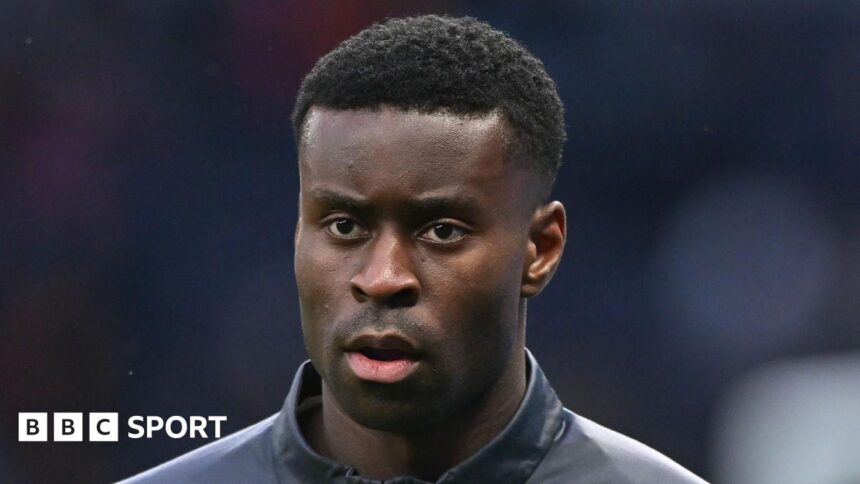
Is Pep Guardiola Right? The Marc Guehi Cup-Tied Controversy Explained
The air at the Etihad Campus is thick with more than just Manchester mist. It is simmering with the indignation of a perfectionist who has spotted a flaw in the system. Pep Guardiola, the architect of Manchester City’s modern dominance, is angry. His grievance? That his new defensive linchpin, Marc Guehi, will be barred from the Carabao Cup final against Arsenal on March 22nd. The reason is the ancient, often confounding, law of being “cup-tied.” Guardiola calls it a lack of “pure logic.” But in the intricate, often contradictory world of football regulations, is the Manchester City manager’s fury justified, or is it simply the frustration of a tactician denied a key piece on the biggest board?
The Heart of the Matter: A Rule Change and a Crucial Deadline
At first glance, Guardiola’s argument seems unassailable. A player, now at his club, is prevented from playing in a final. It feels instinctively unfair. Yet, as with most regulations, the devil is buried in the detail, and this season, that detail changed.
For decades, the EFL’s rule was simple and brutal: a player appearing for one club in the Carabao Cup could not represent another that season, full stop. This season, in a move hailed as progressive, the EFL relaxed its cup-tied rules. The new law allows a player to feature for two different clubs in the competition. So far, so logical. However, the relaxation came with a critical, and now decisive, caveat.
The updated regulation included a specific clause for the semi-finals: to be eligible for the final with a new club, a player must have been registered before the first leg of the semi-final. Manchester City’s semi-final was a 5-1 aggregate victory over Newcastle United. The first leg was played on January 13th. Marc Guehi’s high-profile transfer from Crystal Palace to Manchester City was not completed until January 30th.
Therefore, Guehi’s situation breaks down as follows:
- Played for Crystal Palace: He featured in three Carabao Cup matches for Palace earlier this season.
- Benefited from Rule Change: The new rules allowed him to play for City, as a second club.
- Fell Foul of the Deadline: His transfer missed the semi-final first leg cutoff, rendering him ineligible for the final.
In essence, the rule was designed to allow players moving in the January window to participate if their new club reached the final, but only if their move was concluded early in the month. Guehi’s later move, while still in January, arrived after the gate had swung shut.
Guardiola’s Grievance: Logic vs. The Letter of the Law
Pep Guardiola’s frustration is multifaceted. From his perspective, the rule lacks the very “pure logic” he champions in his football.
First, there is the sporting integrity argument. City will face Arsenal in a one-off match for a trophy. They will be without their first-choice centre-back, a player bought for such occasions, due to administrative timing rather than injury or suspension. Guardiola would argue the best players should be available for the showpiece event.
Second, there is the perceived inconsistency of the “relaxed” rule. If the EFL has moved to modernize the cup-tied concept, why does a semi-final deadline create a new, seemingly arbitrary, barrier? The spirit of the change was to increase flexibility for transferred players; the Guehi case suggests that flexibility is limited.
However, the counter-argument from a regulatory standpoint is robust. Rules require clear, unambiguous deadlines to function. The semi-final first leg cutoff provides a fixed point in the calendar. It prevents a scenario where a club in the final rushes to sign a player specifically for that match after the semi-finals conclude, which would undermine the competition’s sporting continuity. The rule is not about Guehi personally; it’s a blanket regulation applied to all.
Furthermore, Guardiola and City’s recruitment team were undoubtedly aware of this rule. The question could be asked: if Guehi was deemed so vital for the final, could the deal have been prioritized to meet the January 13th deadline? The complexities of a major transfer are immense, but the rule was a known parameter.
Broader Implications: Tradition, Commerce, and the Future
This controversy touches on the eternal tension in football between tradition and progress, and between sporting purity and commercial reality.
The old, stricter cup-tied rule was a relic of a time when club loyalty was more pronounced and mid-season transfers less frequent. It protected the integrity of a cup run, ensuring the players who got a team to the final were, largely, the ones who played in it. The relaxation acknowledges the modern reality of a bustling January transfer window.
Yet, the Guehi case shows the new hybrid model can create its own anomalies. It leads to a situation where a player can play in the competition for two clubs, but cannot play in the final. This is the “impure logic” that infuriates Guardiola.
Looking forward, this incident will likely fuel the debate. Will the EFL consider tweaking the rule further? Potential future changes could include:
- Removing the semi-final deadline entirely, allowing any player registered before the final to be eligible.
- Implementing a “one-club per round” rule after a certain stage.
- Revisiting the entire concept of cup-tied players, as UEFA has done in the Champions League.
The pressure from powerful managers like Guardiola, amplified by media scrutiny, often acts as a catalyst for regulatory review.
Final Verdict and Predictions for Wembley
So, is Guardiola right to be angry? Emotionally and competitively, yes. He is deprived of a top player in a final for a reason that feels bureaucratic to a sporting mind. However, legally and procedurally, his anger is misdirected. The EFL has a clear, published rule. Manchester City, like all clubs, are bound by it. The fault lies not in the rule’s application, but perhaps in its design—a design the club understood when navigating the transfer.
This incident will cast a shadow, but it will also refocus minds at the Etihad. Guardiola is a master at turning adversity into a unifying cause. The narrative will now become “us against the world,” or more precisely, “us without Guehi.” This can galvanize a squad.
Prediction for the Final: Manchester City will adapt. The absence of Guehi likely means a start for the formidable Manuel Akanji or the experienced Nathan Aké alongside Rúben Dias. While Guehi’s ball-playing prowess and physicality will be missed, City’s defensive depth is the envy of world football. Guardiola’s anger will be channeled into meticulous preparation for Arsenal’s attack. The rule may cost City a theoretical advantage, but it is unlikely to be the decisive factor in the match. Expect a tightly contested final where City, fueled by a sense of injustice, still have the slight edge in big-game experience.
In conclusion, the Marc Guehi saga is a classic footballing paradox. A progressive rule change has created a new problem. Guardiola’s anger is understandable from the touchline, but the EFL’s stance is defensible from the boardroom. It highlights that in football, “pure logic” is often the first casualty when confronted with the messy realities of calendars, contracts, and the relentless pursuit of advantage. The final at Wembley will be played within the boundaries of the rules, even as one of its greatest managers continues to question their very foundation.
Source: Based on news from BBC Sport.