The Sentinel’s Return: How Casemiro Reclaimed His Manchester United Throne
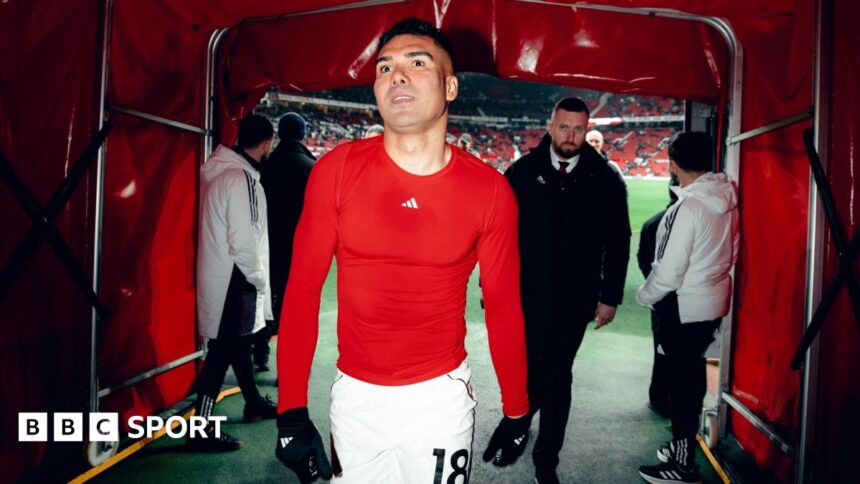
The roar at Old Trafford on December 30, 2024, was a chilling one. It wasn’t directed at the opposition, Newcastle United, who would secure a comfortable 2-0 victory. This was an internal, visceral sound of frustration. As summer signing Joshua Zirkzee was substituted after a dismal 33 minutes, a sarcastic cheer echoed around the famous stadium—a brutal, modern football indictment. Yet, in the sobering post-match analysis, a more damning consensus emerged: had it been Casemiro, the £70m marquee signing from Real Madrid, trudging off that pitch, the reaction would have been volcanic. That night marked the nadir. The great midfield sentinel, a five-time Champions League winner, was seen as a symbol of a broken project. His career in Manchester appeared to be a costly, fading echo. What followed was not a quiet surrender, but the beginning of one of the season’s most remarkable and unexpected revivals.
The Perfect Storm: Anatomy of a Crisis
To understand the scale of Casemiro’s comeback, one must first appreciate the depth of his decline. His arrival in August 2022 was heralded as a masterstroke—the final piece of Erik ten Hag’s tactical puzzle. For a season, it worked. He provided steel, savvy, and crucial goals, embodying a winning mentality sorely lacking at the club. But the 2024/25 campaign unravelled quickly. Injuries ravaged the squad, exposing a lack of cohesive structure. Casemiro, now 33, often looked like a man trying to plug multiple holes in a crumbling dam.
The Newcastle defeat was the culmination. He was bypassed in midfield, his lack of pace brutally exposed, and his positional discipline, once impeccable, seemed to have deserted him. The physical toll of years at the pinnacle of the game appeared to have been cashed in. Ten Hag’s decision was stark and unequivocal. Casemiro was benched for the next five matches, a full month in the footballing wilderness. Pundits wrote his United obituary, speculating about a lucrative move to Saudi Arabia or a sad, slow fade. The narrative was set: another superstar past his prime, another United transfer failure.
The Laboratory: Reinvention in the Shadows
What the public narrative missed was the work being done away from the spotlight. This was not a passive acceptance of fate. Sources close to Carrington indicate that Casemiro’s month out of the team became a period of intense, personalised reinvention.
- Radical Physical Reprogramming: The sports science and conditioning team devised a bespoke regimen focused not on regaining the explosive power of his twenties, but on enhancing functional strength, core stability, and short-area agility. The goal was to maximise his reading of the game and minimise the situations where he was isolated in space.
- Tactical Re-education: Alongside Ten Hag and his coaches, Casemiro pored over footage. The analysis shifted from what he could no longer do, to how his unparalleled experience could be best deployed. They worked on positioning his body earlier, intercepting passes before the duel was necessary, and simplifying his distribution.
- The Mental Battle: Perhaps the greatest challenge was psychological. This was a player accustomed to being non-negotiable. Former teammate and confidant Luka Modrić is said to have been a constant source of support, reinforcing the belief that class is permanent, even as adaptations are required.
This period wasn’t about proving the critics wrong; it was about finding a new version of himself that could still dominate at the highest level. He was rebuilding his game, brick by brick, with the humility of a academy graduate.
The Phoenix: A New Role, The Same Authority
His reintroduction was cautious—a 20-minute cameo in a tight game where United needed to see out a result. The difference was immediately noticeable. He was leaner, his movements more economical. He wasn’t chasing the game; he was anticipating it. As he gradually reclaimed his starting spot, a new, refined Casemiro emerged.
Gone were the reckless, lunging tackles in midfield. In their place was a master of the art of obstruction and intelligent fouls. He began to operate in a more withdrawn, almost quarter-back role, sitting directly in front of the central defenders, using his experience to organise the defensive line and shield them from danger. His passing became more vertical and incisive, breaking lines with a single touch rather than dwelling on the ball. He became the team’s defensive orchestrator, a communicator and leader who directed traffic and provided the platform for United’s more creative players to flourish.
The stats told a story of efficiency over exertion. His pass completion rate soared, his interceptions per 90 minutes increased, while his fouls conceded dropped significantly. He was no longer the box-to-box force of his Madrid heyday; he was the deep-lying strategist, the brain of the defensive unit. The Old Trafford crowd, once on the verge of turning, now greeted his first crunching—but clean—tackle with a roar of approval. The sentinel was back, but his watchtower had been moved.
Looking Ahead: Legacy and Longevity
Casemiro’s revival is more than a feel-good story; it has profound implications for Manchester United’s immediate future and the player’s own legacy.
For United, they now have a world-class operator redefined for the demands of the latter stages of his career. He provides invaluable stability and a winning mentality for a squad still blending youth and experience. His presence allows younger midfielders around him the freedom to develop. Crucially, he has transformed from a symbol of wasteful spending into a testament to elite player development and man-management.
For Casemiro, this chapter redefines what is possible. He has demonstrated that the true mark of an all-time great is not just peak performance, but the intelligence and grit to evolve when that peak has passed. He has added a new, cerebral layer to his game that could extend his career at the top level for several more seasons.
The prediction is clear: Casemiro will not be the dynamic, goal-scoring midfielder of 2022. He will be the strategic anchor, the dressing-room pillar, and the on-field general who controls the tempo of the defensive phase. His role is now foundational, not flashy.
Conclusion: More Than a Comeback
The journey from the sarcastic cheers of that December night to the authoritative figure commanding the midfield today is a tale of modern footballing resilience. Casemiro’s Manchester United revival is a masterclass in athletic and professional reinvention. It underscores that for the very best, decline is not always a steep cliff, but a slope that can be navigated with intelligence, hard work, and a willingness to change.
He faced the abyss of being deemed part of the problem and responded not with defiance, but with transformation. In doing so, Casemiro has not just salvaged his United career; he has rewritten its final act, proving that his greatest strength was never just his tackling, but an unbreakable will to adapt and win. At Old Trafford, the sentinel stands guard once more, his watch forever changed, but his authority utterly undimmed.
Source: Based on news from BBC Sport.