Gregor Townsend’s Defiant Stand: “I Believe in What We’re Doing” Amidst Scotland’s Roman Ruin
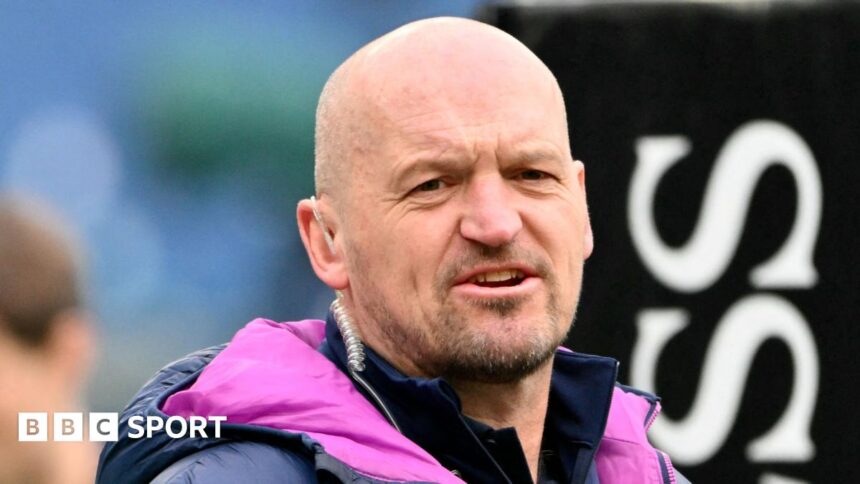
The rain in Rome fell with a relentless, cold finality, washing away not just the markings on the Stadio Olimpico pitch, but seemingly the foundations of Gregor Townsend’s Scotland project. In the damp aftermath of a staggering 18-15 defeat to Italy—a first home Six Nations win for the Azzurri in over a decade—the head coach stood firm. His message was one of unwavering, perhaps stubborn, conviction: “I believe in what we’re doing.” But as the Scottish rugby world reels from a performance of profound disappointment, the chasm between Townsend’s belief and the stark reality of the scoreboard has never felt wider.
A Roman Catastrophe: Where It Went Wrong for Scotland
This was not a heroic, last-gasp defeat. It was a systemic failure from the very first whistle. Scotland’s set-piece, traditionally a point of reliability, disintegrated under the Roman downpour and Italian pressure. The scrum, a source of penalties and pain, and the lineout, a malfunctioning lottery, stripped Townsend’s side of any platform or territory. Without that foundation, the much-vaunted attacking flair—the “what we’re doing” Townsend refers to—was rendered utterly impotent.
The early 12-point deficit was a direct result of this frailty. Italy, energized and tactically astute, exposed a Scottish side that looked undercooked, mentally fragile, and startlingly devoid of answers. Key issues included:
- Set-Piece Collapse: The scrum and lineout were not just weak; they were decisive liabilities that handed Italy both points and psychological dominance.
- Attacking Stagnation: The much-discussed “Russell-centric” attack failed to fire a shot, with Finn Russell isolated and the backline moves reading as predictable script the Italians had already studied.
- Leadership Question Marks: In the face of adversity, on-field leadership seemed to waver, with no clear plan B emerging from the chaos.
The Weight of History and the Mounting Pressure
To view this loss in isolation would be generous. It exists within a deeply concerning pattern. The autumn brought a deflating loss to Argentina and a record defeat to New Zealand, performances that already had Townsend’s seat warming considerably. The Rome defeat amplifies the pressure on Gregor Townsend exponentially, transforming murmurs of discontent into a roar of scrutiny.
This result carries the heavy stench of historic Scottish frailties: a seeming inability to handle the weight of expectation, and a vulnerability on the road against teams they are favoured to beat. The narrative of “same old Scotland” is a cruel one, but it is one Townsend has fought hard to dismantle. After promising signs in recent championships, this feels like a catastrophic regression. The question now is whether the coach’s belief is a lighthouse guiding the way through a storm, or a stubborn refusal to see the rocks ahead.
Expert Analysis: Decoding Townsend’s “Belief”
From a tactical standpoint, “what we’re doing” is a philosophy built on pace, width, and empowering playmakers like Finn Russell. Its success is predicated on quick, clean ball. In Rome, that ball was neither quick nor clean. The critical analysis must therefore focus on the coaching staff’s adaptability—or lack thereof.
An expert eye would note several concerning strategic elements:
- Game Plan Rigidity: Did Scotland have a viable, wet-weather, forward-oriented contingency plan? The evidence suggests not.
- Selection Loyalty: Are certain players undroppable regardless of form? The performance of some key individuals raises this difficult question.
- Psychological Preparation: The flat start indicates a team not mentally primed for the ferocious Italian challenge, a core coaching responsibility.
Townsend’s belief must now translate into brutal honesty and tangible change. It must address why the fundamentals failed and why a team with so much experienced talent can deliver so little when it matters most.
The Road Ahead: Predictions for a Season on the Brink
The Six Nations schedule offers no respite. Scotland now face a wounded Wales in Cardiff, followed by the visit of England and a trip to Ireland. The trajectory of Townsend’s tenure, and perhaps his legacy, will be defined in the coming weeks.
Our predictions for the path forward:
- Immediate Backlash vs. Wales: Expect a reaction. The pride of the players will be stung, and Murrayfield will be febrile for England. A victory in Cardiff is now non-negotiable to salvage the campaign.
- Intense Scrutiny on Selections: Townsend must show his hand is not static. Changes in the pack, particularly, are likely as he searches for set-piece solidity.
- The Murrayfield Crucible: The home games against England and France will decide everything. Win them, and Rome becomes a horrible blip. Lose them, and the pressure may become untenable, regardless of belief.
- The Verdict: The SRU has historically shown patience with Townsend, but their tolerance will have limits. Failure to secure at least three wins this championship will make his position profoundly difficult, regardless of the stated belief in the project.
Conclusion: Belief Alone Is Not Enough
Gregor Townsend’s defiant “I believe in what we’re doing” is a statement of intent, a shield against the gathering storm. But in the ruthless arena of international rugby, belief must be validated by results, reinforced by adaptability, and evidenced by on-field execution. The performance in Rome betrayed a belief system that, on the day, was flawed in its application and found wanting in its fundamentals.
The coming weeks are the ultimate test of Gregor Townsend’s philosophy and his leadership. He must prove that his belief is not blind faith, but a catalyst for rapid, intelligent evolution. He must demonstrate that the system can be fixed under fire, and that his players still unequivocally buy into his vision. For Scottish rugby, yearning for consistency and to shed its nearly-men tag, the patience is wearing thin. The belief from the stands must be earned anew, and it starts not with words in a Roman tunnel, but with actions on the pitch in Cardiff. The time for talking is over; the time for delivering has arrived.
Source: Based on news from BBC Sport.