Kenneth Walker’s Super Bowl Masterpiece: A Historic MVP Performance Etched in NFL Lore
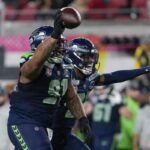
The confetti had barely settled on the Allegiant Stadium turf when the magnitude of the achievement began to crystallize. In Super Bowl LX, the Seattle Seahawks, led by a relentless and explosive ground attack, dethroned the New England Patriots dynasty with a decisive 29-13 victory. At the heart of this triumph was not a veteran gunslinger or a defensive stalwart, but a second-year running back who authored a performance for the ages. Kenneth Walker III didn’t just win a championship; he sprinted into the rarefied air of NFL legends, matching a feat held by Marcus Allen and ending a near-three-decade MVP drought for his position, cementing his place as the game’s unforgettable hero.
A Spartan Stands Alone: Walker Joins Immortal Company
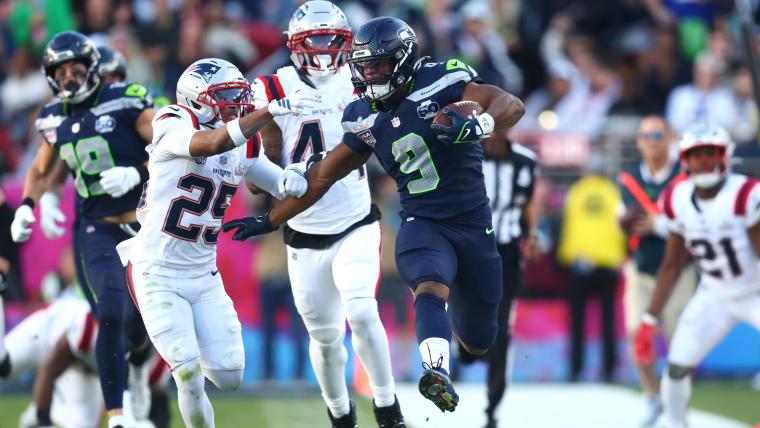
From the opening drive, the Seahawks’ game plan was clear: establish the run and let their dynamic back carve up the Patriots’ formidable defense. Walker, with a blend of patience, explosive cuts, and breakaway speed, did more than that—he delivered a clinic. His stat line—24 carries for 187 yards and two touchdowns—tells only part of the story. The true historical weight lies in the explosive plays that broke the game open.
According to ESPN Insights, Walker joined a supremely exclusive club by recording multiple rushes of 25 yards or more in the same Super Bowl. The only other members? Washington’s Timmy Smith in Super Bowl XXII and the legendary Raiders Hall of Famer, Marcus Allen, in Super Bowl XVIII. This isn’t just a trivia note; it’s a testament to game-breaking ability on the sport’s biggest stage. Allen’s 74-yard touchdown run against Washington remains one of the most iconic plays in Super Bowl history. Walker, by achieving the same statistical benchmark, placed his performance in that stratospheric context.
- Marcus Allen (Super Bowl XVIII): 20 carries, 191 yards, 2 TDs, including a 74-yard run.
- Timmy Smith (Super Bowl XXII): 22 carries, 204 yards, 2 TDs.
- Kenneth Walker (Super Bowl LX): 24 carries, 187 yards, 2 TDs, with two 25+ yard bursts.
Furthermore, Walker’s MVP honor made Michigan State history. He and Nick Foles now stand as the only Spartans alumni to ever win Super Bowl MVP, a point of immense pride for the program and a legacy-defining moment for the young back.
Ending the Drought: The Running Back MVP Returns
Perhaps the most significant layer of Walker’s accomplishment is what it means for the running back position in the modern NFL. In an era dominated by quarterbacks and high-flying passing attacks, the workhorse back had been conspicuously absent from Super Bowl MVP discussions. The last time a running back claimed the Pete Rozelle Trophy was Denver’s Terrell Davis in Super Bowl XXXII—a staggering 29 years ago.
Davis, battling a migraine, willed the Broncos to victory with 157 yards and three touchdowns. For nearly three decades, every MVP award went to a quarterback, a wide receiver, or a defensive player. Walker’s tour de force shattered that trend, reminding the football world of the visceral, game-controlling power a dominant runner still possesses. In a matchup against the cerebral Bill Belichick, who is famed for eliminating an opponent’s best weapon, Walker was the weapon that could not be contained. His performance was a throwback to a different style of football championship, proving that a foundational, physical run game remains a potent formula for the ultimate success.
Expert Analysis: Deconstructing a Legacy Performance
Walker’s success was no accident. It was the culmination of Seattle’s strategic commitment and Walker’s evolved skill set. Let’s break down the key elements that defined his MVP night:
Vision and Patience: Walker consistently set up his blocks, allowing Seattle’s offensive line to create seams. His patience behind the line, waiting for a crease to appear, was markedly improved from his rookie season.
Contact Balance and Power: While known for his speed, Walker repeatedly broke through arm tackles and churned out extra yards after contact, demoralizing the Patriots’ front seven and sustaining crucial drives.
The Decisive Moment: With the Seahawks holding a narrow lead in the third quarter, Walker took a handoff, hit the edge, and exploded for a 43-yard touchdown run. This game-breaking touchdown shifted all momentum permanently to Seattle and served as the de facto dagger—a play worthy of any MVP highlight reel.
This performance also validates the Seahawks’ offensive philosophy. In a league chasing the next great passing innovator, Seattle doubled down on a physical identity, building their offense around Walker’s talents. Super Bowl LX was the ultimate justification of that vision.
The Future is Bright: What’s Next for Walker and the Seahawks?
With a Super Bowl MVP on his resume at just 24 years old, the trajectory for Kenneth Walker III is now astronomically high. The immediate question becomes: is this a legendary peak, or the launchpad for a Hall of Fame-caliber career?
Predictions for Walker: Expect Walker to enter the 2025 season as a consensus top-3 NFL running back. The challenge will be handling the increased scrutiny and the inevitable “Madden Curse” chatter. His game, however, is built on more than just athleticism; his improved patience and understanding of NFL defenses suggest this level of play is sustainable. He will be the focal point of the Seattle offense for the foreseeable future.
Predictions for the Seahawks: Champions have a target on their back. Seattle’s front office must now navigate the difficult salary cap decisions that come with success, ensuring they can keep a competitive core around their young superstar. The NFC West remains a brutal division, but with a franchise back in place, the Seahawks have cemented their status as a perennial contender. The dynasty talk will be premature, but the foundation for one is certainly in place.
Conclusion: A Performance for the History Books
Kenneth Walker III’s Super Bowl performance was a masterpiece of power, speed, and historical significance. By matching Marcus Allen’s explosive-play benchmark and ending the running back MVP drought, he didn’t just win a game; he authored an instant-classic chapter in Super Bowl lore. He carried the hopes of a franchise, revived the prominence of his position on the grandest stage, and delivered a Spartan moment that will resonate in East Lansing and Seattle for generations.
In the years to come, when fans debate the greatest Super Bowl performances by a running back, the names will be clear: Marcus Allen, Terrell Davis, and now, unequivocally, Kenneth Walker III. In a single, dominant evening, he transformed from a promising young star into a Seattle Seahawks legend and an NFL immortal. The forgotten MVP? Not anymore. His name is etched on the trophy, and his legacy is just beginning.
Source: Based on news from Yahoo Sports.