Chris Brown Throws Shade at Bad Bunny’s Divisive Super Bowl Halftime Show: “They Need Me”
The spectacle of the Super Bowl halftime show is designed to unite millions in a shared, explosive moment of pop culture. Yet, following Super Bowl LX’s headlining set by global Latin trap superstar Bad Bunny, the most resonant sound wasn’t just the final echo of “Monaco” in Santa Clara’s Levi’s Stadium—it was the distinct murmur of a divided audience. In the immediate aftermath, as social media lit up with polarized reactions, an unexpected voice entered the chat: R&B singer Chris Brown, who posted a seemingly pointed message that has since set the music and sports worlds abuzz: “They need me.”
A Polarizing Performance and the Patriotism Play
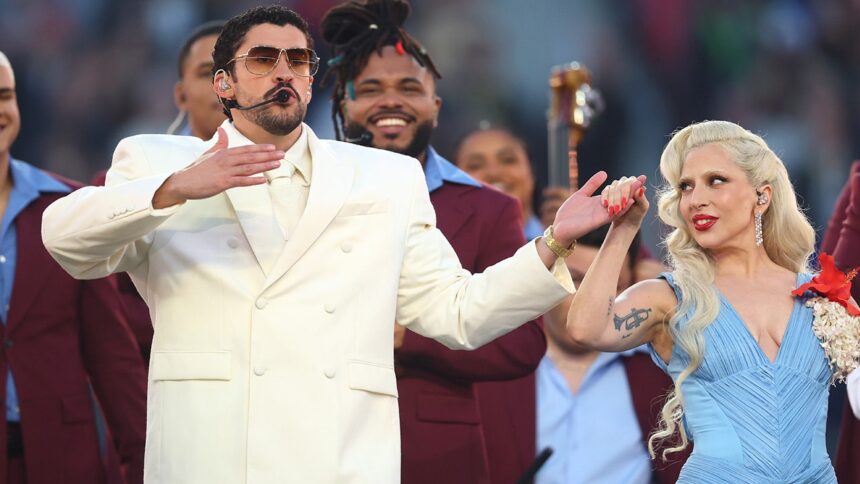
Bad Bunny’s performance was, by design, unapologetically himself—a high-energy, Spanish-language barrage of his biggest hits, featuring surprise appearances from fellow Puerto Rican stars and a vibrant, carnival-esque stage production. For a massive segment of the audience, it was a historic, celebratory moment of Latin cultural dominance on America’s biggest stage. For others, it proved alienating, with critiques ranging from language barriers to a perceived lack of classic, crowd-pleasing showmanship.
This division created a vacuum, one that was swiftly filled by counter-programming. Notably, Turning Point USA, a conservative student organization, aired a patriotic special during the halftime slot. Their spokesperson, Andrew Kolvet, framed it as a direct and successful alternative. “We offered a celebration of American values at a time when the main event seemed to speak to a very different, and for many, unfamiliar audience,” Kolvet stated, highlighting a cultural fissure the performance exposed. This move underscored that the Super Bowl halftime show is no longer just a concert; it’s a geopolitical and cultural battleground where viewership fragments and narratives collide.
Chris Brown’s Calculated Entry Into the Ring
Amid this landscape of debate, Chris Brown’s social media post was a masterclass in timing. While not mentioning Bad Bunny by name, the implication was clear to his 144 million followers and the industry at large. Brown, a performer known for his intricate choreography, vocal prowess, and a catalog of cross-generational hits, was positioning himself as the remedy to a divided show. His message spoke to a perceived need for a certain type of entertainer—one who delivers what many consider the traditional halftime show essentials:
- High-Octane Dance Routines: Brown is considered one of his generation’s premier dancers.
- English-Language, Genre-Spanning Hits: A discography featuring R&B, pop, and hip-hop tracks known to a vast U.S. audience.
- Nostalgia Factor: With a career spanning nearly two decades, he offers immediate recognition for multiple age groups.
- Spectacle-Driven Showmanship: His ongoing “BREEZY BOWL XX” tour, as seen at Chase Field in Phoenix, is built on large-scale production.
This wasn’t just an offhand comment; it was a strategic bid for the most coveted gig in music. It reframed the post-show conversation from “Was Bad Bunny good or bad?” to “What *type* of performer does the NFL need next?”
Expert Analysis: The Halftime Show’s Evolving Mandate
The role of the halftime performer has dramatically evolved. Once a platform for legacy rock and pop acts, it has recently prioritized streaming giants, global phenomena, and cultural moment-makers—from Rihanna’s iconic pregnancy reveal to the star-studded West Coast hip-hop celebration with Dr. Dre, Snoop Dogg, and Eminem. Bad Bunny fit squarely into this new model: he is Spotify’s most-streamed artist globally for multiple years, a symbol of Latin music’s commercial takeover.
However, Brown’s “they need me” comment highlights a tension the NFL must constantly manage: the balance between global relevance and mainstream American appeal. The league’s audience is undeniably international, yet its core domestic viewership includes a massive segment that craves familiarity. An expert in music branding, Dr. Lena Rodriguez, notes: “Chris Brown is articulating a real sentiment in a portion of the fanbase. He represents the classic, athletic, hit-after-hit American performer model. His tweet is a pitch: in a year of perceived risk, he is the safe bet that still delivers fireworks.”
Yet, Brown’s own complex history presents a significant hurdle. The NFL is intensely image-conscious, and selecting a performer with a controversial past invites a media firestorm that could overshadow the game itself. This makes his public campaign a high-stakes gamble.
Predictions: What This Means for Super Bowl LXI
The fallout from Bad Bunny’s performance and Chris Brown’s subsequent swipe will undoubtedly influence the NFL’s selection process for Super Bowl LXI. The league’s committee will be analyzing data far beyond social media chatter, but the narrative is now part of the equation. We can anticipate several potential outcomes:
- The “Back to Basics” Approach: The league may seek a performer with broad, multi-generational appeal and an uncontroversial reputation. Think a Bruno Mars or a Taylor Swift (should she not be playing in the game itself).
- The “Global Citadel” Double-Down: They could ignore the noise and continue targeting the world’s biggest stars, perhaps looking to a K-Pop giant like BTS or a global icon like Shakira.
- The “Chris Brown Calculus”: The NFL will seriously weigh his star power and performance chops against the inevitable PR storm. His public audition makes him a central figure in the conversation, but his selection remains a long shot due to the associated risks.
- The “Collaborative Mosaic”: A return to a multi-artist format, blending genres and demographics to ensure something for everyone, mitigating the risk of a single polarizing figure.
Conclusion: The Halftime Show as Cultural Mirror
Ultimately, Chris Brown’s three-word tweet did more than just critique a performance; it crystallized the ongoing identity crisis of the Super Bowl halftime show. Is it a platform for global cultural statements, or is it comfort-food entertainment for the American mainstream? Can it be both? Bad Bunny’s performance challenged the traditional template, and the reaction—from patriotic counter-programming to a veteran pop star’s claim of necessity—proves how deeply the event resonates.
The NFL’s choice for next year will be a telling response. It will signal whether the league views the polarization as a problem to be solved or simply the cost of doing business in a fragmented cultural landscape. One thing is certain: the pressure for Super Bowl LXI’s halftime show is now immense. It must not only entertain but also, in some way, answer the question Chris Brown so provocatively posed: Who do “they” really need? The answer will define the next era of this singular American institution.
Source: Based on news from Fox Sports.