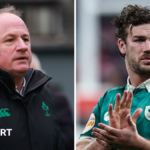
O’Neill’s Ibrox Ambition: Why a Full Celtic Allocation is More Than Just a Numbers Game
The air crackles with a different kind of electricity when the Old Firm derby approaches. It’s a fixture that transcends sport, a cultural and sporting collision that defines seasons and careers. As Celtic prepare for a pivotal Scottish Cup quarter-final at Ibrox next month, a familiar, passionate voice has entered the pre-match discourse, not with tactical jargon, but with a plea for atmosphere. Interim manager Martin O’Neill, a man who has felt the full, visceral force of this rivalry, has publicly championed a cause close to the hearts of the Celtic support: the return of a significant away contingent to the home of their greatest rivals.
The Allocation Imbalance: From Broomloan Roar to Whispered Presence
For decades, the sight and sound of 7,500 Celtic fans packed into the Broomloan Stand at Ibrox was an indelible part of the Old Firm spectacle. It created a genuine cup-tie atmosphere, a cacophonous dueling of anthems that players from both sides have described as both terrifying and exhilarating. However, in 2018, Rangers unilaterally reduced the Celtic allocation to fewer than 1,000 tickets, citing safety and security concerns and a desire to provide more seats for their own supporters. This move fundamentally altered the acoustic and visual dynamic of the fixture at Ibrox.
O’Neill’s hope hinges on a specific Scottish Football Association rule. In the Scottish Cup, visiting clubs have the right to claim up to 20% of the stadium capacity. At Ibrox, with a capacity just over 50,000, that equates to more than 10,000 away tickets—a staggering return to the numbers of yesteryear. Yet, the rule contains a crucial caveat: the final arrangement must be agreed upon by both clubs and the police. This trilateral agreement is where tradition, safety, and modern football politics collide.
- Historical Norm: Approximately 7,500 Celtic fans at Ibrox for league and cup derbies.
- 2018 Shift: Rangers cut allocation to under 1,000, changing the derby atmosphere.
- Scottish Cup Rule: Away side can claim 20% of tickets (over 10,000 at Ibrox).
- The Stipulation: Requires agreement from both clubs and police authorities.
O’Neill’s Perspective: The Intangible Value of a True Away End
Why is Martin O’Neill, tasked with the high-pressure job of steering Celtic through a transitional period, focusing on ticket allocation? The answer lies in his deep, experiential understanding of what makes these matches tick. O’Neill isn’t just talking about numbers; he’s talking about psychological momentum and the intangible lift a vocal away support can provide.
“It makes for a much better atmosphere,” O’Neill stated, cutting to the heart of the matter. For a manager, a booming away end acts as a twelfth man in the most hostile of environments. It can energize players in moments of fatigue, celebrate tackles as if they were goals, and provide a tangible connection to the jersey when surrounded by a sea of opposition color. In a game where fine margins decide outcomes, this surge of energy can be pivotal. O’Neill remembers the era of the full Broomloan Stand, an era where Celtic enjoyed significant success at Ibrox. His advocacy is rooted in the belief that restoring that element restores a classic, ferociously balanced contest.
Furthermore, his public stance places the onus squarely on the decision-makers. By framing it as a desire for the “full allocation available,” he highlights the potential of the occasion while subtly questioning what barriers might prevent a pure sporting spectacle. It’s a savvy piece of pre-match positioning that resonates with fans and puts the issue firmly on the agenda.
The Hurdles: Safety, Sovereignty, and Sporting Politics
The path to 10,000 Celtic fans at Ibrox is fraught with complexity. The concerns are not merely sporting but logistical and societal.
First, police agreement is paramount. Strathclyde Police have vast experience in managing this fixture, but the operational challenge of transporting, filtering, and housing a massive away support in a concentrated area of Glasgow is immense. The reduced allocation model of recent years has, from a policing perspective, arguably simplified match-day operations. Reversing that would require significant resource planning and risk assessment.
Second, and perhaps most critically, is the need for Rangers’ agreement. Ibrox is their fortress, and the current model maximizes home advantage by minimizing the away presence. Granting a large allocation is seen by many as ceding a strategic edge. There is also the commercial aspect—those are tickets sold to their own season ticket holders and support. Beyond sport, the decision sits within a broader, often tense, relationship between the two clubs’ boards, where cooperation is frequently in short supply.
The final hurdle is precedent. If granted for the Scottish Cup, could Celtic argue for a similar restoration in the Scottish Premiership? The designated away end debate thus becomes a landmark case with implications far beyond a single quarter-final.
Prediction and Legacy: What Happens Next?
Realistically, a jump from under 1,000 to over 10,000 tickets seems a monumental leap for one match. A more probable compromise might be an increase to a figure closer to the old standard of 7,500, should all parties engage constructively. However, the very fact that O’Neill has elevated this to a headline issue increases the pressure for a meaningful gesture.
This is about more than one game. It’s about the soul of a derby. Martin O’Neill, a figure of immense stature, is advocating for a return to the raw, unadulterated version of the clash. His intervention reminds us that the Old Firm, at its best, is a symphony of conflict played out by two sets of players and two choruses of fans. Silencing one chorus diminishes the entire piece.
The likely outcome is a negotiated increase, but not the full 20%. The police will advise, Rangers will deliberate, and Celtic will push. Regardless of the final number, O’Neill has already succeeded in making a powerful point: true sporting spectacle requires the breath of both sets of supporters. The Scottish Cup quarter-final at Ibrox will be decisive on the pitch, but the discussion around the ticket allocation may prove just as defining for the future character of Scotland’s greatest rivalry.
Conclusion: A Roar Worth Restoring
Martin O’Neill’s hope for a full Celtic allocation at Ibrox is not mere nostalgia; it is a professional’s assessment of what elevates elite sport. The reduced allocations of recent years have created a different, perhaps more manageable, but undoubtedly less authentic atmosphere. The Scottish Cup, with its specific rules, presents a perfect opportunity to revisit the principle of a significant away support.
While practical and political hurdles are significant, the core argument is one of spectacle and sporting integrity. The Old Firm derby is a global advertisement for Scottish football. Presenting it in its most vibrant, intense, and traditional form—with the stands a patchwork of contrasting color and deafening noise—only enhances its stature. O’Neill, the old warrior, understands this in his bones. Whether his call is heeded may depend on whether the authorities and the clubs share his vision for a derby that roars with two voices, not one. The world will be watching, and more importantly, listening.
Source: Based on news from BBC Sport.