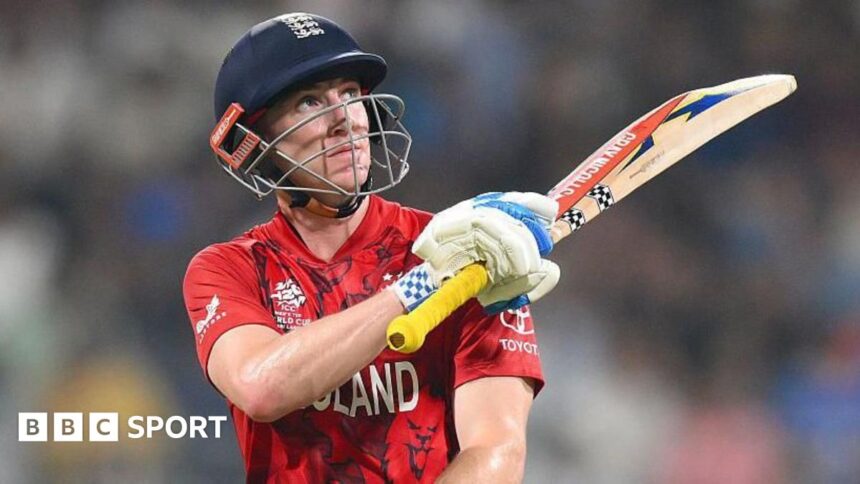
England’s T20 World Cup Hopes Stutter as ‘Careful’ Batting Proves Costly Against West Indies
The roar in St Lucia was deafening, but it was the silence in the England camp that spoke volumes. In a crucial Super 8 clash at the T20 World Cup, the defending champions’ title defence veered dangerously off course, not with a bang, but with a whimper of overcaution. A commanding West Indies total of 197, built on the explosive foundations of Brandon King and Johnson Charles, was met not with England’s trademark fearless aggression, but with a hesitant middle-order collapse that has left their tournament future hanging by a thread. In the aftermath, stand-in captain Harry Brook delivered a damning, succinct diagnosis: his team had been “too careful.”
A Promising Start Unravels in the Spin Web
For the first ten overs of the chase, the script was being written for an English masterpiece. Phil Salt, in imperious form, and Jos Buttler provided a blistering start. At 74-1, with the required rate under control and a powerful batting line-up to come, the Kensington Oval crowd sensed an inevitable onslaught. Then, the trap was sprung. The introduction of the West Indian spin duo, the crafty Gudakesh Motie and the ever-dangerous Roston Chase, transformed the game.
What followed was a period of baffling passivity. The boundary drought stretched from the 10th to the 15th over—an eternity in modern T20 cricket. The pressure built, the required rate soared, and the wickets tumbled in a heap. Six wickets fell for just 37 runs in the middle overs, a period that has historically been England’s engine room for acceleration. Moeen Ali, Jonny Bairstow, Liam Livingstone, and the captain himself, Harry Brook, all succumbed to the turning ball, caught between aggression and defence, executing neither.
Gudakesh Motie was the chief architect, his left-arm orthodox spin proving unplayable. His figures of 3 for 24 were a masterclass in control and deception, exploiting the palpable tension in the English batting. “We were probably a little bit too careful,” Brook admitted post-match, a statement that will sting a batting unit famed for its destructive power.
Expert Analysis: Deconstructing the “Careful” Collapse
Brook’s admission opens a critical tactical discussion. Why did the most aggressive white-ball team of the last decade suddenly retreat into its shell? The analysis points to a confluence of factors:
- Scoreboard Pressure: While 197 was chaseable, it was undeniably a par-plus score. The sheer weight of runs, coupled with the tournament context, may have subconsciously prompted a risk-averse “consolidate and then explode” plan that never got to the explosion phase.
- Pitch Deception: The surface, while good for batting, offered consistent turn for the spinners. England’s batters, perhaps expecting the ball to come on quicker, misjudged the need to use their feet and force the pace against Motie and Chase, instead opting to play from the crease.
- Leadership Void: The absence of the injured Jos Buttler as an on-field captain during the chase cannot be overlooked. While Brook handled duties admirably off the field, the loss of Buttler’s intuitive, aggressive captaincy in the heat of the moment may have contributed to the collective indecision.
- Middle-Order Identity Crisis: England’s lineup, packed with power-hitters, lacks a designated, busy anchor in the middle overs like a Virat Kohli or a Aiden Markram. When plan A (all-out attack) was stifled, a clear plan B was not evident.
The psychological impact is now the biggest threat. This disappointing defeat to West Indies has shifted the momentum and handed the initiative to their rivals in a tight Group 2.
Tournament Predictions: A Rocky Road to the Semi-Finals
This loss has thrown England’s campaign into a state of precarious uncertainty. Their path to the semi-finals is now narrow and fraught with danger. Here’s what lies ahead:
- Must-Win Finale: Their final Super 8 game against South Africa is now a virtual quarter-final. Nothing less than a victory will keep them in contention, and even that may require net run-rate calculations.
- South Africa’s Threat: The Proteas present a different but equally formidable challenge. Their pace attack, led by Kagiso Rabada and Anrich Nortje, will test England’s top order, potentially creating a scenario where the middle-order is exposed early again.
- Mental Scars: How England rebound from this mental setback will define their tournament. Do they double down on their aggressive philosophy, or will the fear of another collapse lead to further tentativeness? The team’s character is under the microscope.
The margin for error, once comfortable, has now evaporated. England must win, and likely win well, to advance.
Conclusion: Reclaiming the Fearless Mantra or Flying Home
The irony for England is that their greatest strength became their fatal flaw. The “fearless” cricket that revolutionized the game and brought them both the 50-over and T20 World Cups was conspicuously absent when it mattered most. Being “too careful” is a cardinal sin in the T20 format, especially for a team built on the principles of proactive, boundary-hitting play.
Harry Brook’s honest assessment is the first step toward a remedy. The second must be a collective, unwavering recommitment to the strategy that made them champions. The batting firepower of Salt, Buttler, and Livingstone is undeniable, but it must be unleashed with conviction, not hesitation. The defeat to a superb West Indies team is a stark warning: in the cauldron of a World Cup, hesitation is defeat. England’s title defence now hinges on their ability to shed the care, embrace the chaos, and play once more with the reckless brilliance that defines them. If they don’t, their World Cup journey will end not with the roar of a champion, but with the quiet regret of a team that forgot who they were.
Source: Based on news from BBC Sport.