


Lindsey Vonn’s Grueling Comeback: Inside the Third Surgery and the Road Ahead
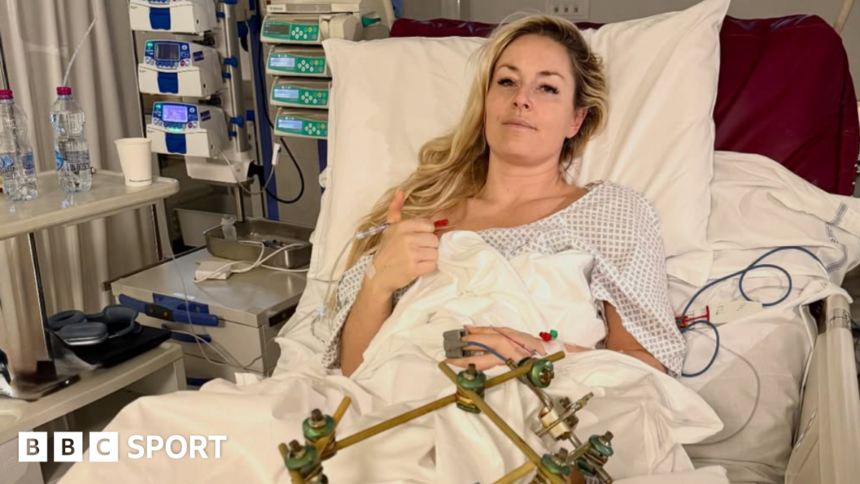
The world of alpine skiing holds its breath once more. Lindsey Vonn, the sport’s most decorated female racer, is navigating a painfully familiar path—the long, arduous road of recovery. In a heartfelt Instagram update from a hospital in Treviso, Italy, Vonn delivered a message of resilience tinged with the stark reality of her latest setback. “I had my third surgery today and it was successful,” she wrote, following a horrific crash at the Cortina downhill just nine days after returning from a separate knee injury. This isn’t just another sports injury report; it’s a profound chapter in the saga of an athlete whose will is as formidable as the mountains she conquers.
A Cascade of Catastrophe: From Knee to Complex Fracture
To understand the magnitude of this moment, one must rewind to a brutal sequence of events that would test any athlete’s physical and mental fortitude. Vonn’s journey to the Cortina start gate was already a triumph of modern sports medicine. Mere days prior, she had ruptured ligaments in her left knee—a significant injury in itself. Her decision to race was a testament to her legendary toughness. Then, 13 seconds into her downhill run, disaster struck. Vonn hooked a gate, was violently thrown off her line, and catapulted into the safety netting at speed.
The immediate aftermath was severe. Airlifted off the iconic piste, the initial diagnosis revealed a complex tibia fracture in her already compromised left leg. This type of fracture, often involving multiple break lines or fragmentation, presents significant challenges for stabilization and healing. The need for three separate surgeries in such a short timeframe underscores the severity of the trauma. Each procedure likely had a focused goal:
- Initial Stabilization: The first surgery would have addressed immediate dangers, controlling bleeding and aligning the bone to prevent further tissue damage.
- Definitive Fixation: A second, more intricate surgery likely involved installing hardware—plates, screws, or rods—to secure the fractured tibia.
- Addressing Complications or Refinement: The third, and reportedly “successful,” surgery may have managed swelling, addressed soft tissue concerns, or fine-tuned the stabilization to optimize the healing environment.
“Making progress,” as Vonn stated, in this context is a monumental understatement. It signifies surviving the acute trauma phase and beginning the first tentative steps toward a future that once again includes walking without pain.
Expert Analysis: The Medical and Psychological Mountain
From a sports medicine perspective, Vonn’s situation is exceptionally complex. Dr. Elena Rossi, a former orthopedic consultant for World Cup ski teams (who is not directly involved in Vonn’s care), explains the layered challenge. “You have two major traumas in the same limb: a significant soft-tissue ligament injury in the knee and a complex bone fracture in the tibia. The rehabilitation protocols can conflict. Knee rehab often requires early range of motion, while a tibia fracture needs protected weight-bearing. Coordinating this demands a world-class team and immense patience from the athlete.”
Furthermore, the psychological toll cannot be overstated. Vonn has spent more of her career in rehabilitation than most athletes spend competing. Her history is a map of surgical scars: multiple knee reconstructions, fractures, and chronic pain. Each comeback has been a masterclass in perseverance, but the cumulative effect is real. “The mental battle is now as important as the physical one,” notes sports psychologist Dr. Michael Chen. “She is drawing from a deep well of resilience built over years, but this incident—coming so quickly after another injury—tests fundamental motivation. Her statement’s positivity is a crucial self-management tool. By publicly declaring progress, she is reinforcing her own mindset.”
This successful third surgery is therefore more than a medical note. It is the foundational step in rebuilding not just a bone, but the belief system of a champion who has repeatedly stared down the end of her career.
Predictions: What’s Next for the Skiing Legend?
Predicting Lindsey Vonn’s future has always been a fool’s errand, as she has consistently defied timelines and expectations. However, informed projections can be made about the phases ahead.
The Immediate Future (Next 3-6 months): The focus will be exclusively on healing. This means strict non-weight bearing, managing pain and swelling, and gentle, monitored movement to prevent stiffness in the knee and ankle. Any talk of skiing is entirely off the table. The primary goal is achieving solid bone union and preventing infection or circulatory issues.
The Long Rehabilitation (6-18 months): Once cleared by her surgeons, the grueling work begins. Vonn’s team will face the delicate task of rebuilding muscle mass lost to atrophy while respecting the healing bone. The previously injured knee ligaments will need careful retraining. This phase is a marathon of monotonous, painful exercises where progress is measured in degrees of motion or single-leg balance held for seconds longer.
The Competitive Horizon: Will she race again? At 36, with this cumulative injury history, a return to World Cup downhill—the sport’s most demanding discipline—seems a distant prospect. However, writing off Lindsey Vonn has never been wise. A more plausible target could be a ceremonial, storybook farewell run, perhaps at a storied venue like Lake Louise or even the 2022 Beijing Olympics, not with an eye on medals but on closure. Her legacy, however, is untouchable. With 82 World Cup wins and three Olympic medals, her place in the pantheon is secure, regardless of what happens next.
Legacy of Resilience: More Than Just Wins
Lindsey Vonn’s story has long transcended results sheets. Yes, she is the woman who chased and nearly caught Ingemar Stenmark’s legendary win record. But she is also the athlete who has become a global symbol of resilience. Her public struggles with depression, her vocal advocacy for equal pay and treatment in sports, and her raw, unfiltered documentation of the agony of recovery have humanized the icon.
This latest chapter, perhaps the most difficult yet, adds another layer to that legacy. It is a stark reminder of the brutal physical currency these athletes pay for our awe. Her progress after third leg operation is not just about mending a limb; it’s about the enduring power of a competitive spirit. She is showing the world that a setback, no matter how catastrophic, is not the same as a surrender.
Conclusion: The Unbreakable Spirit
Lindsey Vonn’s “successful” third surgery is not the end of a story, but the fraught beginning of a new one. The path from a hospital bed in Treviso back to any form of normalcy is a mountain steeper than any she has faced. It will require more than surgical skill; it will demand every ounce of the indomitable will she has displayed for two decades. While the skiing world wonders if it has seen her final competitive run, the broader sports community watches something more inspiring: a master class in grit. Lindsey Vonn isn’t just making progress on a broken leg. With each day of painful rehab ahead, she continues to define what it means to be unbreakable, teaching us that sometimes the most powerful victories are not won on the podium, but in the quiet, determined space of recovery.
Source: Based on news from BBC Sport.


