Jon Rahm’s Defiant Stand: Inside the Rejection That Shakes the DP World Tour and Ryder Cup Future
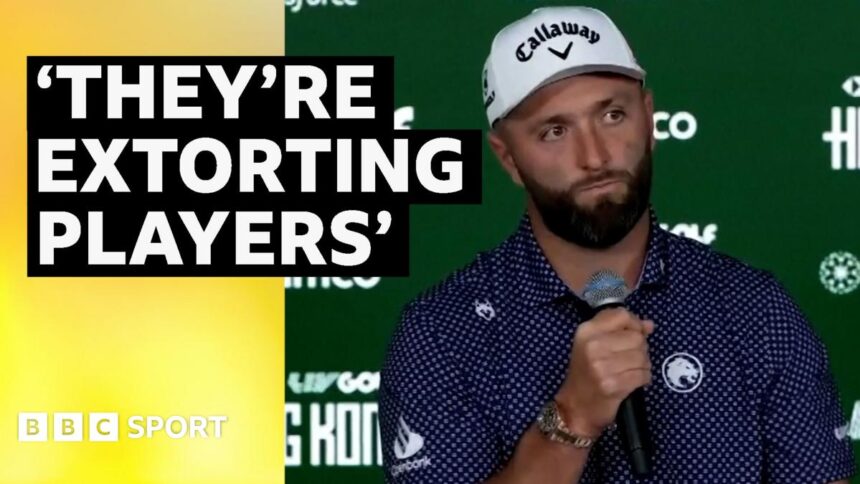
The world of professional golf is no stranger to seismic shifts, but the tremors often come from boardrooms as much as back nines. In a move that underscores the ongoing power struggle in the sport, two-time major champion Jon Rahm has publicly and pointedly rejected a DP World Tour membership deal, a decision with profound implications for his European identity and, critically, his future Ryder Cup eligibility. This isn’t a simple scheduling conflict; it’s a principled stand by one of the game’s biggest stars against a mandate he fundamentally disagrees with.
The Core of the Contention: “I Refuse to Play Six Events”
At the heart of Rahm’s decision lies a specific and non-negotiable demand from the DP World Tour. To maintain membership and the crucial Ryder Cup eligibility that comes with it, the tour requires its top players to commit to a minimum of four “designated” events plus two additional regular tournaments. For Rahm, this rigid structure is a bridge too far. His explanation was blunt: he doesn’t agree with the contract and “refuses to play six events” under such an obligation.
This stance is not born out of a lack of loyalty to European golf. Rahm has consistently been one of the DP World Tour’s most supportive marquee names, often playing beyond requirements. His objection is to the inflexibility of the mandate. As a top-tier global player balancing a PGA Tour schedule, major championships, family life, and his own performance standards, Rahm values the autonomy to choose where and when he plays based on course fit, preparation, and personal circumstance. The tour’s deal, in his view, removes that necessary discretion.
Beyond the Schedule: A Clash of Philosophies
Rahm’s rejection speaks to a larger, more philosophical battle in professional golf. In an era where the PGA Tour has strengthened its own designated event model and LIV Golf offers guaranteed, limited-field appearances, the DP World Tour is fighting to secure the participation of its elite players. Their membership contract is a tool to ensure tour strength and sponsor value.
However, from the player’s perspective, particularly one of Rahm’s caliber, it can feel like an outdated constraint. His decision highlights a growing tension:
- Tour Control vs. Player Agency: Should a tour mandate appearances, or should a player’s commitment be organic?
- Collective Responsibility vs. Individual Career Management: Where does Rahm’s duty to the European tour end and his right to optimize his own career begin?
- Traditional Models vs. Modern Realities: The old-world tour structure is colliding with the new-world reality of star-driven golf.
Rahm is effectively arguing that his past support and future intent should be sufficient. He has stated he still plans to play DP World Tour events, just not on the tour’s dictated terms. This puts the DP World Tour in a precarious position: punish its most successful active European star, or re-evaluate its rules for its biggest names?
The Ryder Cup Sword of Damocles
The most immediate and painful consequence of this standoff is the cloud it places over Rahm’s Ryder Cup future. The current eligibility criteria for Team Europe require players to be DP World Tour members. By rejecting the membership deal, Rahm is technically ineligible for the 2025 matches at Bethpage Black, a course where his passion and prowess would be invaluable.
This creates an almost unthinkable scenario. Jon Rahm, the fiery heart of the European team in Rome, a man whose passion for the contest is unmatched, sidelined by a bureaucratic rule. It’s a threat that seems to leverage Rahm’s love for the Ryder Cup to force compliance. Yet, Rahm is calling what he may see as a bluff. He is betting that the tour, the fans, and his potential teammates will not allow the best European player to miss golf’s greatest team event over a two-event disagreement in a mandated minimum.
The precedent is also critical. If Rahm is granted a special exemption or the rules are bent, it opens the door for other top Europeans to seek similar leniency. If he is not, the DP World Tour risks damaging its flagship event and alienating its fanbase.
Expert Analysis: A Calculated Risk with Wide Ramifications
This is a calculated risk by Rahm, but not a reckless one. His position is fortified by several factors. First, his stature as a two-time major winner and former world No. 1 gives him immense leverage. Second, his genuine, documented love for the Ryder Cup makes his threat of absence credible and painful for the tour to consider. Third, in the fragmented golf landscape, his services are in high demand; his value is not defined by one tour’s membership.
The ramifications extend far beyond Rahm’s personal schedule:
- DP World Tour’s Leverage: If Rahm wins this standoff, does the tour’s membership model for top stars collapse? It may force a tiered system of membership requirements.
- Player Empowerment: Other European stars will be watching closely. A victory for Rahm empowers all elite players to negotiate more flexible terms.
- Ryder Cup Captain’s Dilemma: Future captains will be thrust into political battles, potentially having to advocate for rule changes to select their best team.
- Sponsor Reaction: Will tournament sponsors demand the inclusion of stars like Rahm, thereby pressuring the tour to soften its stance?
Predictions: A Negotiated Path Forward
It is highly unlikely we have seen the last of Jon Rahm in European colors. The drama will likely unfold in a series of negotiations rather than a hardline ban. Predictions for the path forward include:
1. A “Rahm Rule” Compromise: The most probable outcome is a behind-the-scenes agreement that satisfies both parties. This could involve the DP World Tour creating a new category for players of Rahm’s stature—perhaps those with multiple majors or a certain world ranking history—that reduces the mandatory event count or allows for more flexibility in which events count toward the minimum.
2. Ryder Cup Exemption Pressure: As the 2025 matches draw nearer, public and internal pressure will mount on the DP World Tour and Ryder Cup Europe to find a solution. The narrative of “Rahm banned from Ryder Cup” is one no governing body will want to sustain.
3. A Shift in Tour Strategy: This public clash may accelerate the DP World Tour’s need to reimagine its relationship with its top-tier talent, moving from a mandate-based model to a more collaborative partnership, using incentives beyond punishment to attract stars.
Conclusion: A Line in the Sand for the Modern Golfer
Jon Rahm’s rejection of the DP World Tour deal is more than a scheduling dispute; it is a line in the sand for the modern elite golfer. It is a declaration that while history and team pride are powerful motivators, they cannot be the sole tools for governance in a player-centric era. Rahm is not rejecting Europe; he is rejecting a one-size-fits-all contract that fails to account for the unique demands and value of a top-five global player.
The coming months will test the resilience of tradition against the force of star power. The resolution will set a critical precedent for how golf’s institutions adapt—or fail to adapt—to the new realities of the sport. One thing is certain: the outcome will resonate far longer than any single drive or putt, shaping the relationship between tours and their stars for the next generation. The ball is now in the DP World Tour’s court.
Source: Based on news from BBC Sport.