Why Team GB’s Medal Hopes Are Far From Over: The Fightback Starts Now
The narrative was set. For over a decade, the story of British winter sports has been one of glorious, against-the-odds overachievement. A nation with no ice track of Olympic standard, few snowy mountains, and a climate more suited to umbrellas than skis, somehow producing a conveyor belt of world champions. As these Beijing 2022 Games began, the expectation—both internal and external—was for that remarkable trend to continue. Yet, as the first week concludes, the medal table for Team GB remains stubbornly, glaringly blank. The punches that once landed so sweetly above our weight are now being absorbed, and the body blows feel heavy. But in elite sport, as in a long slopestyle run, the final trick is what counts. To write off Team GB now would be a historic mistake. The medal hopes are not lost; they are simply waiting for their moment to drop in.
The Weight of Expectation: A New Challenge for British Winter Sport
For years, British athletes enjoyed the luxury of being underdogs. Every medal was a “surprise,” every podium finish a “bonus.” This changed after the seismic success of Sochi 2014. Suddenly, British winter sports were a genuine force, with funding, a system, and crucially, expectation. This cycle has seen the rise of proven champions—the world champions and X Games medallists referenced in the build-up. But expectation is a double-edged ice pick. The near-misses we’ve witnessed—the fourth and fifth-place finishes in skeleton, curling, and ski slopestyle—aren’t failures of talent, but often millimetre-perfect margins in sports where Britain is now, rightfully, judged among the favourites. The team is no longer punching above its weight; it is fighting in its rightful weight class, and that is a fiercer, more unforgiving battle.
The Contenders Waiting in the Wings: From the Slopes to the Ice
Focusing solely on what hasn’t been won ignores the formidable talent yet to compete. The schedule is pivotal, and Britain’s strongest medal prospects are historically back-loaded. The notion that all hopes are dashed is a fallacy built on impatience.
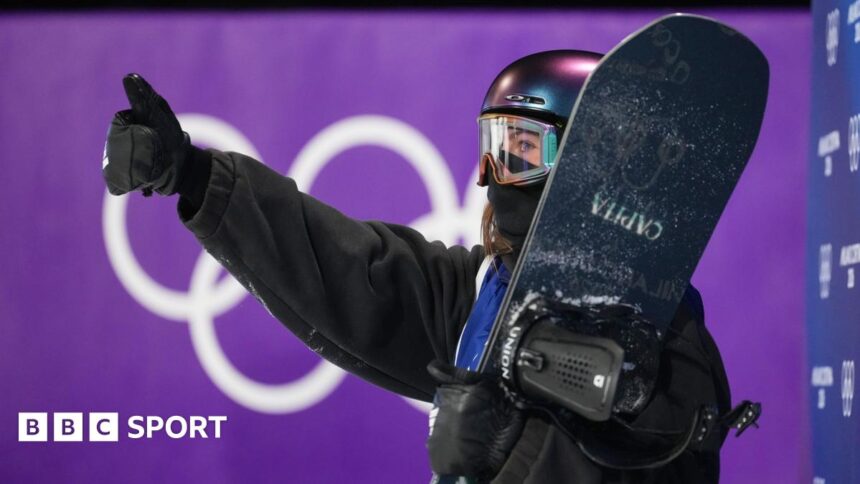
- Mia Brookes: The 17-year-old phenom isn’t just a “hope”; she is a bona fide gold medal contender in the women’s snowboard slopestyle. As the reigning and youngest-ever world champion in the event, her technical prowess and big-trick mentality make her a focal point of Britain’s second week.
- Dave Ryding: “The Rocket” carries the nation’s hopes in Alpine skiing’s men’s slalom. A veteran who finally broke Britain’s 50-year World Cup drought with a stunning victory in January, his experience and recent peak form make him a threat for the podium on the sport’s most technical stage.
- Bruce Mouat: Skip of the men’s curling team, Mouat is the current world champion and a silver medallist from the mixed doubles in Beijing. His rink is consistently ranked number one globally and represents one of Team GB’s most reliable shots at a medal, if not gold.
- Kirsty Muir: In the women’s ski big air and slopestyle, Muir has already shown her quality with a fifth-place finish in slopestyle. Her amplitude and style in the big air discipline, where she is a world silver medallist, give her a legitimate podium chance.
This is not a list of maybes; this is a roster of proven world-level performers. Their events are still to come.
Beyond the Podium: The Foundation for Future Success
The current medal drought, while painful, must be viewed in the context of a longer journey. The fact that Britain is punching above its weight has evolved. We now expect to qualify athletes in almost every discipline, from ski cross to speed skating. This breadth of participation is a new form of success, built on the legacy of those who broke the ice before. The system funded by National Lottery money is producing depth, not just stars. The “plenty” of World Cup podium finishes throughout this season proves the pipeline is healthy. A single Games without early medals does not collapse a system; it tests it. The resilience shown by athletes in responding to near-misses—the agonising 0.02-second margins in skeleton—demonstrates a professional culture that will fuel the next generation, regardless of this week’s results.
The Final Run: Predictions for a Golden Conclusion
So, what can we realistically expect? The historical pattern suggests a surge. In Sochi 2014, all four medals came in the final six days. In PyeongChang 2018, three of the five medals were won in the second week. History has a habit of repeating itself for Team GB.
Here is where the fightback will likely manifest:
- Snowboard Slopestyle: All eyes on Mia Brookes. The pressure is immense, but her skating and contest mentality suggest she thrives on it. A medal is the expectation; its colour depends on the day.
- Men’s Curling: Bruce Mouat’s rink is too consistent and too talented not to be in the mix for at least a bronze, with gold a very real possibility. This is the steadiest ship in the fleet.
- Alpine Slalom: Dave Ryding will need the run of his life, but he has already proven he can beat the best. A podium finish would be a story for the ages and is well within reach.
- The Wildcards: Watch for the freestyle skiing and snowboard big air events, where athletes like Muir and others can pull out a career-best run. In these judged sports, anything can happen on the day.
The prediction is not for a record haul, but for a dignified, determined recovery. Two to three medals is a tangible target, with every one of them hard-earned and richly deserved.
Conclusion: Zero is Not the Final Score
The opening week of these Games has been a sobering reminder that the path of the winter sports pioneer is never linear. The transition from plucky underdog to established power is the most difficult trick of all to land. But to judge Team GB’s entire campaign at its midpoint is to make a critical error. The heart of the schedule—featuring world champions, X Games victors, and athletes who have spent the last four years climbing global rankings—is ahead of us. The punches have been heavy, but the team is still on its feet, adjusting its guard and ready to counter. The medal hopes for Team GB are not lost. They are being meticulously prepared, waiting for their moment in the starting gate, on the curling sheet, and at the top of the slopestyle course. The story of these Games for Britain is not yet written. The final chapter, and the most important tricks, are still to come.
Source: Based on news from BBC Sport.