Spurs in Flux: Inside the Hunt for an Interim Boss as Summer Overhaul Looms
The axe has fallen at Hotspur Way, but the path forward remains shrouded in the familiar fog of a North London winter. The sacking of Thomas Frank, with Tottenham perched a precarious five points above the relegation mire, has triggered not a swift succession, but a calculated pause. In a move that speaks volumes about the current state of the club, Tottenham Hotspur are set to appoint an interim manager to steer the ship through turbulent waters, deferring a permanent, defining appointment until the summer. This is not merely a caretaker role; it is a high-stakes audition and a strategic buffer, with the club’s immediate Premier League survival and long-term vision hanging in the balance.
A Duo at the Helm: Lange and Venkatesham’s Defining Moment
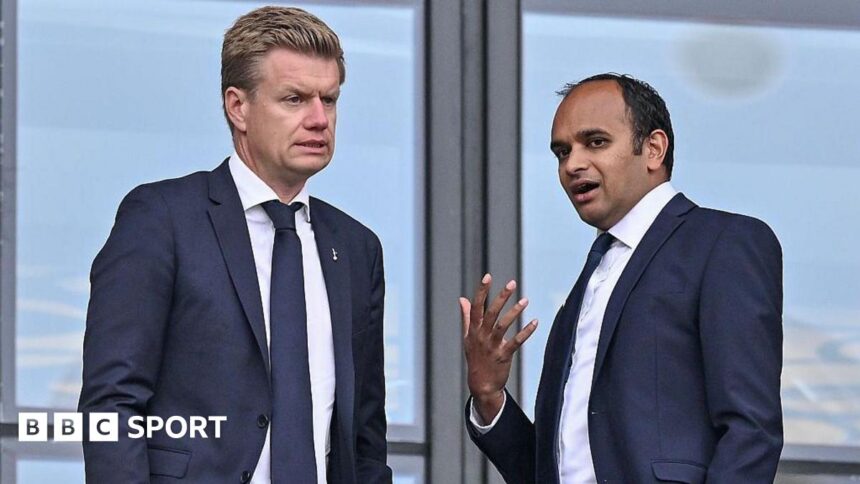
The weight of this critical decision rests on the shoulders of two key figures: Technical Director Johan Lange and Chief Football Officer Vinai Venkatesham. This partnership is now under the microscope. Lange, with his deep background in recruitment and data analytics, and Venkatesham, the executive bridge between the football operation and the board, must now demonstrate a unified and decisive strategy. Their task is twofold: identify a safe pair of hands for the gruelling final months of the season, while simultaneously laying the groundwork for a summer appointment that will define the club’s trajectory for years to come.
This process reveals a club attempting to learn from past stumbles. The reactive, often chaotic managerial searches of recent years are being replaced, in theory, with a more measured approach. The nine-day break following their FA Cup third round exit provides a sliver of respite, but the clock is ticking loudly. Sources indicate the club is confident of securing an interim boss before the squad reconvenes on Monday, a necessity with the explosive north London derby against Arsenal looming on February 22nd.
The Interim Imperative: Stability, Assessment, and Survival
Why an interim? The rationale is multi-layered and, in the current context, arguably prudent:
- Immediate Firefighting: The primary, glaring objective is to secure Premier League status. An experienced interim can provide a shock to the system, simplify tactics, and rally a squad whose confidence is clearly fractured.
- The Summer Candidate Pool: The club’s preferred long-term targets—be it a rising star from the continent or an established name—may currently be unavailable, entrenched in their own season-defining campaigns. Waiting until summer vastly expands the options.
- Squad Audition: The final months of the season serve as an extended trial for every player. A dispassionate interim can provide a clear assessment of who is fit for the fight, informing crucial summer transfer decisions.
- Diffusing Pressure: A permanent boss hired now would inherit a crisis, with their reign forever marked by a potential relegation scrap. An interim absorbs that immediate pressure, allowing the summer appointee to start with a (hopefully) clean slate.
The profile of this interim is key. Expect a figure of authority, possibly with prior club connections or a reputation for organising struggling defences. Names like Ryan Mason, a club loyalist, or experienced heads such as Rafael Benítez or Steve Bruce (for all the groans it may provoke) fit the mould of short-term stabilisers. This is not a time for philosophical revolutions; it is a time for grit, clear communication, and points.
The Summer Summit: What This Delay Says About Spurs’ Ambition
Deferring the main event to summer is a high-risk, high-reward strategy. It signals that the hierarchy believes they can survive this season with a temporary fix, and that they harbour ambitions for a coach who requires persuasion or compensation that is currently problematic. It allows Lange and Venkatesham to pursue a coherent vision, rather than a panic buy.
Potential summer targets could range from the ever-present links with Brighton’s Roberto De Zerbi, whose style would thrill fans, to a project-focused coach like Sporting’s Rúben Amorim. It may also include a serious run at a German tactician, such as Julian Nagelsmann, should his international commitments conclude. The interim period becomes a proving ground for the club’s structure as well. Can they provide the right environment for the interim to succeed? The answer will either bolster or severely damage their pitch to elite coaches in a few months’ time.
However, the gamble is monumental. Should the interim appointment fail and results deteriorate, Spurs could find themselves in an even more dire predicament come May—potentially in the Championship, and a far less attractive proposition for any top-tier manager. The margin for error is virtually non-existent.
Predictions and The Road to the Derby
The immediate future is fraught with tension. The interim manager’s first task will be to harness the unique energy of the north London derby. A positive result against Mikel Arteta’s high-flying Arsenal could be a season-altering moment, injecting belief and momentum. A heavy defeat, however, could instantly undermine the new boss and deepen the sense of crisis.
Look for the interim to implement a back-to-basics approach:
Organised, low-block defence to stop the bleeding of goals.
A simplified, direct attacking plan to utilise the pace in the squad.
An immediate emphasis on physical and mental resilience in training.
The prediction here is one of painful pragmatism. Spurs will likely scrape enough results under the interim to secure safety, but it will be an ugly, nerve-shredding process. The football may be forgettable, but the points will be precious. The summer will then bring a wave of optimism, a new “project,” and a familiar cycle of hope—but only if the great interim gamble pays off in the next thirteen weeks.
Conclusion: A Club at a Crossroads, Choosing Detour Over Destination
Tottenham Hotspur’s decision to install an interim manager is a stark admission of their current reality. This is a club not ready to choose its future, because the present is too unstable. It is a strategy born of necessity, not design. The reigns handed to Johan Lange and Vinai Venkatesham have never been heavier; their ability to identify the right short-term leader and sell a compelling long-term vision will define their tenures and the club’s medium-term fate.
The coming months will be a test of nerve, of professional pride, and of sheer survival instinct. The interim manager becomes the most important figure in the club, tasked with preserving its Premier League status so that the summer can be about ambition rather than atrophy. For Spurs fans, it’s another chapter of uncertainty, but within this stopgap solution lies a glimmer of strategic thinking. The message is clear: the house is on fire, but they are trying to call an architect for the rebuild, not just a firefighter. Whether the house is still standing for that architect to assess, however, is the drama that will now unfold.
Source: Based on news from BBC Sport.