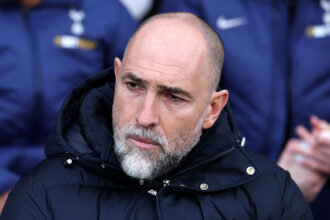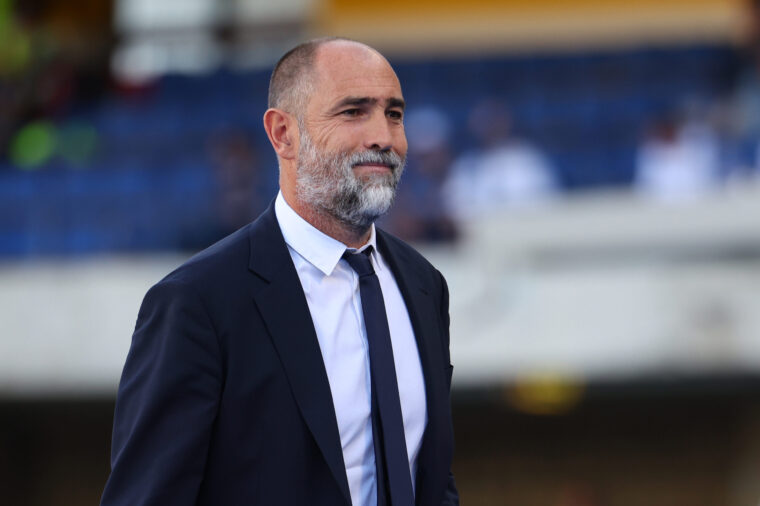
Igor Tudor Agrees to Become Tottenham Interim Head Coach in Shock Short-Term Move
In a swift and decisive move that has sent shockwaves through the Premier League, Tottenham Hotspur have reached a verbal agreement to appoint the fiery and intense Igor Tudor as their interim head coach until the end of the season. The North London club, reeling from the abrupt dismissal of Thomas Frank on Wednesday, have turned to the Croatian tactician as their preferred short-term solution, opting for a starkly different managerial profile to steady the ship. This is not a long-term play, but a calculated, high-stakes gamble for the remainder of a turbulent campaign.
The 47-year-old Tudor is expected to sign a deal running only until the summer, with no option to make the appointment permanent—a clear signal that Tottenham’s long-term managerial search remains a separate project entirely. Led by chief executive Vinai Venkatesham and technical director Johan Lange, the Spurs hierarchy moved with remarkable speed to secure their man, prioritizing immediate stability and a distinct tactical identity over a drawn-out courtship. The message is clear: the final months of this season are now a distinct audition, not for Tudor, but for the entire squad under a notoriously demanding leader.
A Tactical Earthquake: What Tudor Brings to N17
Forget the possession-centric philosophies that have defined recent eras at Tottenham. Igor Tudor is a disciple of the intense, high-press, man-marking system perfected by his mentor, Gian Piero Gasperini at Atalanta. His football is not pretty; it is physically punishing, mentally exhausting, and relentlessly aggressive. At his previous clubs, including a successful stint at Marseille, Tudor transformed teams into units of sheer force, often deploying a 3-4-2-1 or 3-5-2 formation that demands supreme athleticism and tactical discipline from every player.
This appointment represents a fundamental cultural reset for a Spurs squad often accused of softness. Tudor’s non-negotiables are well-documented:
- Aggressive Man-to-Man Pressing: Out of possession, his teams hunt in packs, marking opponents across the entire pitch, a system that leaves no room for passengers.
- Vertical, Direct Attacking: The ball is moved forward with pace and purpose. Patient build-up is sacrificed for rapid transitions and creating chaos in the opponent’s penalty area.
- Extreme Physical Demand: Players are pushed to their absolute physical limits. Pre-season under Tudor is famously brutal, and his in-season training maintains that intensity.
The immediate question is how Tottenham’s current squad, assembled for a different style, will adapt. The likes of Pedro Porro and Destiny Udogie seem tailor-made for the wing-back roles, while the energy of Pape Matar Sarr could thrive. However, for other technically gifted but less defensively robust players, the coming weeks could be a severe shock to the system.
Decoding the Strategy: A Short-Term Fix with Long-Term Implications
Tottenham’s decision to appoint Tudor on a strictly interim basis is a fascinating piece of club strategy. It reveals several key insights into the thinking of Venkatesham, Lange, and the board.
Firstly, it underscores a palpable sense of urgency to salvage the season. With European qualification still a tangible goal, the club could not afford a prolonged period under a caretaker with no first-team experience. Tudor is a proven operator at a high level, capable of implementing a clear identity immediately. He is a tactical shock therapy.
Secondly, it completely decouples the immediate crisis from the long-term vision. By ruling out a permanent move now, the club alleviates the pressure of a “trial period” for Tudor and can conduct a thorough, discreet search for their permanent manager this summer. Names like Roberto De Zerbi, Ange Postecoglou, or a surprise candidate can be evaluated without the noise of the current season’s run-in.
Most intriguingly, this move can be seen as an audition for the players, not the coach. Under Tudor’s unforgiving microscope, every member of the squad will be judged on their adaptability, work ethic, and mental toughness. The data and performances gathered between now and May will provide the incoming permanent manager—and the technical director—with invaluable evidence on who can withstand pressure and who may be surplus to requirements in a new, harder-edged Tottenham era.
Predictions: Chaos, Carnage, and a Clearer Future
The final months of Tottenham’s season are now must-watch television, but not necessarily for free-flowing football. Expect a period of significant turbulence.
Initially, there will likely be a “new manager bounce” fueled by adrenaline and fear. The players will run themselves into the ground. However, the complexity of Tudor’s system means defensive mistakes and disjointed play are probable as players learn on the job. Results could be wildly inconsistent: a rousing, energetic win one week, followed by a chaotic, disorganized defeat the next.
Key players will be thrust into the spotlight. Cristian Romero seems born to be a leader in this back-three system. The midfield duo of Rodrigo Bentancur and Sarr could become the aggressive engine room Tudor desires. Conversely, players whose primary strength is creative subtlety may find themselves on the periphery, struggling with the defensive demands.
By the season’s end, Tottenham will likely have secured a mid-table finish, possibly sneaking into a Europa Conference League spot. More importantly, the club’s leadership will have gained absolute clarity. They will know which players have the mentality to stay, they will have a definitive assessment of the squad’s character, and they will enter the summer with a clean slate to appoint their chosen long-term architect, unburdened by an interim coach expecting the job.
Conclusion: A Necessary Jolt for a Drifting Giant
The appointment of Igor Tudor is a radical, short-term shock treatment for a Tottenham Hotspur side that had lost its way. It is a concession that the previous project had failed and that the remainder of this season needed a purpose beyond mere points accumulation. This is not about building a legacy for Tudor; it is about installing a human catalyst to provoke reaction, reveal truths, and restore a baseline of intensity at the club.
For the fans, it promises passion and fire, but also inevitable frustration. For the players, it is the ultimate test of professional pride and adaptability. For the board, it is a strategically neat, if brutally pragmatic, solution to bridge a crisis and enable a clearer future.
As Tudor prepares to land in North London, one thing is certain: comfort zones are about to be obliterated. The Tottenham Hotspur Stadium is set to become a crucible, and from the heat of the next few months, the club hopes a stronger, more resilient identity will begin to form for whoever takes the permanent reins this summer. The Tudor era may be brief, but its impact could resonate for far longer.
Source: Based on news from Yahoo Sports.