Brian Flores’ Landmark NFL Discrimination Lawsuit Clears Final Hurdle, Heads to Public Trial
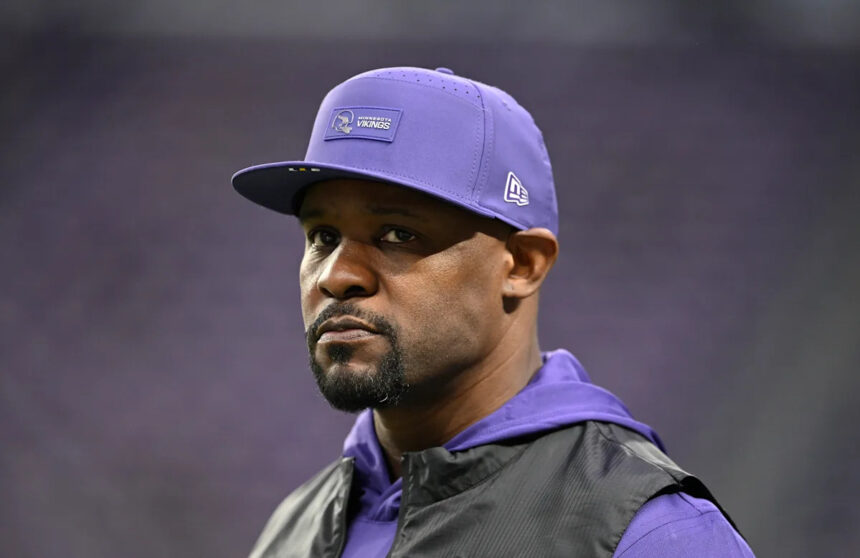
In a seismic ruling with the power to reshape the National Football League, a federal judge has cleared the path for former Miami Dolphins head coach Brian Flores to take his racial discrimination lawsuit against the NFL and several teams to an open trial. The decision, handed down by the U.S. District Court for the Southern District of New York, denies the league’s efforts to force the explosive claims into a private arbitration overseen by NFL Commissioner Roger Goodell. This ruling ensures that one of the most damning challenges to the NFL’s hiring practices will be argued not behind closed doors, but in the full glare of the public courtroom—a prospect the league has fought vigorously to avoid.
The Court’s Decision: A Rejection of “Kangaroo Court” Arbitration
At the heart of this legal battle was a fundamental question of fairness: could the NFL, as the defendant, legitimately force employees to have their discrimination claims adjudicated by the league’s own commissioner? The court’s resounding answer was no. Upholding decisions from both a district judge and the 2nd U.S. Circuit Court of Appeals, the ruling affirms that Flores’ discrimination lawsuit will proceed to a jury trial.
The legal team for Flores and his co-plaintiffs—former Arizona Cardinals head coach Steve Wilks and longtime assistant coach Ray Horton—hailed the decision as a victory for transparency. “The court’s decision recognizes that an arbitration forum in which the defendant’s own chief executive gets to decide the case would strip employees of their rights under the law,” attorneys Douglas H. Wigdor and David E. Gottlieb stated. This sentiment cuts to the core of the plaintiffs’ argument: that the NFL’s internal mechanisms are structurally biased and designed to protect the league, not to provide justice for employees alleging systemic racism.
Key implications of the court’s ruling include:
- Public Scrutiny: The NFL’s hiring processes, internal communications, and executive depositions are now subject to discovery and potential public testimony.
- Legal Precedent: It firmly establishes that claims under certain anti-discrimination statutes cannot be forced into arbitration clauses found in employment contracts when a neutral forum is not guaranteed.
- Collective Action: The class-action nature of the suit means the trial could address league-wide patterns, not just isolated incidents.
Deconstructing the Lawsuit’s Explosive Allegations
Filed in February 2022, Flores’ original lawsuit was a grenade tossed into the NFL’s front office. It alleges that the league’s commitment to diversity, exemplified by the Rooney Rule, is a “sham” that perpetuates a cycle of discriminatory hiring. Flores, an assistant for 11 years before leading the Dolphins for three seasons, was fired in 2022 despite a winning record in his final two years. His subsequent job search became the catalyst for the suit.
Most notably, Flores alleges that his interview with the New York Giants in 2022 was a “sham” conducted only to satisfy the Rooney Rule, as the team had already decided to hire Brian Daboll. He claims to have received congratulatory texts from Patriots coach Bill Belichick for the Giants job days before the interview—texts mistakenly intended for another candidate named “Brian.” Similarly, his suit claims the Denver Broncos conducted a 2019 interview with him under then-GM John Elway where executives showed up an hour late and appeared visibly hungover, indicating they never seriously considered him for the position.
Steve Wilks alleges he was given a “bridge” job with the Arizona Cardinals in 2018, set up to fail with a poor roster and then replaced by a white coach after a single season. Ray Horton claims his 2016 interview with the Tennessee Titans was a Rooney Rule checkbox, as the team had already decided on Mike Mularkey, who later admitted the job was “100 percent” his before interviews concluded. These narratives paint a picture of a NFL hiring process where minority candidates are often used as procedural pawns rather than genuine contenders.
Expert Analysis: The NFL’s Mounting Legal and PR Crisis
Sports law and diversity experts view this ruling as a catastrophic procedural loss for the NFL. “The league’s worst-case scenario is now unfolding,” says Dr. Lecia Johnson, a sports sociologist. “They have lost control of the narrative. Arbitration is about containment; a public trial is about exposure. Every owner, every executive, every text message related to these hiring processes is now a potential exhibit.”
The legal strategy is now clear: by avoiding the league’s internal arbitration, Flores’ attorneys can subpoena a vast trove of documents and compel high-ranking officials to testify under oath. The discovery phase alone could unearth evidence of discriminatory patterns far beyond the specific cases mentioned in the suit. Furthermore, the class-action lawsuit status amplifies the stakes, moving the focus from individual grievances to an institutional reckoning.
From a public relations perspective, the NFL faces a no-win situation. A trial will keep the issue of racial inequity in leadership—a chronic stain on the league—at the forefront of sports news for months. Even if the NFL were to settle on the courthouse steps, the perception will be that they paid to keep damning evidence from seeing the light of day. The court’s decision has effectively cornered the league, limiting its options to either a bruising public trial or a massive, admission-adjacent settlement.
Predictions and Ramifications: What Comes Next for the NFL?
The path forward is fraught with uncertainty for America’s most powerful sports league. Several key developments are now on the horizon:
- Intensified Settlement Talks: The pressure on the NFL to settle will become immense. A pre-trial settlement would allow the league to avoid the discovery process and a public airing of its dirty laundry. However, any settlement would likely be historic in size and require substantive, league-wide changes to hiring practices.
- Discovery Phase Fireworks: If the case proceeds toward trial, the discovery phase will be a journalistic goldmine. Depositions of owners, general managers, and Commissioner Goodell will be scrutinized for any admission or contradiction.
- Rooney Rule Overhaul: The trial will force a fundamental re-evaluation of the Rooney Rule. Expect calls for more stringent penalties, transparent reporting, and perhaps even draft-pick compensation for teams that develop minority head coaches and executives hired away by other clubs.
- Cultural Reckoning: Beyond the law, the trial will serve as a public tribunal on the NFL’s culture. The testimony could validate long-held frustrations among Black coaches and assistants, potentially leading to a wave of further legal actions or a coordinated demand for structural reform from the NFL Players Association.
Conclusion: A Pivotal Moment for Equity in American Sports
Brian Flores’ lawsuit is no longer just a legal complaint; it is a referendum. The court’s decision to green-light a public trial transforms it from a behind-the-scenes dispute into a historic public examination of power, race, and equity in a multi-billion dollar industry. The NFL, an entity that prides itself on controlling its message and image, has lost its ability to manage this crisis internally. The league now faces the very real prospect of a federal trial where its most influential leaders will be asked to defend their actions under penalty of perjury.
This case has already achieved one significant victory: it has shattered the shield of arbitration that protected the NFL for decades. Whether through a transformative settlement or a watershed trial verdict, the landscape of NFL coaching hires is irrevocably changed. The pursuit of “X’s and O’s” excellence can no longer be separated from the imperative for fair and equitable leadership opportunities. The courtroom doors are now open, and the entire sports world will be watching.
Source: Based on news from Yahoo Sports.