Why GB’s First Olympic Gold on Snow Was Always Inevitable
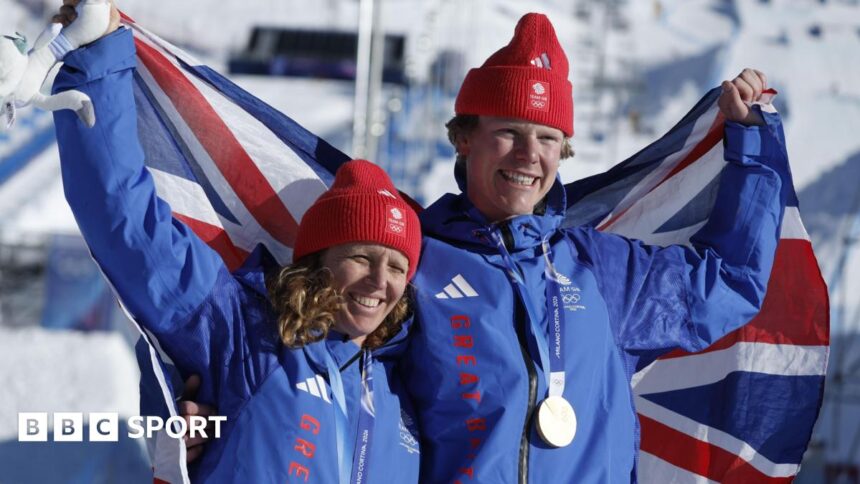
For over a century, it stood as the final, frosty frontier for British winter sport: an Olympic gold medal won on snow. While ice has been kind—think Torvill and Dean, Lizzy Yarnold, the curling rinks of Salt Lake and Sochi—the snowy slopes remained stubbornly barren of the ultimate prize. That 102-year wait, a narrative of ‘plucky losers’ and near misses, was not just ended but emphatically shattered in Livigno. Charlotte Bankes and Huw Nightingale, in a blistering display of power and partnership, claimed the mixed team snowboard cross title, carving their names into history as Britain’s pioneering snow gold medalists. Yet, for those watching the evolution of British snowsports, this seismic moment wasn’t a shock. It was the culmination of a calculated, well-funded, and athlete-centric revolution. The gold was not found by chance; it was built, piece by piece, and its arrival was, finally, just a matter of time.
The Long Wait: More Than Just a Historical Footnote
The statistic—102 years without a snow gold—is often recited with a wistful sigh. It conjures images of heroic failure against alpine Goliaths. But this framing obscures a more complex truth. Britain’s winter sports history was, for decades, largely amateur, underfunded, and geographically disconnected. The nation lacks the vast, high-altitude terrain of the Alps or Rockies, making athlete development a monumental challenge. Success came in disciplines where technique, engineering, and nerve could offset natural disadvantage: the precise art of figure skating, the controlled chaos of the skeleton sled, the tactical chess of curling.
Snow sports, particularly the alpine and freestyle events, demanded a different ecosystem—one of year-round training on world-class slopes, access to cutting-edge coaching and technology, and a deep talent pipeline. For most of the 20th century, Britain simply did not have that system. The “plucky Brit” narrative was born from genuine circumstance, not a lack of heart. The wait, therefore, wasn’t a curse of incompetence, but a reflection of the immense, infrastructure-heavy mountain that needed to be climbed.
The Building Blocks of a Snowsports Revolution
The turn of the millennium marked a quiet but decisive shift. The catalyst was a combination of strategic investment and a philosophical overhaul within the system. UK Sport’s National Lottery funding, targeted ruthlessly at medal potential, began to flow into snowsports with more purpose. This wasn’t just about buying athletes better skis; it was about building a sustainable performance environment.
- World-Class Coaching & Infrastructure: Governing bodies began recruiting top international coaches and securing consistent training bases in the Alps and North America. Athletes no longer had to scrape together a season; they had a professional training calendar.
- Sports Science Integration: From nutrition and physiology to psychology and video analysis, British snowsports athletes gained access to the same performance support networks as their summer Olympic counterparts. Marginal gains were pursued on the mountain with the same rigor as on the cycling track.
- Talent ID & Development: Proactive programs scoured the country for athletic potential, not just those who happened to grow up near a dry slope. The creation of elite academies, like the British Ski and Snowboard Academy, provided a pathway for young talent to combine education with high-level training.
This systemic change created a new breed of British snowsports athlete: full-time, professional, and expecting to win. The near-misses started to pile up—a bronze here, a fourth place there. The dam was creaking.
Bankes and Nightingale: The Perfect Storm of Preparation and Opportunity
The mixed team snowboard cross event, new to the Olympic program, was the ideal arena for this new British approach to bear fruit. In Charlotte Bankes, Team GB possessed a bonafide world champion. A former French team rider, her decision to switch allegiance to Britain in 2018 was a seismic statement of belief in the UK system. She wasn’t coming for the scenery; she was coming because British Snowsport could provide the platform to win. In Huw Nightingale, they had the perfect partner: consistent, tactically astute, and peaking at the right moment.
Their victory was a masterclass in modern Olympic preparation. It wasn’t a fluke run of luck. It was the product of:
- Individual Excellence: Bankes’s raw power and experience as a multiple World Cup winner.
- Team Synergy: Their practice together, relay transitions, and mutual understanding were honed to perfection.
- Technical and Tactical Superiority: Their starts were explosive, their line choices intelligent, and their ability to handle pressure in the chaotic, pack-racing format was evident.
They didn’t just win a race; they executed a plan that had been years in the making. They were the personification of the system’s intent: world-class athletes, supported by a world-class program, seizing a world-class opportunity.
The Avalanche Effect: Predictions for a Golden Future
Bankes and Nightingale haven’t just made history; they have irrevocably changed the future. The psychological barrier is gone. The “impossible” is now a blueprint. This gold will have a profound legacy impact, inspiring the next generation and validating the investment model. Predictions for British snowsports are now overwhelmingly positive.
We can expect to see:
- Increased Medal Consistency: This gold will likely be the first of many on snow. Athletes in freestyle skiing (slopestyle, halfpipe, big air) and other snowboard disciplines are already knocking on the door of the podium.
- Enhanced Funding & Commercial Appeal: Success breeds investment. Sponsors and broadcasters will take greater notice, funnelling more resources into the sport and creating a virtuous cycle of growth.
- A Redefined Identity: The “plucky Brit” tag can be retired. The new identity is that of a savvy, professional, and potent snowsports nation that develops winners.
The question is no longer *if* Britain will win more Olympic gold on snow, but *how many* and *how soon*.
Conclusion: A Legacy Forged, Not Found
The images from Livigno are immortal: Bankes and Nightingale, draped in the Union Flag, standing atop a podium that had eluded British athletes for ten decades. But to view this as simply the end of a long wait is to miss the true story. This was not a lucky strike. It was the definitive arrival of a new power in winter sports.
Britain’s first Olympic gold on snow is a victory of vision over geography, of system over chance. It proves that with the right support, talent can thrive anywhere. Charlotte Bankes and Huw Nightingale are the glorious tip of the spear, but behind them stands a reformed and formidable apparatus built for this exact moment. The 102-year journey was not in vain; it was the necessary prelude to a golden age. The impossible has been achieved, and in doing so, Team GB has sent a clear message to the winter sports world: on snow, we are just getting started.
Source: Based on news from BBC Sport.