What Pep Guardiola’s Old Newspaper Column Reveals About Manchester City’s Tactical Evolution
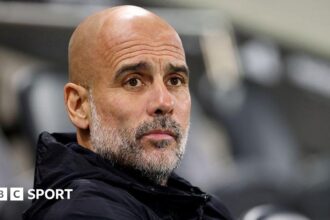
The question was simple, born from hours of video analysis and a nagging sense of tactical deja vu. “Pep,” I began in last week’s press conference, “we’re seeing your attackers—Foden, Grealish, Doku, even Haaland—consistently occupying the same central corridors. It’s a world away from the chalk-on-the-boots wingers of your first title win. Is this a permanent philosophical shift, or simply adapting to the players you have now?”
His reply was instant, dripping with that familiar blend of sarcasm and insight. “Do you want to be my assistant coach? You are brilliant, you are top.” The room chuckled. But for me, it was a spark. It wasn’t a denial. It was a confirmation that the change was real, deliberate, and deeply rooted. To understand Manchester City’s present and future, you must look not just at last season, but to a forgotten artifact: Pep Guardiola’s newspaper column from his 2007-08 sabbatical.
The Columnist’s Blueprint: Control, Not Width
Before taking the Barcelona job, a young Guardiola penned a regular tactical column for Catalan newspaper El Mundo Deportivo. These weren’t match reports; they were philosophical treatises. Revisiting them today is startling. The obsession wasn’t with flying wingers, but with central overloads and positional play. He wrote extensively about the “interior” spaces—the half-spaces between the wing and the center. He argued that dominating these zones, not the touchlines, was the key to controlling the pitch and breaking compact defenses.
Fast forward to 2017-18. At City, Guardiola had Leroy Sané and Raheem Sterling, two of the most devastating wide forwards on the planet. His system utilized their blistering pace in transition, stretching teams horizontally to create cavernous gaps for David Silva and Kevin De Bruyne. The white paint on their boots was a badge of honor. But it was also, perhaps, a concession—a brilliant adaptation to his personnel, not the purest expression of his column’s ideology.
Today, the canvas is different. The players are different. And Guardiola is finally painting his masterpiece exactly as he first sketched it.
The Great Convergence: How City’s Attackers Now Operate
Watch a current City game. The difference is visual and profound. The era of fixed wingers is over. Instead, we see a fluid attacking pod operating in a central band of the pitch. This is the implementation of those old column ideas.
- Phil Foden & Kevin De Bruyne: They are the ultimate “interiors.” Neither are traditional wingers nor pure central midfielders. They constantly drift into the half-spaces, receiving the ball between the lines, turning, and attacking the heart of the defense. Their starting position might be wide, but their destination is always central.
- Jack Grealish & Jérémy Doku: They serve as “wide playmakers” and “ball carriers,” not out-and-out wingers. Grealish’s primary role is to attract defenders, win fouls, and provide secure possession in the final third before linking inside. Doku’s explosiveness is a weapon to unbalance a defense before often cutting into his preferred right foot in central areas.
- Erling Haaland: He is the ultimate focal point and space-creator. His ruthless presence pins center-backs, creating the room for Foden, De Bruyne, and Silva to operate in those coveted interior zones. He is the anvil upon which the interplay is forged.
This creates a numerical superiority in the center. With four or five players buzzing in a 30-yard horizontal band, opposition midfielders and defenders are overwhelmed. Passing lanes multiply. One-twos become incessant. The goal is to create not a crossing opportunity, but a clear sight of goal from a central position.
The Engine Room Shift: From Fernandinho to Rodri’s Evolution
This attacking shift is impossible without a corresponding revolution at the base of midfield. The 2017-18 model relied on Fernandinho—a phenomenal destroyer and recycler. His job was to win it, give it, and protect the space behind the flying wingers.
Rodri’s role is fundamentally different. He is the single pivot orchestrator. With attackers converging centrally, the wings are deliberately vacated. This leaves immense space on the flanks for Rodri to exploit. His game is now defined by:
- Switching Play: His breathtaking cross-field passes to the weak-side winger (or advancing full-back) are the new width. He doesn’t just recycle possession; he re-angles the entire attack in an instant.
- Penetrative Passing: From deep, he now threads vertical passes into the feet of the interior attackers, a role previously reserved for more advanced playmakers.
- Increased Goal Threat: His clutch goals in recent seasons are no accident. With opponents preoccupied with City’s central swarm, Rodri arrives late into unchecked space on the edge of the box.
He is the calm eye of the storm, the point guard redistributing the ball to where the defense is most vulnerable. This was all prefigured in Guardiola’s writings, where he described the holding midfielder as the “brain” of the team, the first attacker.
The Future is Narrow: Predictions for City and Their Rivals
So, is this the final form? Guardiola will never stop tinkering, but the principles from his columnist days appear to be his tactical endgame. This shift has major implications.
For Manchester City, future recruitment will prioritize technical, agile players comfortable in congested central spaces over outright speedsters. The “winger” archetype is being redefined. We can also expect full-backs like Josko Gvardiol to take on even more attacking importance as the primary providers of true width, inverting only at the right moment.
For opposing teams, the challenge is nightmarish. Defending wide against Sterling was difficult, but it was a known problem. Defending against five players interchanging in a central maze is a conceptual puzzle. The solution—a compact, low block—plays into City’s hands, allowing Rodri and the center-backs to control the game. Pressing them high is incredibly risky due to their technical security.
The most successful teams may be those who can mimic this structure and fight fire with fire in the center of the park, or those who can develop rapid, devastating counter-attacks that exploit the space City willingly cedes on the flanks during their build-up.
Conclusion: The Philosopher King Finally Home
When Pep Guardiola joked about making me his assistant, he was acknowledging a truth visible in his own history. The 2017-18 team was a magnificent machine, built to dominate the Premier League of its time. But the 2024-and-beyond City is the purest incarnation of Guardiola’s lifelong footballing philosophy, finally fully realized with the players and confidence to execute it.
The white paint has been scrubbed from the boots. The action is now in the grass, in the most crowded, demanding, and creative area of the pitch. The columnist from 2007, dreaming of control through centrality, would look at this team and see not just a champion, but his vision made flesh. The evolution is complete. The revolution is here.
Source: Based on news from BBC Sport.