Gold Medal Glory Meets Political Politeness: U.S. Women’s Hockey Team Declines SOTU Invite
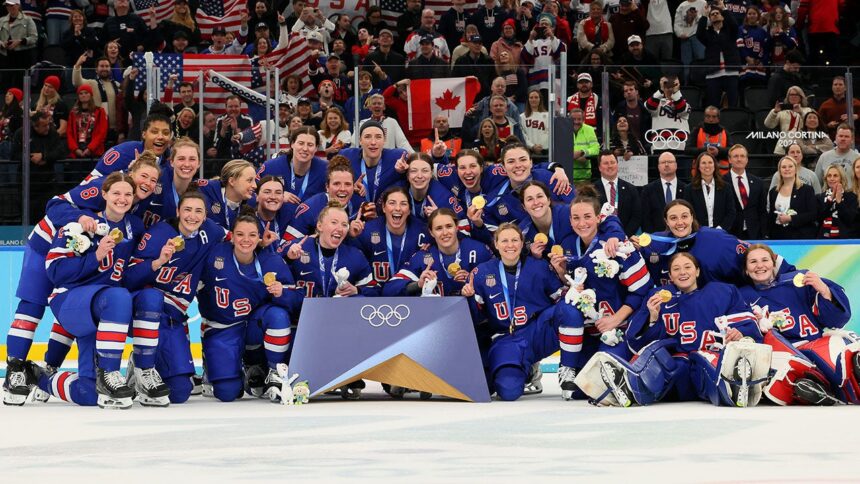
The roar of the crowd in Milan had barely faded. The weight of the gold medals, earned in a heart-stopping victory over archrival Canada at the 2026 Winter Games, still felt new and profound around their necks. For the U.S. Women’s National Hockey Team, the return home was a whirlwind of celebration and the daunting task of returning to normal life. This week, however, their historic win intersected with the political calendar, creating a moment of quiet, diplomatic significance. The team, in a move characterized by grace and logistical reality, declined an invitation from President Donald Trump to attend his State of the Union address.
A Victory Forged in Rivalry: The Milan Gold Standard
To understand the weight of the invitation, one must first appreciate the magnitude of the achievement. The U.S. women’s ice hockey team did not just win gold; they conquered a dynasty. Defeating Canada in a women’s hockey final is the pinnacle of the sport, a battle that has defined generations of athletes. The 2026 victory in Milan-Cortina was a testament to years of planning, sacrifice, and a relentless pursuit of excellence that finally tipped the scale. This wasn’t an underdog story in the traditional sense; it was a coronation of a team that had long been knocking on the door, finally kicking it down.
This win sparked immediate debate in sports circles. Notably, commentator Colin Cowherd posed a provocative question: how does this gold-medal victory over Canada compare to the iconic 1980 “Miracle on Ice,” where the U.S. men’s team stunned the Soviet Union? The parallels are superficial—both are historic U.S. hockey wins on the Olympic stage—but the contexts are worlds apart.
- The 1980 Win: A geopolitical proxy battle during the Cold War, featuring amateur U.S. college kids against the seemingly invincible Soviet “Big Red Machine.” The victory was a seismic cultural event that transcended sport.
- The 2026 Win: The culmination of a professionalized, decades-long women’s sports movement. The U.S. and Canada are peer superpowers in women’s hockey; the victory was about supremacy within an established hierarchy, not a shocking overthrow of an empire.
America should feel immense pride in both, but for different reasons. The 1980 win was a symbol of hope and defiance. The 2026 win is a symbol of sustained excellence and investment in women’s athletics. It’s a celebration of a team that is expected to be great—and delivered.
The State of the Union Invitation: Honor and Scheduling Realities
In the aftermath of such a triumph, recognition from the nation’s highest office is a traditional gesture of patriotic celebration. The invitation to the State of the Union address is a coveted honor, a chance for athletes to be celebrated before the assembled government and a national television audience. President Trump’s invitation followed this long-standing custom.
The team’s response, delivered through USA Hockey, was a masterclass in diplomacy and tact. “We are sincerely grateful for the invitation… and deeply appreciate the recognition of their extraordinary achievement,” the statement read. It then cited the core reason for declining: “Due to the timing and previously scheduled academic and professional commitments following the Games, the athletes are unable to participate.”
This explanation is rooted in the tangible reality of a women’s hockey player’s life. Unlike athletes in the highest-revenue professional leagues, many of these gold medalists have immediate obligations to return to:
- NCAA and professional league seasons already in progress or resuming.
- Academic responsibilities at their universities.
- Primary careers and jobs outside of hockey that were paused for Olympic training.
The statement concluded with genuine appreciation: “They were honored to be included and are grateful for the acknowledgment.” There was no political commentary, no overt statement—just the practicalities of life for world-class athletes who, for many, balancing sport with career and education is a necessary part of the journey.
Expert Analysis: Reading Between the Lines in the Sports-Political Arena
As a sports journalist, the analysis of this event must separate the optics from the almost certain reality. In today’s hyper-polarized climate, any interaction between high-profile athletes and political figures is scrutinized for subtext. However, the most compelling reading of this situation is the simplest: scheduling conflict and personal priority.
These athletes have just completed the most intense period of their sporting lives. The Olympic cycle demands years of singular focus. Post-Games, there is a critical window to reintegrate into “normal” life—to fulfill contractual obligations with their professional clubs, to not fall behind in semester studies, and to capitalize on the fleeting opportunities for endorsements and appearances that follow a gold medal. A trip to Washington, D.C., with associated security protocols and rehearsals, is a multi-day commitment during a precious and already over-scheduled time.
Furthermore, the U.S. women’s hockey team has a history of activism, most notably their successful 2017 fight for equitable support and fair wages from USA Hockey. This is a group keenly aware of its platform and power. If a political statement was intended, their history suggests it would have been more direct. The choice here appears to be one of prioritizing their immediate team, personal, and professional ecosystems over a symbolic, though prestigious, political appearance. It is a choice that speaks to the maturity and busy lives of modern female athletes.
Predictions: The Lasting Impact of a Polite “No, Thank You”
What does this mean for the future of sports and political crossovers? This incident will likely have a subtle but meaningful impact.
First, it reinforces the professional stature of women’s sports. The reason for declining—”professional commitments”—is the same reason an NBA star or NFL MVP might cite. It frames these athletes as serious professionals with demanding schedules, not merely as amateurs available for a photo-op. This elevates their perceived value in the public eye.
Second, it may inspire a reevaluation of timing for such honors. Future administrations, recognizing the immediate post-Olympic crunch for athletes, might consider organizing a dedicated ceremony at the White House or Capitol at a later, more feasible date. This allows for proper celebration without forcing athletes to choose between national honor and personal obligation.
Finally, the team’s graceful handling of this will bolster their reputation. They accepted the honor of the invitation while respectfully declining due to prior commitments—a move that resonates as both polite and powerfully professional. It avoids unnecessary political entanglement while firmly centering the narrative on their athletic achievement and their real-world lives.
Conclusion: Where the True Victory Lies
The story of the 2026 U.S. women’s hockey gold medal is not defined by an invitation they declined. It is defined by the years of sweat, the final buzzer in Milan, and the legacy they continue to build. Their polite and practical decision regarding the State of the Union is a footnote, but an instructive one. It reminds us that these champions are not just symbols; they are students, professionals, and individuals navigating complex lives.
Colin Cowherd’s question about comparing victories is answered not in geopolitical terms, but in terms of progress. The “Miracle” was a one-off, lightning-in-a-bottle moment. The women’s gold in 2026 is the result of systemic growth, fierce advocacy, and a sustained culture of winning. Their ability to handle the ensuing spotlight—including navigating prestigious political invitations with poise and clarity—proves their victory was not just on the ice. It is in their continued demonstration of excellence, in every arena they choose to occupy. The nation’s recognition is appreciated, but their legacy was already secure, forged in the fires of rivalry and solidified in gold.
Source: Based on news from Fox Sports.