Why a Champions League Return is the Non-Negotiable Lifeline for Manchester United
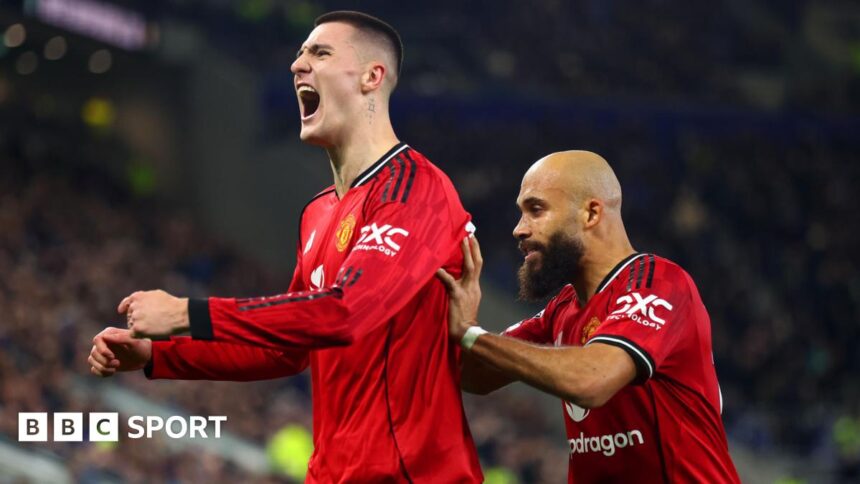
The final whistle at the Etihad, the Amex, or even Old Trafford itself. The hollow feeling of a mid-table finish. The silence of Tuesday and Wednesday nights in autumn. For Manchester United, the 2024-25 season wasn’t merely a disappointment; it was a profound identity crisis. As the powerbrokers at the club sifted through the wreckage of a catastrophic campaign, a stark, two-year roadmap emerged from the debris. The destination was unambiguous: a rapid return to the UEFA Champions League. This isn’t just a sporting ambition; it is the crucial, non-negotiable lifeline for the club’s sporting, financial, and spiritual revival.
The Financial Imperative: More Than Just a Prize Purse
While the romantic ideal is of glory under lights, the cold, hard reality is that the Champions League is the economic engine of elite football. For United, missing out is a multi-pronged financial catastrophe.
- Broadcasting Revenue Black Hole: The Champions League offers a base fee, performance bonuses, and a massive UEFA coefficient payout. Missing a single season can mean a shortfall of £50-70 million. A second year compounds the crisis, impacting Financial Fair Play (FFP) flexibility.
- Commercial Contract Clauses: Major sponsors, from kit manufacturers to global partners, have performance-related clauses. Absence from Europe’s top table triggers significant reductions in income, weakening the club’s commercial powerhouse status.
- The Transfer Market Squeeze: Elite players demand Champions League football. Without it, United are forced to pay a “tax” in inflated wages or miss out on top targets entirely, settling for second-tier prospects. It creates a vicious cycle of mediocrity.
The club’s clear two-year plan—Europa League qualification in Year One, followed by a Champions League return in Year Two—is fundamentally a financial survival blueprint. Fourth place by 2026-27 isn’t just a target; it’s a fiscal necessity.
The Sporting Project: Attracting Talent and Building a Culture
Money fuels the machine, but prestige makes it purr. The Champions League is the world’s ultimate shop window. For a club in rebuild mode, like United, it is the essential tool for talent acquisition and retention.
Consider the curious case of Benjamin Sesko. While not a United player, his statistic is telling: no player has scored more Premier League goals as a substitute this season than Benjamin Sesko. This highlights the profile of emerging, impactful talent in the league. To attract the next Sesko—or, more pertinently, to keep a Kobbie Mainoo—United must offer the platform their ambitions demand. Young stars don’t dream of Thursday nights in Azerbaijan; they dream of the Bernabéu and the San Siro.
Furthermore, the rhythm of Champions League weeks creates a culture of elite preparation and recovery. It demands a deeper, more competitive squad, raising standards in daily training. The “project” sold to a manager like Erik ten Hag—or his successor—becomes infinitely more credible with the promise of imminent Champions League football. It transforms a rebuild from a hopeful gamble into a compelling vision.
The Psychological Rebirth: Restoring the Fear Factor
Manchester United’s global brand was forged in the Champions League. The Treble in ’99, the nights of comebacks and drama under Ferguson—these are the club’s defining modern moments. Prolonged absence erodes that aura, both externally and, more dangerously, internally.
For fans, it’s a disconnect from the club’s DNA. For players, the lack of those seismic occasions can breed complacency. The determination was clear, the rationale obvious in the boardroom because they understand that the club’s psyche is at stake. Returning to the Champions League signals to the world that the wilderness years are over. It restores a layer of fear and respect at visiting grounds. It makes Old Trafford a fortress of anticipation once again, not a museum of past glories.
This psychological lift is intangible but critical. It turns pressure from a burden into a privilege. The club’s stated aim of a sixth-placed Premier League finish as a stepping stone is an acknowledgment that they must relearn how to win consistently before they can conquer Europe again.
The Roadmap to 2027: Realistic Predictions and Pitfalls
The outlined plan is logical, but the Premier League is a minefield. Achieving sixth place next season requires seeing off ambitious projects at Chelsea, Newcastle, and perhaps a resurgent West Ham or Crystal Palace. It assumes that Tottenham or Aston Villa might falter. It is a bare minimum.
The jump from sixth to the top four, however, is a different challenge entirely. It requires:
- Flawless recruitment: Signings must be instant hits, not projects. Every transfer must address a clear need.
- Managerial stability: Whether it’s Ten Hag or another, the manager must be given the time and tools to execute a philosophy.
- Injury mitigation: The squad’s depth must be improved to withstand the inevitable physical toll.
The prediction here is that United will achieve their Year One goal, but it will be a grind. Year Two, the Champions League return, hinges entirely on the success of the summer 2025 transfer window. A failure to invest wisely after a potential Europa League season could see the club stall, making the “realistic finishing spot” of fourth feel like a mirage.
Conclusion: An Existential Race Against Time
For Manchester United, the return to the Champions League is not merely crucial; it is existential. It is the singular objective that unites financial health, sporting ambition, and cultural restoration. The club’s powerbrokers have drawn their line in the sand: 2026-27. This timeline is a race against the accelerating projects of their rivals and the relentless financial pressures of modern football.
Failure is not an option that the club can sustainably endure. Another season outside the top four beyond 2027 would not just be a sporting failure; it would begin to permanently recalibrate the club’s status in the global game. The wreckage of 2024-25 served as the ultimate warning siren. The path forward is narrow, steep, and non-negotiable. For the soul of Manchester United, the lights of the Champions League must shine on Old Trafford again, and soon. The future of the club depends on it.
Source: Based on news from BBC Sport.