Uefa Stands Firm: Benfica’s Prestianni Appeal Rejected Ahead of Real Madrid Showdown
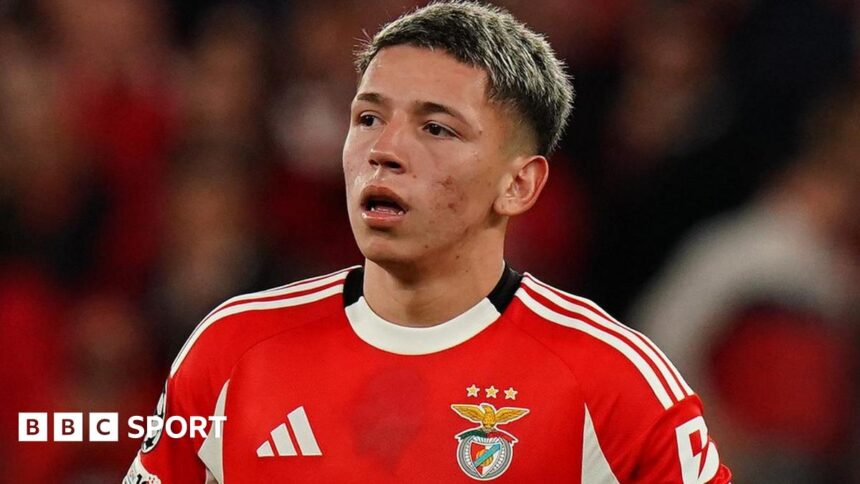
The stage is set for a dramatic Champions League knockout play-off second leg at the Santiago Bernabéu, but Benfica will walk onto that stage missing a key attacking piece. In a decisive move, Uefa has rejected S.L. Benfica’s appeal against the provisional suspension of Argentine winger Gianluca Prestianni, confirming he will play no part in Wednesday’s high-stakes clash against Real Madrid. This decision, stemming from an incident involving alleged racist abuse directed at Vinícius Júnior, adds a layer of profound controversy to a footballing spectacle already brimming with tension. With Benfica trailing 1-0 from the first leg, the sporting implications are significant; but the ethical and disciplinary ramifications echo far louder.
The Unfolding of a Controversial Suspension
The flashpoint occurred during last week’s first leg at the Estádio da Luz, a match decided by a solitary Brahim Díaz goal. Following the final whistle, Real Madrid’s Vinícius Jr., a player who has tragically become a focal point in football’s fight against racism, reported an alleged incident of racist abuse to the match official. Uefa’s Control, Ethics and Disciplinary Body (CEDB) moved swiftly, launching an immediate investigation.
Their initial action was a provisional one-match suspension for Gianluca Prestianni. It is crucial to understand the nature of this ban:
- Provisional Basis: This is not a final verdict. It is a preventative measure imposed by Uefa pending the conclusion of a full, independent investigation by an ethics and disciplinary inspector.
- Immediate Effect: Despite Benfica’s appeal, the suspension was active, meaning Prestianni was always likely to miss the second leg unless the appeal succeeded at extraordinary speed.
- Potential for Further Action: Uefa’s statement clearly indicates this could be just the beginning. The ongoing investigation may uncover more details, leading to additional sanctions for the 20-year-old or other individuals.
Benfica, while publicly announcing their intention to appeal, struck a resigned tone, acknowledging the appeal was unlikely to “have any practical effect” before the trip to Madrid—a prediction that has now proven accurate.
Sporting Consequences: Benfica’s Uphill Battle Just Got Steeper
From a purely tactical perspective, Roger Schmidt’s task has been complicated. Trailing by a single goal away from home, the mission was already monumental. Now, it must be undertaken without a specific offensive weapon. Gianluca Prestianni, the young Argentine signed from Vélez Sarsfield, represents a particular profile: a direct, left-footed winger capable of isolating defenders and providing a different option from the bench. Against a Real Madrid side likely to enjoy more possession, his pace on the counter-attack could have been a valuable, if not starting, asset.
Benfica’s strategy must now be recalibrated. The onus falls even more heavily on the shoulders of players like Ángel Di María, who will face his former club, and Rafa Silva to create magic. The absence of Prestianni diminishes Benfica’s tactical flexibility and reduces Schmidt’s ability to change the game’s dynamic in the latter stages. For Carlo Ancelotti’s Real Madrid, holding a slender lead and now facing a depleted opponent, the directive is clear: control the game, avoid unnecessary risks, and leverage the immense pressure of the Bernabéu to secure their passage to the round of 16.
Expert Analysis: A Landmark Decision in Uefa’s Disciplinary Process
This case is being closely watched as a potential precedent. Uefa’s decision to impose a provisional suspension before a full investigation is complete is a powerful and relatively swift tool. In the past, disciplinary processes could drag on, allowing players under investigation to continue participating. This “wait-and-see” approach often drew criticism, particularly in sensitive cases involving discrimination.
“Uefa is sending an unequivocal message,” states a veteran football legal analyst familiar with Uefa’s protocols. “The protection of players from abuse, and the integrity of the proceedings, are being prioritized over the immediate sporting interests of the club involved. By acting provisionally, they remove the accused individual from the environment while seeking the facts. It’s a significant shift towards a more protective and immediate response mechanism.”
The key question now is what the full investigation will uncover. The inspector’s report will determine if the allegation is proven and, if so, the severity of the final punishment. This could range from a multi-match ban to mandatory education courses. For Benfica, while the appeal is lost, the club will be hoping the final report mitigates any long-term absence for their young talent.
Predictions and Ramifications for the Second Leg
The narrative for Wednesday night is now irrevocably split into two parallel stories: the football match and the shadow of the disciplinary case.
On the pitch, Real Madrid enter as firm favorites. The 1-0 lead, the home advantage, and the psychological boost from this off-field decision tilt the balance heavily in their favor. Expect a disciplined Benfica to defend resolutely early on, but the need to score will eventually force them open. A Real Madrid victory, likely by a multi-goal margin, seems the most probable outcome, with Vinícius Jr. poised to be a central figure in the action as well as the storyline.
Off the pitch, the repercussions will linger. This case demonstrates Uefa’s increasing willingness to use interim measures. It places clubs on high alert about the immediate consequences of their players’ actions. Furthermore, it highlights the ongoing, painful prevalence of racism in the sport. How the Bernabéu crowd receives Vinícius Jr., and how both sets of players manage the emotionally charged atmosphere, will be as telling as the result itself.
Conclusion: More Than Just a Football Match
Uefa’s rejection of Benfica’s appeal ensures that the second leg at the Bernabéu will be about much more than a quest for Champions League progression. It is a match now framed by a serious ethical inquiry. Gianluca Prestianni’s absence is a tangible sporting consequence of an alleged act that has no place in football. While Benfica must navigate this handicap in their quest for a historic comeback, the broader game is forced to confront its demons yet again.
The final whistle on Wednesday will decide which team advances, but it will not end this story. The ongoing Uefa investigation will deliver its own verdict, one that could set a new standard for how European football’s governing body handles allegations of discrimination. In standing firm on Prestianni’s ban, Uefa has already shown its hand: the fight against abuse will not be delayed for the convenience of the fixture list. The beautiful game’s integrity, however tarnished, is non-negotiable.
Source: Based on news from BBC Sport.