Will Drivers Still Make the Difference in F1’s 2026 Revolution?
The essence of Formula 1 has always been a simple, brutal equation: the best driver in the best car wins. But as the sport accelerates towards another seismic technical revolution in 2026, a fundamental question is being asked with increasing urgency: in a world of hyper-complex machinery, does the human behind the wheel still matter most? The chorus of discontent from the grid’s leading voices suggests we are at a crossroads.
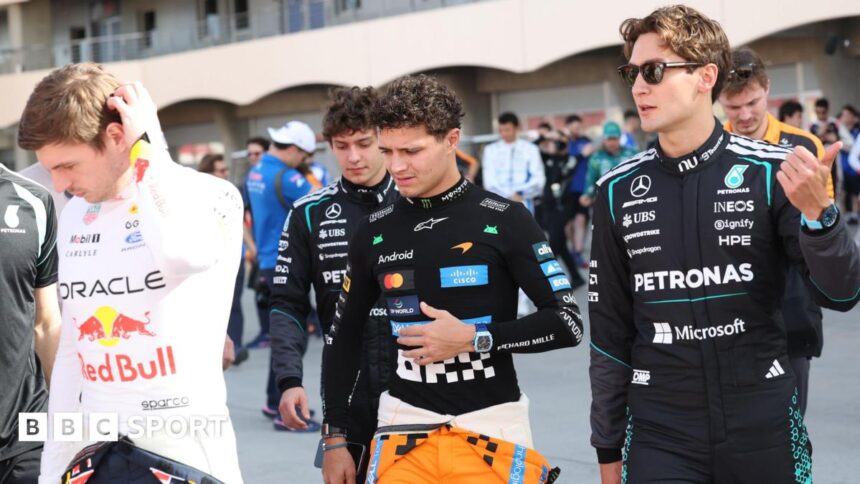
“Not Formula 1,” says reigning champion Max Verstappen, critiquing the current energy management demands. “Ridiculously complex,” laments seven-time title holder Lewis Hamilton. Fernando Alonso, with characteristic sharpness, suggests “the chef could drive the car at that speed” on straights, while Lando Norris calls it “not the purest form of driving.” When the sport’s four active world champions unite in criticism, it signals a profound moment of introspection. But is this a lament for a bygone era, or a necessary evolution? The 2026 regulations will provide the definitive answer.
The 2026 Rulebook: A Paradigm Shift on Three Fronts
The 2026 regulations represent more than a tweak; they are a philosophical overhaul designed to address sustainability, cost, and racing spectacle. The changes are built on three core pillars that will directly challenge drivers in new ways.
Power Unit Revolution: The internal combustion engine becomes a supporting actor. The new MGU-K will harvest and deploy nearly three times the electrical energy of the current unit, with power output soaring to a staggering 470kW. The ICE, running on 100% sustainable fuels, will be smaller and less powerful. The driver will become an energy conductor, managing a vastly different power delivery curve.
Aerodynamic Simplification & Active Aero: In a bid to slash drag and improve overtaking, cars will feature two key active aerodynamics systems. A manual override system will allow drivers to deploy a “X-Mode” on straights, radically reducing downforce for top speed. A second, automated system will adjust wings in corners to maintain grip. This turns downforce management from a static engineering puzzle into a dynamic, in-race tactical tool.
Lighter, Nimble, Manual Machines: Cars will be shorter, lighter, and crucially, will reintroduce a manual clutch for standing starts—a direct callback to driver skill. Combined with narrower tires and reduced aerodynamic dependency, the goal is to make the cars more physically demanding and less predictable.
- 50/50 Power Split: Aim for near-equal power from ICE and electric motor.
- Driver-Controlled “X-Mode”: A strategic overtake/defend tool on straights.
- Reduced Aerodynamic Grip: A return to emphasis on mechanical grip and car control.
The Driver’s New Battleground: From Brawn to Brain
Gone are the days when supreme bravery and reflexes alone could secure victory. The 2026 driver must be a multidisciplinary savant. The difference will be made not just in lap time, but in strategic energy allocation and real-time aerodynamic chess.
Strategic Energy Management: This will be the defining skill. Drivers will need to meticulously budget their electrical energy throughout a lap and a race stint. Do you deploy early to secure a position, risking a vulnerable end to the lap? Do you harvest more in certain sectors to enable a devastating attack later? This layer of strategy will be as critical as tire management is today, but with consequences measured in seconds, not tenths.
Tactical Aero Deployment: The manual “X-Mode” is a game-changer. Using it at the wrong moment—entering a corner with minimal downforce—could spell disaster. The best drivers will perfect the art of late deployment for overtakes and early reactivation for corner entry. It introduces a high-stakes, split-second decision matrix previously reserved for engineers on the pit wall.
The Return of Raw Car Control: With less aerodynamic downforce glued to the track, cars will be more slide-prone and physically taxing to drive. This shifts the balance back towards innate car control, feel, and the courage to dance with a looser rear end. The driver who can find the limit of a less forgiving machine will reap rewards.
Historical Echoes: Why This Change is Different
Formula 1 is no stranger to rule revolutions. The turbo-hybrid era in 2014 initially created a Mercedes dynasty, but driver skill still determined intra-team battles (Rosberg vs. Hamilton). The 2022 ground-effect cars aimed to improve racing, yet Verstappen’s and Red Bull’s dominance highlighted that a supreme driver in a harmoniously designed car remains unbeatable.
The 2026 shift is different in kind, not just degree. It moves decisive control into the driver’s cockpit. Previously, complex energy management was a background calculation. Now, it is a foreground tactical weapon. Active aero was forbidden; now, it is a driver tool. This evolution doesn’t diminish the driver’s role—it redefines it from a primarily physical executor to a tactical conductor of a complex orchestra of systems.
The fear, voiced by the champions, is that this complexity sanitizes the raw thrill. But history suggests the best adapt and shine brighter. The 2026 rules may simply be creating a new, more cerebral definition of “the complete racing driver.”
2026 Predictions: Who Will Thrive in the New Era?
Based on the emerging skill set required, we can project which drivers and teams might gain an early advantage when the new era begins.
The Strategic Maestros: Drivers like Lewis Hamilton and Max Verstappen, with their deep technical understanding and race-craft intelligence, are poised to excel. Verstappen’s sim-racing prowess, which hones split-second resource management, could translate eerily well to the new energy game. George Russell’s noted skill for technical feedback and strategic thinking could also become a superpower.
The Adaptable Veterans: Fernando Alonso’s genius lies in extracting maximum performance from any set of rules. His unparalleled race intuition and ability to drive around a car’s weaknesses will be priceless in the early, unstable development phase of the 2026 cars.
The Team Dynamics: This reset is a golden opportunity for teams like Ferrari, McLaren, and Aston Martin to close the gap. A clean-sheet design philosophy mitigates the advantage of entrenched concepts. The team that produces a car with intuitive energy deployment and reliable active aero will give its driver the ultimate platform. Furthermore, simulators and driver-in-the-loop development will become even more critical, favoring teams with the most advanced tools.
Conclusion: The Ultimate Challenge Reimagined
To claim that the 2026 rules will negate the driver’s difference is to misunderstand their intent. Yes, the pure, unassisted mechanical symphony of past eras is gone. But it has been replaced by a challenge of unprecedented complexity that demands a fusion of instinct, intellect, and improvisation.
The complaints from today’s champions are valid—they are mourning a form of driving they mastered. But their successors will lionize a new form. The 2026 champion will not simply be the fastest; they will be the most cunning energy economist, the most precise aero strategist, and the most adaptable car controller, all while hurtling around Monaco at 180 mph.
Formula 1’s status as the ultimate challenge isn’t being damaged; it is being upgraded. The driver will not just make a difference in 2026. In a field of near-identical technological potential, the driver—their mind, their nerve, their skill—will be the decisive difference. The revolution is coming, and it will be driven by the most complete athletes the sport has ever seen.
Source: Based on news from BBC Sport.