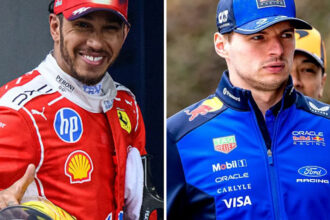
Verstappen’s Power Play: The Unprecedented Ejection of a Journalist in Japan
The world of Formula 1 is no stranger to high-octane drama, but it typically unfolds at 200 miles per hour. This week, the controversy arrived at a standstill, inside a press conference room at the Suzuka Circuit. In a move that sent shockwaves through the paddock and beyond, reigning world champion Max Verstappen refused to speak to the written media until a specific journalist, The Guardian’s Giles Richards, was removed from the room. This unprecedented act of control, stemming from a perceived slight months prior, reveals more than a simple clash of personalities; it exposes the evolving, and often tense, power dynamic between modern F1 superstars and the press corps tasked with holding them to account.
The Suzuka Standoff: A Clash of Wills
The scene was routine: a Thursday drivers’ press conference ahead of the Japanese Grand Prix. As Verstappen surveyed the room, his demeanor shifted. His eyes landed on Giles Richards, a respected and long-serving F1 correspondent. What happened next was anything but routine. Verstappen immediately stated, “One second – I’m not speaking before he’s leaving.” The room fell into a stunned silence. Richards, seeking clarification, asked if Verstappen was serious and if this was related to a question from the Abu Dhabi season finale last year. No direct answer was given, but the implication was clear. After a brief, awkward impasse, Richards departed, and only then did Verstappen proceed with the conference.
This was not a spontaneous outburst. It was a calculated, pre-meditated decision. Verstappen had clearly remembered the journalist and carried a grievance across continents and months. The incident highlights a key trait of the triple world champion: an intensely long memory for perceived disrespect and a ruthless willingness to enforce his own boundaries, regardless of protocol or precedent.
Roots of the Rift: Abu Dhabi’s Lingering Shadow
To understand the depth of Verstappen’s reaction, one must rewind to the aftermath of the 2023 Abu Dhabi Grand Prix. While Verstappen had already secured his third title, the race was another dominant victory. In the post-race press conference, Giles Richards posed a question that evidently struck a nerve. The exact wording has varied in reports, but the crux focused on whether the sheer ease of his and Red Bull’s victory—their 21st win in 22 races—diminished the sense of achievement or satisfaction.
For a driver of Verstappen’s competitive psyche, this line of questioning was likely interpreted as dismissive of his skill and Red Bull’s historic engineering triumph. In his mind, it framed their dominance as a negative, a boring inevitability, rather than the result of relentless perfection. This taps into a broader narrative Verstappen has frequently pushed back against: that dominance is inherently bad for the sport. The row that dates back to last year’s season finale festered, finding its dramatic resolution not with a heated exchange, but with a cold, powerful dismissal in Japan.
Expert Analysis: The New Dynamics of Driver Media Relations
This incident is a seminal moment in F1 media relations. We have moved beyond terse answers or irritable exchanges. This was a unilateral expulsion of a credentialed journalist.
- The Power Shift: Modern F1 drivers, especially generational talents like Verstappen, wield immense influence. Their global brand, fan following, and essential role in the sport’s commercial appeal give them leverage previous generations didn’t possess. Verstappen tested that leverage and found it absolute.
- Control Over Narrative: Verstappen has always been fiercely protective of his private life and selective in his media engagements. This action takes it a step further, attempting to control not just what questions are asked, but who is allowed to ask them. It sets a concerning precedent where access could become contingent on favorable coverage.
- The Team’s Role: Notably, Red Bull Racing, the team that manages Verstappen’s interests, did not intervene to reverse his decision. This silent endorsement speaks volumes. It suggests the team prioritizes their star driver’s comfort and state of mind over traditional media obligations, even if it creates a public relations friction.
Furthermore, this clash occurs against a backdrop of professional frustration for Verstappen. After a failing to finish in China following a rare mechanical issue, and coming off a sixth place in Australia (where he also retired), the champion is in a rare patch of adversity. The pressure to reassert dominance at Suzuka was already high, potentially shortening fuses and amplifying reactions to old grievances.
Predictions and Repercussions: What Happens Next?
The fallout from Suzuka will ripple through the F1 paddock for the remainder of the season and likely beyond.
Immediate Consequences: The FIA, which organizes the official press conferences, faces a dilemma. Will they codify rules to prevent driver-led ejections, or will they allow star power to dictate terms? A fine or reprimand seems unlikely given Verstappen’s status, but inaction could encourage similar behavior from others.
Chilling Effect on Journalism: Will journalists now self-censor, avoiding tough questions for fear of losing access? The core purpose of the press conference—to provide unfiltered accountability—is undermined if drivers can curate their interrogators. The incident may push more critical dialogue into written analysis, away from the driver’s direct, controlled press conferences.
Verstappen’s Fortress Mentality: This event will likely further cement Verstappen’s “us against the world” mentality. He and his core team may retreat further into a bubble, viewing external media with even greater suspicion. This can create a disconnect between the champion’s narrative and the public’s perception, managed only through tightly controlled social media and official team channels.
Conclusion: A Line Crossed, A Paradigm Shifted
Max Verstappen’s expulsion of Giles Richards was not a mere tantrum. It was a strategic, powerful statement. It declared that his access is a privilege he alone grants, and that historical criticisms will have tangible consequences. While it underscores his fierce, uncompromising nature—a trait that makes him a phenomenal competitor—it also raises alarming questions about transparency and power in Formula 1.
The sport sells itself on the raw, unfiltered brilliance of its drivers. But as this episode shows, that brilliance is increasingly accompanied by an equally potent desire for control. The Japanese Grand Prix press conference may be remembered not for the race preview it was supposed to be, but as the moment the reigning champion rewrote the rules of engagement between the cockpit and the press room. The checkered flag has fallen on this particular skirmish, but the longer race for the soul of F1’s media landscape is just beginning.
Source: Based on news from BBC Sport.