From Gold to Gaffe: How a Political Quip Overshadowed a Historic Olympic Feat
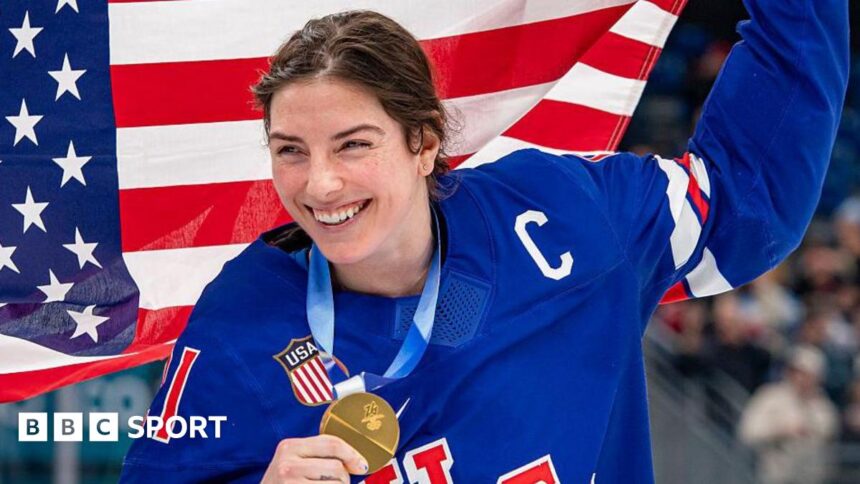
The final buzzer at the Milan-Cortina Winter Olympics signaled more than just victory for Team USA hockey. It marked a historic first: the United States had simultaneously captured gold in both the men’s and women’s ice hockey tournaments. For athletes like Hilary Knight, the legendary captain of the women’s team, this moment was the culmination of a lifetime of sacrifice, representing the pinnacle of a career already decorated with two golds and three silvers. Yet, in the days following their triumph, the narrative shifted from athletic dominance to political awkwardness, as a “distasteful joke” from the White House, according to Knight, cast a long shadow over their achievement.
A Historic Double Gold and the Phone Call That Changed the Tone
The U.S. women’s ice hockey team’s victory was a masterclass in resilience and skill, solidifying their status as a global powerhouse. The men’s team, an underdog story of its own, captured the nation’s attention with their thrilling run to gold. This dual triumph was a monumental moment for USA Hockey, a testament to the program’s depth and a story ripe for celebration. The traditional congratulatory call from the sitting president, a norm for Olympic champions, was expected to be a unifying, celebratory capstone.
However, the call from President Donald Trump to the men’s team took an unexpected turn. While extending congratulations and an invitation to the State of the Union address, Trump remarked that he would have to invite the women’s team as well, quipping, “or I probably would be impeached.” The line, delivered as a joke, immediately sparked controversy. For many, it reduced the women athletes’ historic accomplishment to a political liability, an obligatory invite extended under duress rather than earned through merit.
Hilary Knight, speaking out on behalf of her team, labeled the comment “distasteful.” Her public critique was significant, underscoring a feeling that their moment was being hijacked. “To have that overshadow our achievement, and the achievement of so many female athletes at these Games, is disappointing,” Knight stated, framing the issue not as a partisan political dispute, but as one of respect for athletic excellence.
Expert Analysis: The Intersection of Sport, Politics, and Perception
The incident is a textbook case of modern sports politics, where athlete advocacy and cultural commentary collide. Sports sociologists point to this as a pivotal example of how female athletes continue to fight for equitable recognition beyond their performance. “The comment, intended or not, reinforced a tired trope,” says Dr. Elena Martinez, a professor of sports media. “It positioned the women’s invitation as a politically correct afterthought, rather than a celebration of a team that has been as dominant and dedicated as the men’s, if not more so historically.”
The women’s team’s subsequent decision to decline the invitation to the State of the Union was a powerful, silent rebuke. It was a statement of agency, reclaiming control of their narrative. This action highlights a key evolution in modern athletics:
- Athletes as Advocates: Today’s Olympians, particularly women, are increasingly vocal about social and political issues affecting their recognition and treatment.
- The Power of the Platform: Gold medals grant a megaphone. Knight and her teammates used theirs to call out a perceived slight, shifting the conversation back to their terms.
- Perception vs. Intent: In the age of instant media, the impact of a statement often outweighs its intended humor. The “joke” was widely perceived as diminishing the women’s victory.
This episode also underscores the precarious position of sports governing bodies and athletes navigating political relationships. The congratulatory call, a moment of national pride, became a minefield, illustrating the heightened sensitivity and polarization surrounding political figures.
Predictions: The Lasting Impact on Women’s Sports and Future Celebrations
The ramifications of this incident will likely extend far beyond a single news cycle. We can anticipate several key developments in its wake:
Increased Scrutiny of Ceremonial Protocols: Future presidential administrations, regardless of party, will likely approach these victory calls with heightened caution and more rigorously vetted scripts. The era of the off-the-cuff political joke in such a context may be over.
Strengthened Unity and Advocacy Among Female Athletes: Knight’s public stance will resonate across sports. It serves as a rallying cry for female athletes to demand that their achievements be the sole focus of their victory laps. We can expect more coordinated messaging and less tolerance for perceived slights, whether overt or subtle.
A Template for Handling Political Entanglements: The U.S. women’s hockey team provided a case study in controlled response: acknowledge the achievement, critique the overshadowing comment clearly, and take decisive action (declining the invite) to maintain integrity. Future teams may follow a similar playbook when faced with analogous situations.
Potential for Policy Review: There may be internal discussions within the U.S. Olympic & Paralympic Committee about how to better prepare athletes for politically charged moments and how to advise on engagements with political figures to protect the athletes’ spotlight.
Conclusion: A Victory That Stands on Its Own Merit
While Donald Trump’s joke momentarily diverted the headlines, it ultimately failed to diminish the luster of what Hilary Knight and her teammates accomplished. If anything, the controversy has cemented their legacy not just as champions on ice, but as champions of their own narrative. Their historic double gold for USA Hockey remains an indelible feat, a story of two teams reaching the summit of their sport simultaneously.
The true victory lies in their response. By speaking out and politely declining the overshadowed invitation, the U.S. women’s ice hockey team demonstrated that their worth is not contingent on political validation. They reminded the public and the political establishment that the sweat, the sacrifice, and the sheer brilliance of an Olympic gold medal deserve a celebration untarnished by partisan quips. The record books will show their gold medals. And the history of sports advocacy will note the moment they skated past a political distraction to claim something just as valuable: unwavering respect.
Source: Based on news from BBC Sport.