Faith and Football: Inside Manchester City’s Ramadan Protocol for Muslim Stars
The Premier League is a global spectacle, a relentless machine that rarely pauses for tradition. Yet, as the sun sets over West Yorkshire this Saturday, a profound intersection of faith and sport is set to unfold at Elland Road. Manchester City’s clash with Leeds United may feature a rare, respectful pause—not for injury, but for Iftar. With four key first-team players observing Ramadan, the champions’ support system and the league’s evolving adaptability are thrust into the spotlight. This is the story of how elite athletes balance the physical pinnacle of their profession with the spiritual pinnacle of their year.
The Sky Blue Crescent: City’s Observant Quartet
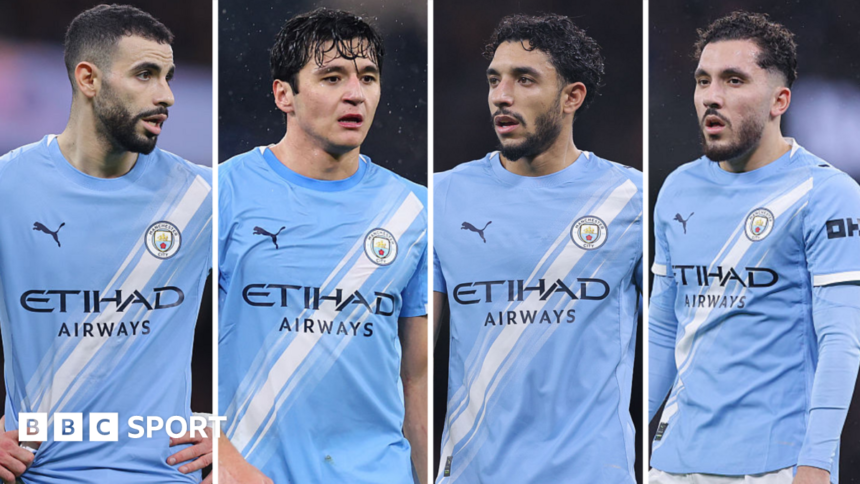
While many clubs have Muslim players, Manchester City’s current contingent forms a significant and influential bloc within Pep Guardiola’s squad. From the dynamic flank play of Rayan Ait-Nouri to the creative promise of Rayan Cherki, the defensive potential of Abdukodir Khusanov, and the attacking thrust of Omar Marmoush, these players contribute across the pitch. Their shared observance of Ramadan creates a unique dynamic, fostering a built-in support network within the dressing room. It’s a brotherhood within a brotherhood, where shared experience becomes a source of strength during the most demanding period of the football calendar.
This isn’t merely about individual practice. Their simultaneous observance necessitates a club-wide, scientifically-informed strategy. City, like other top clubs, have moved far beyond a simple accommodation. They have developed a holistic player welfare protocol specifically for Ramadan, recognizing that supporting spiritual well-being is directly linked to optimizing physical performance.
Beyond Abstinence: The Science of Fasting & Performance
The public perception of fasting often centers on hunger and thirst. For elite athletes, the challenge is exponentially more complex. The Ramadan fast involves abstaining from all food and fluids from dawn to sunset, directly impacting:
- Hydration and Recovery: Even mild dehydration can impair concentration, reaction time, and muscular endurance. For players in a high-press system like City’s, this is a critical factor.
- Energy Availability: With no carbohydrate intake during daylight, maintaining glycogen stores—the primary fuel for high-intensity exercise—requires meticulous nutritional planning.
- Sleep Disruption: Waking for Suhoor (the pre-dawn meal) can fragment sleep patterns, affecting cognitive function and injury risk.
Manchester City’s performance staff, including nutritionists, physiologists, and sleep experts, work closely with each player to create a personalized plan. This isn’t about circumventing the fast, but about optimizing the non-fasting window. Individualized nutrition plans focus on slow-release carbohydrates and high-quality protein at Iftar and Suhoor. Hydration strategies are minute-by-minute from sunset to dawn. Training schedules are often modified, with intense sessions potentially shifted to later in the evening when players are nourished and hydrated. This is a masterclass in sports science meeting cultural and religious observance.
The Elland Road Precedent: A League-Wide Shift
The potential for a matchday pause at 17:41 BST on Saturday is a powerful symbol of the Premier League’s growing cultural intelligence. While referees have had the discretion to allow such breaks since guidance was issued in 2021, each instance marks a significant moment. Leeds United’s reported willingness to accommodate City’s request underscores a collective understanding that has evolved across the league.
This was not always the case. For years, Muslim players navigated this challenge with little formal recognition. Today, the protocol is clear: the team’s club doctor communicates with the match referee and the opposing team’s doctor ahead of the game. A brief stoppage is arranged around sunset, allowing players to take on essential fluids and simple carbohydrates like dates—often brought to the touchline by club staff. This 30-60 second intervention is not a tactical timeout; it is a player welfare imperative that safeguards health and upholds the spirit of inclusion.
For the players, this moment is profound. To perform their religious duty while in the heart of a Premier League battle, and to have that duty respected by the institution, is a powerful statement of belonging. It tells young Muslim fans that their faith has a place in the cathedral of English football.
Guardiola’s Philosophy: Holistic Management for Peak Performance
The success of any club protocol hinges on the manager’s buy-in. In Pep Guardiola, Manchester City have a leader whose football philosophy is deeply rooted in holistic human management. Guardiola has consistently spoken about managing “the person, not just the player.” His approach to Ramadan is a perfect embodiment of this. He trusts his sports science team and, more importantly, he trusts his players’ professional judgment.
Guardiola’s management during this period likely involves:
- Flexible Training Loads: Monitoring metrics and adjusting individual workloads without stigma.
- Tactical Empathy: Understanding that a player’s decision-making or physical output in the 89th minute of a daytime game may be influenced by factors beyond effort.
- Unwavering Support: Publicly and privately backing his players’ observance, framing it as a demonstration of mental fortitude that can benefit the team’s resilience.
This environment allows players like Marmoush or Ait-Nouri to focus entirely on their performance when called upon, free from the anxiety of having to choose between faith and profession. It turns a potential point of difference into a source of collective strength.
Conclusion: A New Standard in the Beautiful Game
The sight of a Manchester City player breaking his fast on the Elland Road touchline this weekend would be more than a novel moment; it would be a testament to a matured, more inclusive Premier League. The journey of City’s Muslim players during Ramadan reveals the cutting edge of modern football: a world where bespoke sports science, empathetic man-management, and cultural respect are inextricably linked in the pursuit of excellence.
Their adaptation is a dual display of elite discipline—the discipline of faith and the discipline of sport. As clubs continue to refine their Ramadan protocols, they are setting a new global standard. They are proving that accommodating religious observance isn’t a compromise to performance, but rather, a sophisticated component of it. In doing so, they not only protect their assets on the pitch but also enrich the very soul of the game, making it truly reflective of the world that watches it. The final whistle blows, but for these players, the balance between devotion and duty is a continuous, and now fully supported, victory.
Source: Based on news from BBC Sport.