F1’s High-Stakes Airlift: How the Sport Chartered Its Way to Melbourne Amid Middle East Conflict
The world of Formula 1 operates on a precision-timed schedule more demanding than any pit stop. When geopolitical shockwaves threatened to strand a quarter of its traveling circus halfway across the globe, the sport’s response was not to wait, but to orchestrate a logistical masterclass. With the 2026 Australian Grand Prix looming, widespread airspace closures in the Middle East forced F1 to charter flights, ensuring its key personnel would reach the Albert Park grid. This unprecedented move underscores the immense, and fragile, global infrastructure required to keep the fastest sport on earth moving.
According to a report from The Athletic, the decision came as retaliatory missile strikes continued to rock the Middle East following a U.S. and Israeli attack on Iran. This led to the temporary closure of airspace around major hubs like Dubai, Abu Dhabi, and Doha—critical waypoints for thousands of flights, including those carrying the F1 paddock from Europe to Australia. With approximately 1,500 personnel in transit, the sport faced a race against time before the cars even hit the track.
The Perfect Storm: Conflict Meets the F1 Calendar
The timing of the disruption could not have been more challenging. The Australian Grand Prix, scheduled for March 8, sits early in the F1 calendar, following a string of races in the Middle East and Asia. For the sport’s nomadic workforce, the most efficient travel path to Melbourne has long been through the glittering hubs of the UAE and Qatar.
“You’re talking about teams, drivers, Formula 1 personnel,” Australian Grand Prix CEO Travis Auld told Channel Nine. “I’m guessing there’d be close to 1,000 people that would have already booked their flights and would be landing somewhere between sort of today, tomorrow, Wednesday.”
The sudden closure of these airspaces didn’t just delay flights; it caused mass cancellations and a frantic scramble for alternative routes. With commercial airlines overwhelmed by the global ripple effect, F1 officials made the decisive call to bypass the chaos entirely.
Key factors that created the crisis:
- Hub Dependency: The modern F1 travel circuit is built around major Middle Eastern airports for their connectivity and frequency of long-haul flights.
- Volume of Personnel: Moving ~1,500 essential staff—from engineers and strategists to hospitality and media—is a monumental task even under ideal conditions.
- Absolute Deadline: Unlike a postponed meeting, a Grand Prix has a fixed, global TV audience and a hard start time. There is zero flexibility.
Logistics on the Limit: The Charter Solution
Chartering flights for such a large group is a colossal and costly undertaking, reserved for extreme circumstances. It speaks to the severity of the disruption and the non-negotiable nature of the sport’s commitments. This wasn’t about convenience; it was about continuity.
As Auld noted, the challenge was compounded by competing with a surge in global demand for re-routed flights. “So they had to all be changed, but a lot of people around the world are on the same thing and so you’re competing obviously with that increase in demand. But they’ve been able to sort it out is the important part.”
The operation likely involved securing large aircraft, possibly even multiple wide-body jets, to ferry personnel from alternative European airports directly to Melbourne or via other secure hubs in Asia. This move guaranteed that the core of the sport—the technical minds who build and tune the cars, the officials who govern the race, and the production teams who broadcast it—would be present. It protected the integrity of the competition itself.
The charter decision highlights F1’s unique vulnerabilities and strengths:
- Centralized Command: F1’s ability to act swiftly for its entire community shows a level of centralized logistical control that few other sports possess.
- Financial Muscle: The cost, while significant, is a necessary operational expense to safeguard a multi-billion dollar global event.
- Personnel as Priority: While freight (car parts, garage equipment) often travels separately by sea and air cargo, the human capital is irreplaceable and time-sensitive.
Expert Analysis: A Wake-Up Call for Global Sport
This incident is far more than a travel anecdote; it’s a stark case study in risk management for international sports leagues. F1, with its 23-race global calendar, is particularly exposed to geopolitical instability. While it has navigated pandemics and weather events, conflict zones present a more volatile and unpredictable challenge.
“This is the hidden side of the ‘World Championship’ moniker,” says a veteran F1 team logistics manager who wished to remain anonymous. “We plan for everything—technical failures, weather, local strikes. But regional conflict that shuts down continental air corridors? That’s a tier-one disaster scenario. The charter option is the nuclear button, but it proves the system has a last-line-of-defense.”
The event raises pressing questions for the future. Will F1 and other globally touring sports need to develop more robust contingency plans, including pre-negotiated charter agreements or diversified travel routes that avoid over-reliance on specific regions? The financial and environmental cost of such charters is unsustainable as a regular solution, making long-term strategic planning essential.
This event exposes critical dependencies:
- Geopolitical Risk: The 2026 calendar, like current ones, is likely to feature multiple races in politically sensitive regions, making travel between them a perpetual chess game.
- Commercial Airline Reliance: The sport is ultimately at the mercy of global aviation networks. When they falter, the cost of creating a private network is astronomical.
- The Human Element: The stress and fatigue on personnel caught in such disruptions can have a tangible impact on performance and safety at the track.
Predictions: Ripple Effects and Future-Proofing
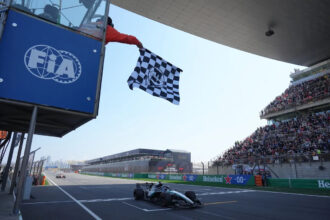
The immediate success of this airlift will get the show on the road in Melbourne, but the reverberations will be felt long after the checkered flag falls in Albert Park.
First, we can expect a thorough internal review within F1 and the FIA. This event will catalyze discussions about creating a formalized travel contingency fund or a dedicated task force for crisis logistics. Second, teams will undoubtedly re-examine their own travel policies, potentially staggering staff arrivals for fly-away races to mitigate all being on the same vulnerable commercial flights.
Looking at the broader landscape, this incident may also influence future calendar design. While commercial opportunities in certain regions are immense, schedulers may now give greater weight to geographic clustering and seasonal stability when plotting the annual tour. The dream of a truly efficient “world tour” must be balanced against the reality of a unpredictable world.
Finally, the role of technology will grow: Increased use of virtual reality for engineering support and remote broadcasting enhancements could, in the future, reduce the number of personnel who are absolutely required to be on-site, thereby decreasing the sport’s travel footprint and vulnerability.
Conclusion: More Than Just a Race to the Airport
The chartered flights to the 2026 Australian Grand Prix represent more than a clever fix to a travel nightmare. They are a symbol of Formula 1’s immense operational scale and its absolute imperative to deliver its spectacle, against any odds. It highlights the delicate interplay between global sport and global politics—a reminder that the roar of engines can sometimes be silenced by the echoes of conflict far from the racetrack.
While the drivers will battle for points in Melbourne, the real victory this weekend belongs to the unseen logistics teams and officials who performed a high-stakes, real-time rescue mission. They ensured the lights would go out on time. Yet, this episode serves as a clear warning: in an increasingly unstable world, the sport’s greatest race may not always be on Sunday, but the relentless, behind-the-scenes sprint to simply get there.
Source: Based on news from Deadspin.
Image: CC licensed via ok.ng.mil