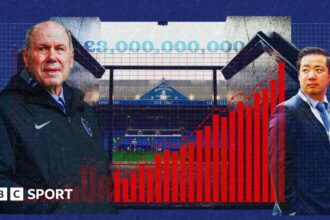
Decoding the Balance Sheet: What the Latest Football Club Financial Results Really Reveal
The publication of annual financial results is more than a statutory obligation for football clubs; it’s an autopsy of ambition, a balance sheet of dreams. As the Premier League’s giants unveil their figures for the 2024-25 season, a complex narrative emerges from the columns of revenue and profit. These documents, dense with accounting notes, tell a story of relentless commercial expansion, precarious wage structures, and a growing chasm that defines the modern game. Moving beyond the headline turnover figures, a deeper analysis reveals the strategic pressures, regulatory tightropes, and future battles that will shape football’s next decade.
The Revenue Race: Commercial Engines at Full Throttle
At first glance, the financial health of the Premier League’s elite appears robust, with several clubs posting record-breaking revenue. This growth, however, is not uniform and highlights a critical shift in football’s economic model. Matchday income, once the cornerstone, is now often the smallest contributor, superseded by broadcasting deals and, most significantly, commercial revenue.
The latest results underscore a fierce commercial arms race. Clubs are no longer just selling shirt sponsorships; they are building global brand ecosystems. We see multi-layered partnerships, from training kit sponsors and sleeve deals to official regional partners across Asia, North America, and Africa. The most successful clubs are leveraging their digital platforms—social media followings in the hundreds of millions—to drive merchandising and direct-to-consumer sales at an unprecedented scale. This commercial juggernaut creates a self-perpetuating cycle: on-pitch success boosts the brand, which boosts commercial revenue, which funds further squad investment.
- Broadcasting Resilience: Despite talk of market saturation, Premier League domestic and international rights deals continue to provide a colossal, stable financial base, insulating clubs from short-term performance dips.
- Stadium Utilization: Clubs with modern, expanded stadiums are maximizing non-matchday revenue through concerts, conferences, and hospitality, turning their grounds into 365-day-a-year entertainment venues.
- Digital Frontier: Direct content subscriptions, NFT experiments (though cooling), and advanced data analytics offerings represent the new frontier for monetizing fan engagement.
The Wage Bill Tightrope: Sustainability vs. Star Power
If revenue tells the story of ambition, the wage bill reveals the cost of it. The perennial tension between attracting world-class talent and maintaining financial sustainability is the central drama in these reports. The wage-to-revenue ratio remains the single most telling health metric for any club.
This season’s results show a continued strain. While top revenues climb, player salaries and agent fees escalate in lockstep. Clubs qualifying for European competitions, particularly the Champions League, face immense pressure to allocate a huge portion of their income to player wages to remain competitive. A failure to qualify can therefore create a devastating financial shock, leaving a club with a squad cost structure it can no longer support. This dynamic makes the Premier League’s top-four and top-seven battles more financially consequential than ever.
The specter of Profit and Sustainability Rules (PSR) looms large over these figures. Several clubs’ results show the creative accounting of player trading—amortizing transfer fees over long contracts and booking sales as pure profit. The reports hint at clubs walking a financial tightrope, balancing massive investment with regulatory compliance. The notes to the accounts often reveal more than the headlines, detailing the intricate, and sometimes risky, financial engineering required to stay within the rules while chasing success.
The Growing Gulf: A League Within a League
The consolidated financial results paint the clearest picture yet of a Premier League evolving into distinct financial tiers. There is now a pronounced financial stratification that is cementing competitive inequality.
The traditional “Big Six” is becoming a “Big Two or Three” in pure economic terms, with a select group pulling away in commercial might. Their global fanbase metrics, sponsorship portfolios, and ability to generate non-broadcasting revenue dwarf the rest of the league. For the chasing pack, the model is riskier, often more reliant on player trading profits and shrewd recruitment to bridge the gap. The results for newly promoted clubs or those without European football starkly illustrate the challenge: they operate in the same competition but in an entirely different financial universe, making their occasional sporting triumphs all the more remarkable.
This gulf has profound sporting implications. It creates a transfer market where only a handful of clubs can realistically target the elite, €100 million-plus players. It also influences managerial appointments, stadium development plans, and long-term strategic vision. The financial reports confirm that the Premier League’s competitive balance is under threat from its own economic success.
Future Forecast: Storm Clouds and Strategic Shifts
Reading these financial statements is also an exercise in forecasting. The numbers point to several inevitable clashes and strategic pivots on the horizon.
First, the regulatory environment is set for a seismic shift. The looming independent football regulator in the UK and UEFA’s new “squad cost ratio” rules (limiting spending on wages, transfers, and agent fees to a percentage of revenue) will directly target the practices visible in these latest results. Clubs with high wage ratios will be forced to adjust their models, potentially leading to a greater focus on youth development and a cooler transfer market.
Second, player trading will become even more central. For all but the very wealthiest, the model of buying potential, developing it, and selling at a premium is no longer a choice but a necessity for financial survival and compliance. The academy is no longer just a source of first-team players; it is a crucial profit center.
Finally, the pursuit of alternative revenue streams will intensify. We can expect more clubs to explore multi-club ownership models to diversify risk and access talent pipelines. Similarly, pre-season global tours will become more elaborate and commercialized, and digital fan engagement platforms will be pushed for direct monetization as clubs seek to reduce their dependency on cyclical broadcasting cycles.
Conclusion: The Final Whistle on Financial Fair Play?
The 2024-25 financial results are a testament to the Premier League’s global commercial powerhouse status. Yet, they are also a warning. They reveal a sport operating at the financial edge, where record revenues are immediately consumed by soaring costs, and where the pursuit of glory is balanced on a knife-edge of regulatory compliance. The growing financial stratification promises a less predictable competitive landscape, and the coming regulatory changes will force a fundamental rethink of club business models.
In the end, these documents remind us that modern football is a tale of two games. One is played on the grass, a sport of passion and unpredictability. The other is played in the boardroom and the accounts department, a calculated, high-stakes battle for economic supremacy. The latest results prove that while the former captures our hearts, the latter increasingly dictates our reality. The final whistle on this financial era is yet to blow, but the pressure is undeniably rising.
Source: Based on news from Sky Sports.