Pep Guardiola’s “Net Spend” Gambit: A Masterclass in Misdirection and Market Reality
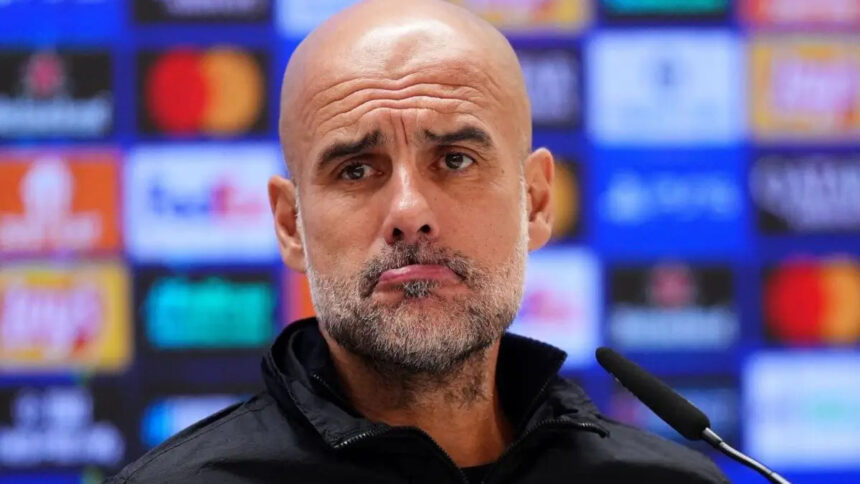
The press conference room at the City Football Academy is a familiar stage for Pep Guardiola’s cerebral theatrics. This Tuesday, however, the Manchester City manager delivered a line that sent ripples far beyond the usual tactical musings. When questioned about the club’s latest foray into the transfer market—a near €100 million splash on Crystal Palace’s Marc Guéhi and Bournemouth’s Antoine Semenyo—Guardiola responded not with a defense, but with a faux grievance, laced with his trademark mischievous grin. His complaint? That City’s net spend over five years ranks a lowly seventh in the Premier League, leaving him “a bit grumpier” towards the club’s hierarchy for not spending more. In one deft soundbite, Guardiola didn’t just answer a question; he reframed the entire narrative around football’s most potent empire.
- Decoding the “Net Spend” Doctrine: Guardiola’s Calculated Reframe
- The Financial Footprint: City’s Spending in the Cold Light of Day
- Beyond the Numbers: The Guardiola Premium and Squad Architecture
- The Future of the “Financial Game”: Predictions and Ramifications
- Conclusion: The Grumpy Genius and the New Football Economy
Decoding the “Net Spend” Doctrine: Guardiola’s Calculated Reframe
To the casual observer, Guardiola’s statement might seem absurd. Manchester City, the reigning champions of everything, pleading poverty? But this is no off-hand remark. It is a meticulously crafted piece of strategic communication aimed squarely at a persistent narrative. For years, City’s financial dominance, backed by Abu Dhabi’s sovereign wealth, has been a cornerstone of criticism from rivals and pundits alike. Guardiola’s retort weaponizes a different metric: net spend.
By shifting the focus from gross outlay to net expenditure (transfer fees paid minus fees received), Guardiola pulls a statistical sleight of hand. He acknowledges the eye-watering gross spend—€1.10 billion over five years, second only to Chelsea—while simultaneously highlighting the club’s equally impressive sales machine. The sales of academy graduates like Cole Palmer and James Trafford, alongside savvy exits for players like Gabriel Jesus and Oleksandr Zinchenko, have generated over €638 million in revenue. This business model, Guardiola implies, is one of sustainable investment, not blank-check spending.
- Gross Spend Narrative: “City buy success with endless oil money.”
- Net Spend Reframe: “City operate a self-sustaining model within a hyper-inflated market.”
His “grumpiness” is, of course, theatrical. It’s a knowing wink to those who understand the numbers, and a challenge to critics to debate on this new, more favorable terrain. It underscores a fundamental truth about modern City: they are not just a footballing powerhouse, but a player trading juggernaut.
The Financial Footprint: City’s Spending in the Cold Light of Day
Let’s examine the hard data that forms the bedrock of Guardiola’s argument. According to the figures he alluded to, Manchester City’s net spend over the last five seasons sits at approximately -€459.55 million. This places them seventh in the Premier League’s “net spend table,” behind the traditional commercial giants and newly ambitious projects.
The Premier League Net Spend Table (Last 5 Years):
- Manchester United: -€782.92m
- Arsenal: -€769.91m
- Chelsea: -€755.11m
- Tottenham Hotspur: -€665.98m
- Newcastle United: -€492.44m
- Liverpool: -€487.85m
- Manchester City: -€459.55m
This context is crucial. It reveals that while City’s gross investment is colossal, their ability to recoup funds is unparalleled among the elite. Clubs like Manchester United and Arsenal have spent vast sums with a far lower return on sales. Chelsea’s unprecedented gross splurge under Todd Boehly creates a category of its own. Guardiola’s point is that in the era of Financial Fair Play (FFP) and its successor, Profit and Sustainability Rules (PSR), financial agility and sell-on value are as important as a owner’s wealth. City’s model, often shadowed by allegations, is technically one of the league’s more sustainable in terms of net transfer flow.
Beyond the Numbers: The Guardiola Premium and Squad Architecture
The raw financial data doesn’t tell the whole story. Guardiola’s genius—and the club’s unwavering support—lies in targeted, high-conviction spending. The €100 million outlay this winter on Guéhi and Semenyo is a case study. This isn’t scattergun shopping; it’s surgical squad evolution. Guéhi, a left-footed, ball-playing center-back, is a quintessential Guardiola prototype, addressing a specific need following injuries and departures. Semenyo offers explosive, direct width, a profile previously lacking.
This speaks to a broader philosophy. City’s spending carries a “Guardiola Premium.” They pay not just for talent, but for a specific, coach-approved skill set that guarantees integration into a complex tactical system. The success rate of these signings—from Ruben Dias to Erling Haaland—is remarkably high, transforming expenditure into on-pitch value more efficiently than most rivals. Furthermore, Guardiola’s ability to improve players increases their future sell-on value, creating a virtuous cycle. The net spend argument, therefore, is underpinned by a uniquely synergistic coach-club relationship where investment is hyper-optimized.
The Future of the “Financial Game”: Predictions and Ramifications
Guardiola’s comments are a opening salvo in the next phase of football’s financial discourse. As PSR enforcement tightens, the ability to generate pure profit through player sales will become the ultimate differentiator. We can predict several consequences:
- The Academy Goldmine: City’s investment in their youth setup will intensify. The sales of Palmer, Trafford, and Romeo Lavia are not accidents but a blueprint. The “City Football Academy” will be judged as much on profit generated as first-team players produced.
- Strategic Targeting: Transfers will be evaluated with a future resale value in mind, even for a club of City’s means. Signings will be younger, with higher potential ceilings and longer asset lifespans.
- The Narrative War: Guardiola’s net spend framing will be adopted by other top clubs and used as a shield against criticism. The public debate will slowly shift from “who spent the most” to “who spent the smartest.”
For Manchester City, the immediate future involves navigating ongoing Premier League charges related to historical financial conduct. Guardiola’s press conference rhetoric can be seen as part of a broader effort to present the club’s current operations as a model of regulatory compliance and shrewd business.
Conclusion: The Grumpy Genius and the New Football Economy
Pep Guardiola’s feigned annoyance was a masterstroke in media manipulation and financial messaging. It was the sound of a manager expertly playing the long game, both on and off the pitch. By championing the net spend metric, he didn’t just deflect a question about winter spending; he issued a sophisticated rebuttal to a decade of criticism and laid out the philosophical blueprint for City’s enduring dominance.
The truth lies in the synthesis of both narratives. Yes, Manchester City spend vast sums, leveraging their financial power to secure top-tier talent. But they also do so with a strategic precision and a salesroom efficacy that few can match. Guardiola’s “grumpiness” is the complaint of a perfectionist operating within a system he has helped master. It reminds us that in today’s football, the most important battles are won not just with moments of magic on the grass, but with spreadsheets, sell-on clauses, and the strategic framing of a press conference quip. The era of pure financial brute force is evolving; welcome to the age of the calculated empire, where even the manager is a key asset in the balance sheet.
Source: Based on news from Yahoo Sports.