Miracle to Walk: Golfer Andrea Pavan’s Harrowing Survival After Three-Story Lift Shaft Fall
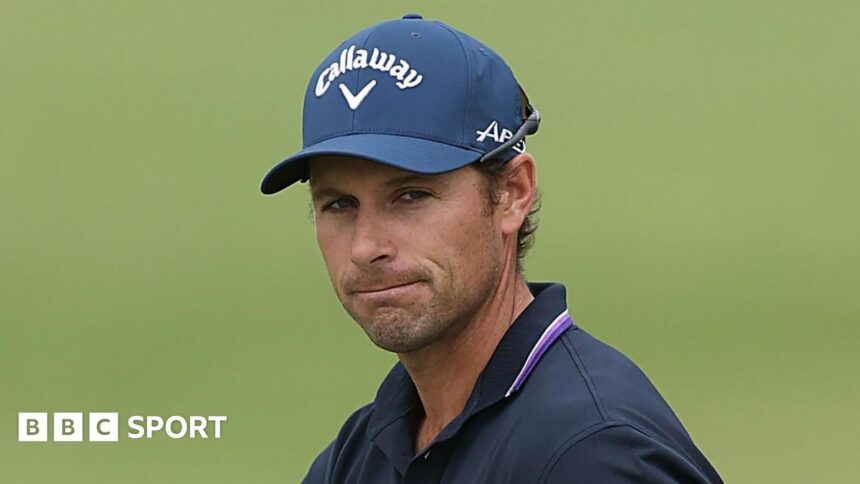
The world of professional golf is built on precision, control, and navigating hazards with calculated grace. For Italian golfer Andrea Pavan, a two-time DP World Tour winner, the most perilous hazard he has ever faced wasn’t a water-guarded green or a deep fairway bunker. It was an open elevator shaft in a private residence that nearly ended his career—and his ability to walk. In a shocking accident that has sent ripples through the sporting community, Pavan survived a three-story fall, suffering severe injuries that make his recent hospital discharge feel, in his own words, “like a miracle.”
The incident occurred just before the recent South African Open at the 36-year-old’s private accommodation near the Stellenbosch Golf Club. In a nightmare scenario, the lift doors opened to reveal a void—the lift car was absent. Pavan tumbled down the shaft, plunging the equivalent of three stories. The aftermath was a brutal catalogue of injuries: severe shoulder damage and fractures to several vertebrae in his back, necessitating major surgery and an uncertain road ahead. His story is no longer just about birdies and bogeys, but a profound testament to resilience, modern medicine, and the fragile line an athlete walks.
A Sudden Plunge: The Accident That Changed Everything
Unlike an on-course injury, Pavan’s accident was a freak, off-script event that highlights the unseen dangers athletes can face while traveling the globe. He was preparing for the South African Open, a tournament on the DP World Tour schedule, likely focusing on his swing mechanics and course strategy. In an instant, that focus shattered. The open lift shaft represents a chilling breach of everyday safety, a moment where routine turns to trauma.
Emergency services rushed him to a local hospital where the full extent of the damage was assessed. Fractures to several vertebrae are among the most serious injuries an individual can sustain, carrying inherent risks to the spinal cord and long-term mobility. The accompanying severe shoulder damage compounded the threat to his golfing future, a career built on the intricate, powerful kinematics of the upper body. The immediate priority shifted from tournament preparation to surgical theaters and stabilizing his spine. The fact that he has now been discharged to begin rehabilitation is the first, and most significant, victory in this new fight.
“A Big Day”: The Long Road of Rehabilitation Begins
This past Wednesday, Pavan broke his silence with a message on social media that was equal parts relief and determination. “Big day today,” he wrote. “After 2 weeks I finally got discharged from the hospital to continue my rehab at an accommodation nearby.” The subtext of that simple statement is immense. Discharge is not a finish line; it is the starting block for a marathon of recovery.
His description of it feeling “like a miracle to be able to walk” underscores the gravity of his escape. Medical experts not directly involved in his case suggest the rehabilitation pathway will be grueling and meticulously phased:
- Initial Phase (Months 1-3): Focus will be on basic mobility and healing. This involves managing pain, gentle physiotherapy to prevent muscular atrophy, and allowing the vertebral fractures and shoulder reconstruction to stabilize. Walking unaided will be a primary, hard-won goal.
- Intermediate Phase (Months 4-9): Assuming positive healing, rehab intensifies with core strengthening, proprioception (balance) work, and gradual reintroduction of rotational movements. The severe shoulder damage will require its own specialized protocol to restore range of motion without compromising the surgical repair.
- Sport-Specific Phase (Year 1+): Only after achieving baseline physical milestones could golf-specific motions be introduced. This starts with putting, then chipping, slowly working up to half-swings. The violent torque of a full driver swing places enormous stress on the spine and shoulders, making it a final hurdle.
The mental challenge will be as formidable as the physical one. An athlete’s identity is tied to their physical prowess, and the patience required in rehab runs counter to their competitive instincts.
Expert Analysis: What This Means for Pavan’s Golfing Future
As a sports journalist who has followed careers cut short and triumphant returns, Pavan’s situation presents a uniquely difficult prognosis. At 36, he is in the latter half of his competitive career, but far from a veteran looking to wind down. His last DP World Tour win was in 2021, and he has the skill to compete at the highest level.
The primary obstacles to a return are clear: The rotational force in a golf swing is catastrophic for a compromised spine if not fully healed. The fractures to several vertebrae must fuse solidly to withstand that force. Secondly, the severe shoulder damage directly impacts the kinetic chain of the swing. Power generation, club control, and the delicate feel required for short game mastery all flow through a stable, strong shoulder joint.
History offers both caution and hope. Golf legend Tiger Woods overcame multiple leg and back surgeries, including a spinal fusion, to win again. Others have not been as fortunate. The difference often lies in the nature of the injury and the athlete’s pain tolerance post-recovery. Pavan’s “miracle” comment suggests he is acutely aware of how much worse it could have been, which may fuel a grateful, process-driven approach to rehab rather than a rushed one.
Realistically, a competitive return to the DP World Tour is at least 12-18 months away, if at all. His initial goals will be quality of life and walking without pain. Golf will be a distant, motivating star. The financial and ranking implications are severe, likely requiring the use of medical exemptions whenever he is cleared to attempt a comeback.
Beyond the Scorecard: A Story of Perspective and Survival
Andrea Pavan’s story has instantly transcended sports. It is a human story of survival that resonates with anyone who considers the unseen dangers in daily life. For his fellow professionals, it’s a sobering reminder of the vulnerability that exists outside the ropes. The golf community has already begun to rally, offering public messages of support that will serve as crucial emotional sustenance in the lonely days of rehab ahead.
His accident also casts a spotlight on accommodation safety for traveling athletes. While details of the incident are still emerging, it will undoubtedly prompt players, management companies, and tour officials to scrutinize rental property safety with even greater diligence. The call for “duty of care” extends beyond tournament logistics to the very places athletes rest their heads.
Conclusion: Walking is the First Victory
Andrea Pavan’s journey is now defined by a new set of pars and birdies. Par will be a day without pain. A birdie will be a successful physio session. An eagle will be holding a golf club again without fear. The man who once navigated the fairways of Le Golf National and Marco Simone now faces the most demanding course of his life: the path to recovery.
While the future of his professional golf career hangs in a delicate balance, the most important victory has already been secured. He is walking. In the face of an accident that could have been fatal or permanently paralyzing, that ability is the miracle he names. The grit, discipline, and focus that made him a tour winner are now his greatest assets. The golf world will wait, and hope, not just for the return of a competitor, but for the full recovery of a man who stared into an abyss and stepped back, one painful, miraculous step at a time.
Source: Based on news from BBC Sport.